
The Silk Self Care Ritual: A Calmer, Kinder Bedtime Routine
You know the feeling: it's late, your brain's still doing laps, and you faceplant into bed with zero handover between "day" and "sleep". A silk self care ritual fixes that gap. It's a short, repeatable evening sequence built around low-friction silk that tells your body the day is over, while treating your skin and hair rather better than cotton ever bothers to.
The honest headline: silk won't sedate you or reverse the clock. What it does is cut friction and pressure against skin and hair, and hand you a calming cue to switch off. This guide covers the exact steps, the real evidence behind each claim, how silk stacks up against cotton and satin, and how to pick a pillowcase that keeps earning its keep for years.
Quick Answer
A silk self care ritual is a simple nightly wind-down that pairs a calming routine with low-friction silk: a mulberry silk pillowcase, sleep mask and scrunchie. Silk reduces friction and moisture loss against skin and hair, so mornings arrive with fewer creases, less frizz and a gentler start. It's a comfort upgrade and a sleep cue, not a clinical treatment.
Key Takeaways
- A silk self care ritual works through reduced friction and a consistent bedtime cue, not through any active treatment effect on skin or hair.
- The Sleep Foundation notes silk's smooth surface causes less friction than rougher fabrics, which underpins claims about fewer tangles, less frizz and softer sleep creases.
- Build the ritual as a sequence: wind down, cleanse and moisturise, secure hair in silk, then settle onto a silk pillowcase under a silk mask.
- Silk is a fibre; satin is a weave. A satin pillowcase may be polyester, so check the fibre before assuming the same benefits.
- Momme weight, not thread count, signals silk quality. Around 22 momme is a durable everyday sweet spot; 30 momme is the denser premium option.
- Consistency matters more than product cost. A cheap ritual done nightly beats an expensive one done occasionally.
In This Article
- What is a silk self care ritual?
- Why anchor self care to bedtime?
- What the evidence does and does not prove
- The silk evening ritual, step by step
- The pillowcase that makes the ritual work
- Silk versus cotton, satin and synthetics
- Momme weight and choosing for longevity
- Mistakes that quietly undo the ritual
- Keeping silk performing over time
- Frequently Asked Questions
What is a silk self care ritual?
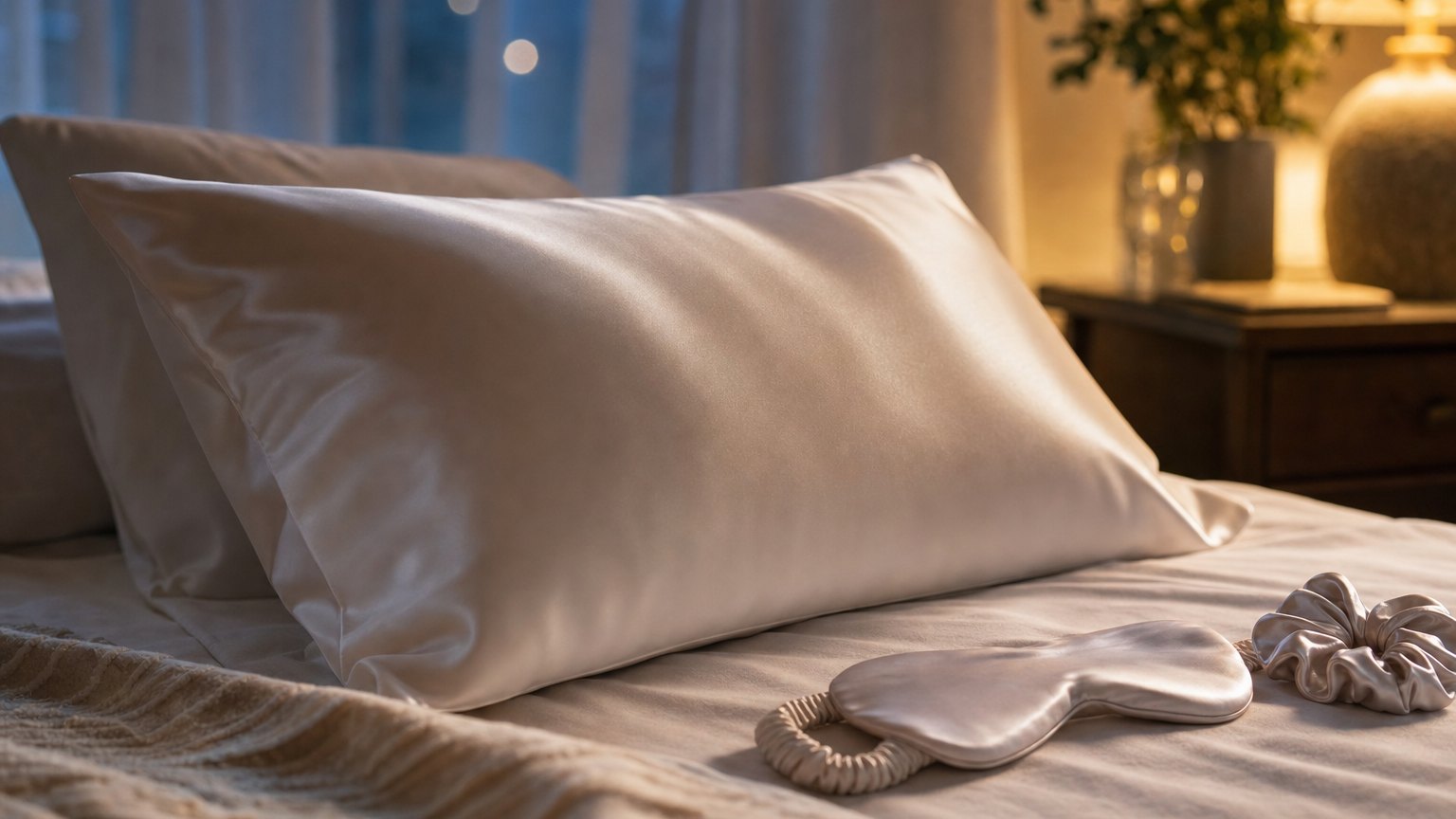
A silk self care ritual is a short, repeatable evening routine that pairs a calming wind-down with low-friction silk items you sleep on and in. The core cast: a mulberry silk pillowcase, a silk sleep mask and a silk scrunchie, bonnet or wrap. The job is twofold: treat skin and hair more gently overnight, and build a reliable cue that tells your body the day is officially closed for business.
The mechanism is mechanical, not magical, so put the wand away. Silk's smooth surface reduces the drag and pressure that skin and hair endure across seven or eight hours pinned against a pillow. That's why people switching from cotton report fewer pillow lines, less frizz and less tangling, not a miracle overnight transformation.
Split the ritual in two. One half is behavioural: dimming lights, cleansing, slowing down. The other is material: swapping rough fabric for smooth, so the friction load on skin and hair drops while you're none the wiser, asleep.
Expert Insight: The Sleep Foundation notes that silk's smooth surface is associated with less friction against skin and hair than rougher fabrics, which is the mechanism behind claims that it helps reduce tangles, frizz and visible creasing.
Source: Sleep Foundation
Why anchor self care to bedtime?
Bedtime is the best place to anchor a self care ritual because a consistent, calming pre-sleep sequence is one of the few habits with genuine backing in sleep science. The NHS lists a regular, relaxing bedtime routine among its core recommendations for sleeping well, precisely because predictable cues help the body shift out of alert mode.
Silk earns its place here by adding a sensory signal to the routine. That cool, smooth feel against your face becomes a Pavlovian marker for rest, the same way a specific tea or a dimmed lamp does. You're not just protecting your hair; you're training your nervous system to clock off.
There's also a practical payoff by morning. A calmer wind-down plus a lower-friction surface tends to mean fewer creases to iron out with your palm and less pillow hair to wrestle, which is why many people pair this with a silk morning routine too.
Expert Insight: The NHS advises that a regular, relaxing bedtime routine and consistent wind-down cues help most people fall asleep more easily, which is why anchoring self care to the same time each night matters more than any single product.
Source: NHS, Every Mind Matters sleep guidance
The most luxurious thing about a silk ritual isn't the fabric. It's the fact that you finally stop, every single night.
What the evidence does and does not prove
Be honest with yourself before you build the ritual: silk's benefits come from reduced friction and moisture loss, not from some undercover treatment effect. The fabric isn't moisturising your skin or repairing your hair while you snore. It's simply lowering the mechanical stress your skin and hair take on overnight.
The friction mechanism is plausible and fits with skin and hair physiology. Where the evidence thins out is how much measurable difference this makes to visible ageing, acne frequency or hair breakage over weeks and months. There's comparatively little direct, peer-reviewed clinical research testing silk pillowcases specifically for these outcomes.
The American Academy of Dermatology recommends satin or silk pillowcases as a gentle-on-skin choice within its wider skincare-while-you-sleep advice, framing them as a sensible comfort habit rather than a proven anti-wrinkle device. That's the right mental model: nice, not miraculous.
Expert Insight: The American Academy of Dermatology suggests sleeping on your back and using a soft pillowcase to reduce the pressure and friction that contribute to sleep lines, framing fabric choice as one small, sensible factor in overnight skin care.
Source: American Academy of Dermatology
The takeaway for your ritual: keep silk as one component, never a replacement. It sits alongside real skincare (cleanser, moisturiser, sunscreen by day) and real haircare (conditioner, gentle detangling), not instead of them. For the fully expanded, no-nonsense version of this evidence discussion, see our breakdown of what silk pillowcase benefits are actually true.

The silk evening ritual, step by step
A workable silk evening ritual is five steps and takes under fifteen minutes. Order matters: cleanse before you touch fabric, and secure hair before you lie down, so the low-friction surface actually has something to protect.
1. Dim the lights and set the cue
Start at roughly the same time each night. Lower the lights, put the phone down and let the room signal rest. This is the behavioural half of the routine, and it's the bit most people skip. Consistency here does more for your sleep than any fabric ever will.
2. Cleanse and moisturise properly
Remove makeup and cleanse fully. Silk reduces friction; it doesn't remove the day's sweat, sunscreen and grime, and sleeping in makeup clogs pores no matter how fancy your pillowcase is. Apply your night moisturiser or serum and give it a minute to sink in before it touches fabric.
3. Secure your hair in silk
Tie hair loosely with a silk scrunchie, or wrap longer or textured hair in a silk bonnet or scarf. The goal is less overnight tension and friction, so keep it gentle. A tight elastic band undoes the whole point in one snap.
4. Settle onto a silk pillowcase
Lie down on a clean silk pillowcase. This is where most of the skin and hair contact happens across the night, so it's the highest-value item in the ritual. Rotate two pillowcases and you can wash on schedule without ever sleeping on a used one.
5. Slip on a silk sleep mask
Finish with a silk sleep mask to block light and cut friction against the delicate skin around the eyes. Light blocking has real backing for sleep quality; the anti-crease claim around the eyes is the same mechanical, comfort-based promise as the pillowcase, so keep expectations in check.
Expert Insight: Cleveland Clinic notes that sleeping in makeup can trap oil, sweat and bacteria against the skin overnight and contribute to clogged pores and irritation, which is why cleansing remains a non-negotiable step no matter how gentle your pillowcase is.
Source: Cleveland Clinic
The pillowcase that makes the ritual work
The problem: even a perfect wind-down ends with your face and hair pressed into fabric for hours. On cotton, that means friction, static, moisture wicked away, and the tug that leaves you with morning frizz and pillow creases. Your careful skincare and haircare get quietly undone while you're dead to the world.
The solution: a pillowcase that works with your skin and hair rather than against them, so the low-friction surface does the boring, invisible protective work while you sleep and your ritual survives until morning.

For how a pillowcase fits into skin and hair health more broadly, our guide to why silk pillowcases help hot sleepers covers the temperature side, a genuine comfort factor in any bedtime routine, not just marketing waffle.
Silk versus cotton, satin and synthetics
Silk isn't the only smooth option, so an honest ritual weighs the alternatives. The most confused comparison is silk versus satin, because the terms get thrown around interchangeably in marketing copy that hopes you won't check. Satin is a weave; silk is a fibre. A satin pillowcase can be polyester, nylon or silk, and the benefits attributed to smoothness depend entirely on which fibre is doing the work underneath.
Cotton is the real-world baseline most people switch from. Its higher-friction surface is exactly what silk is up against, and it's the fairest comparison because it's probably on your bed right now, doing its rough, dependable thing.
| Fabric | Friction on skin and hair | Breathability and heat | Care demands | Verdict for a ritual |
|---|---|---|---|---|
| Mulberry silk | Very low, smooth surface | Breathable, temperature regulating | Delicate: cool wash, gentle detergent | Best all-round for skin, hair and the sensory cue |
| Polyester satin | Low to touch, but can trap heat | Poorer, tends to hold heat | Easy, machine friendly | Cheap smooth feel, weaker on breathability and longevity |
| Cotton | Higher, more drag | Very breathable, robust | Forgiving of hot water and strong detergent | Durable and cheap, but the friction baseline silk beats |
Temperature is the other practical factor. Silk is generally described as breathable and temperature regulating compared with heat-trapping synthetics, so you tend to wake with less overnight sweating against your face, meaning less product transfer and a drier hairline. For a fuller comparison of the smooth-fabric contenders, see whether satin is good for hair and where silk still pulls ahead.
Expert Insight: Sleep Foundation distinguishes silk from satin by explaining that satin is a weave while silk is a fibre, so a satin pillowcase can be made from polyester or nylon and will behave very differently overnight in terms of breathability and heat.
Source: Sleep Foundation
A polyester pillowcase can feel smooth in the shop and sleep hot at 3am. Silk keeps its promises after the lights go out.
Momme weight and choosing for longevity
Momme weight, not thread count, is how you judge silk quality. Momme measures the fabric's density, and it matters for a ritual because a very light, low-momme silk might not survive the frequent washing a facial-contact item genuinely needs before it gives up and pills.
A commonly cited practical range for pillowcases is roughly 19 to 25 momme, balancing softness, durability and everyday usability. Around 22 momme sits comfortably in that sweet spot. Heavier weights such as 30 momme feel denser and more substantial, and tend to last longer, at a higher price and slightly less breathability.
Choose based on how you sleep. Run hot, or want the most breathable option? 22 momme is the sensible default. Want the most substantial, longest-lasting hand-feel and don't mind paying for it? 30 momme is the upgrade. Our detailed look at whether the 30 momme extra weight is worth the higher price unpacks the trade-off in full.
Decision Checklist
- Is it 100% mulberry silk, not a satin weave of polyester or nylon?
- Is the momme weight stated, and is it in the 19 to 30 range?
- Is it OEKO-TEX certified, so no harmful substances sit against your skin overnight?
- Is it machine washable or clearly labelled for gentle care you will realistically follow?
- Does it come as a set of two, so you can rotate and wash on schedule?
- Is there a satisfaction guarantee, so you can test the ritual risk-free?
- Does the weight suit your sleep temperature: 22 momme if you run hot, 30 momme for maximum substance?
Expert Insight: OEKO-TEX STANDARD 100 certification means every component of a textile has been tested against a list of harmful substances, which for a pillowcase pressed against your face all night is a meaningful safety marker rather than a marketing flourish.
Source: OEKO-TEX
Mistakes that quietly undo the ritual
The biggest mistake is treating silk as a stand-alone fix. Skipping sunscreen, conditioner or a proper cleanse because "the pillowcase is doing the work" overstates what a friction-reduction fabric can deliver. Silk is one component, never the whole routine, no matter how good it looks in the ads.
The second is inconsistent washing. Using a silk pillowcase for months without laundering it defeats the entire hygiene point of switching, because oil, product and skin cells build up on any fabric regardless of fibre. Wash facial-contact items on their own sensible schedule.
The third is aggressive handling. Vigorously towel-drying hair still wrapped in a silk scrunchie, or rubbing your eyes the second you peel off a silk mask, reintroduces the exact friction and pressure the ritual was meant to avoid. Undo silk items gently, or you've cancelled out the entire point of buying them.
Wash silk accessories on their own schedule
Items in direct daily skin or scalp contact, such as a silk mask or scrunchie, accumulate oil and product faster than a pillowcase spread across a whole night. They often need washing more often than the pillowcase, even if you launder that weekly. Match frequency to contact, not to your sheet-washing day.
Keeping silk performing over time
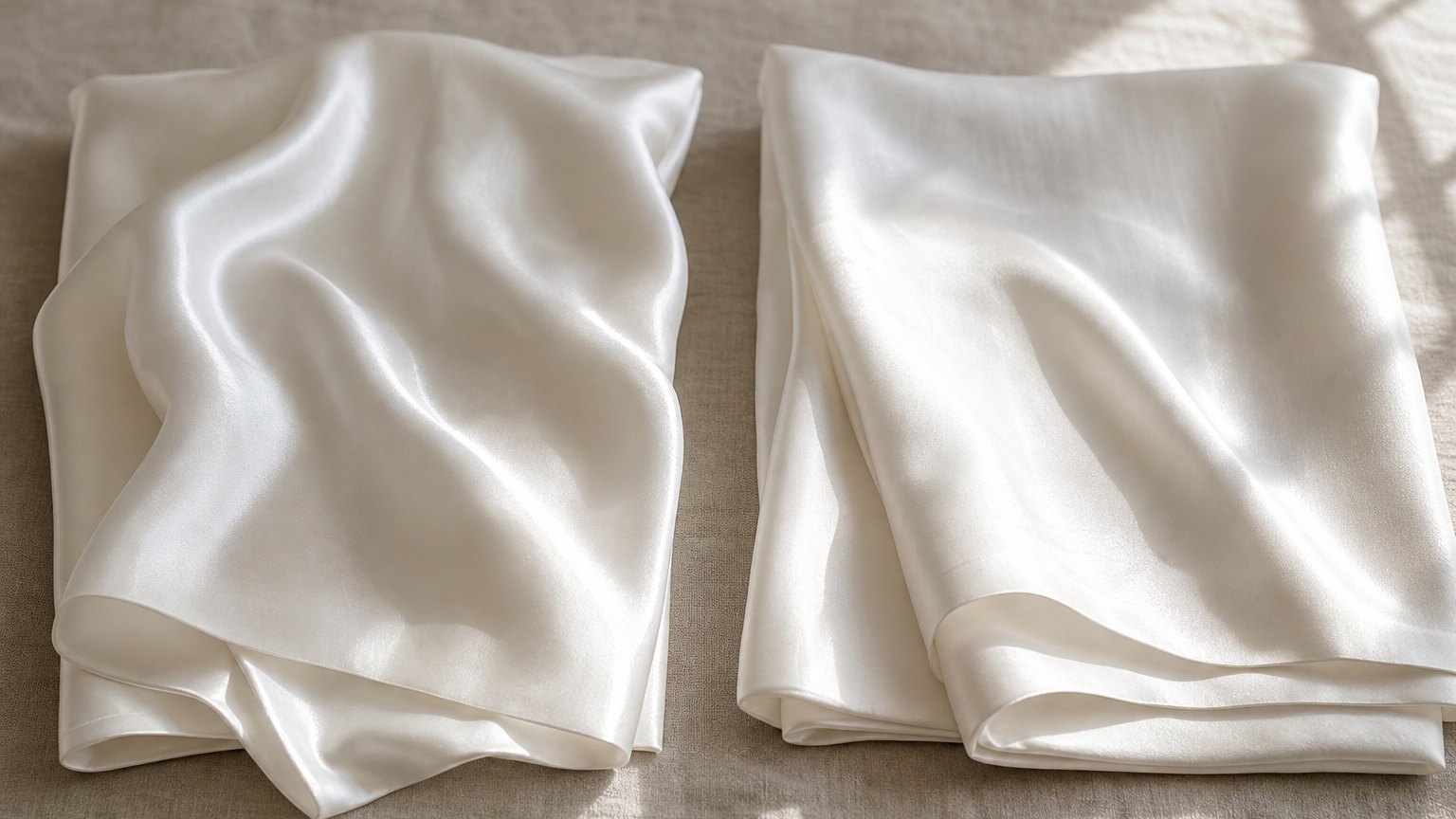
A silk ritual only keeps delivering if the silk stays smooth, because neglect changes its surface. Wash new silk before first use, since manufacturing and packaging can leave starches and residues that sit against skin overnight. This is standard bedding hygiene, and it applies to any silk item entering your routine.
Silk is a protein fibre, so harsh detergents with proteases (enzymes that break down protein stains) can degrade the very smoothness that makes the benefits possible. High heat, direct sun drying and rough agitation do the same damage. Mishandle it a few times, and a silk item ends up performing like worn cotton, without you ever twigging why the magic wore off.
For the full method without the panic, our guide on how to wash silk properly covers exactly what to do and what to avoid.
Expert Insight: Good Housekeeping advises washing silk in cold water with a gentle, silk-appropriate detergent and avoiding wringing or high heat, because these protect the fibre's structure and preserve the smooth surface that gives silk its signature feel.
Source: Good Housekeeping
Upgrading the ritual for maximum substance
The problem: some sleepers want the ritual to feel as substantial as it is functional, with a pillowcase that has real body and drape rather than a lightweight hand-feel that thins with frequent washing.
The solution: a denser, higher-momme silk that keeps the same low-friction benefits while feeling more luxurious and lasting longer under regular laundering.

Whichever weight you choose, the ritual logic stays the same. The pillowcase is the hardest-working item because it carries the most skin and hair contact across the night. For the wider picture, our complete silk pillowcase guide ties the buying and benefit questions together.
Give your evenings a softer landing
Turn your wind-down into a ritual you actually keep. Start with a pure mulberry silk pillowcase set, backed by our 60-night guarantee so you can test it against your own mornings.
Shop the Collection →Free delivery · 60-night guarantee · Set of 2
Frequently Asked Questions: The Silk Self Care Ritual
What is a silk self care ritual?
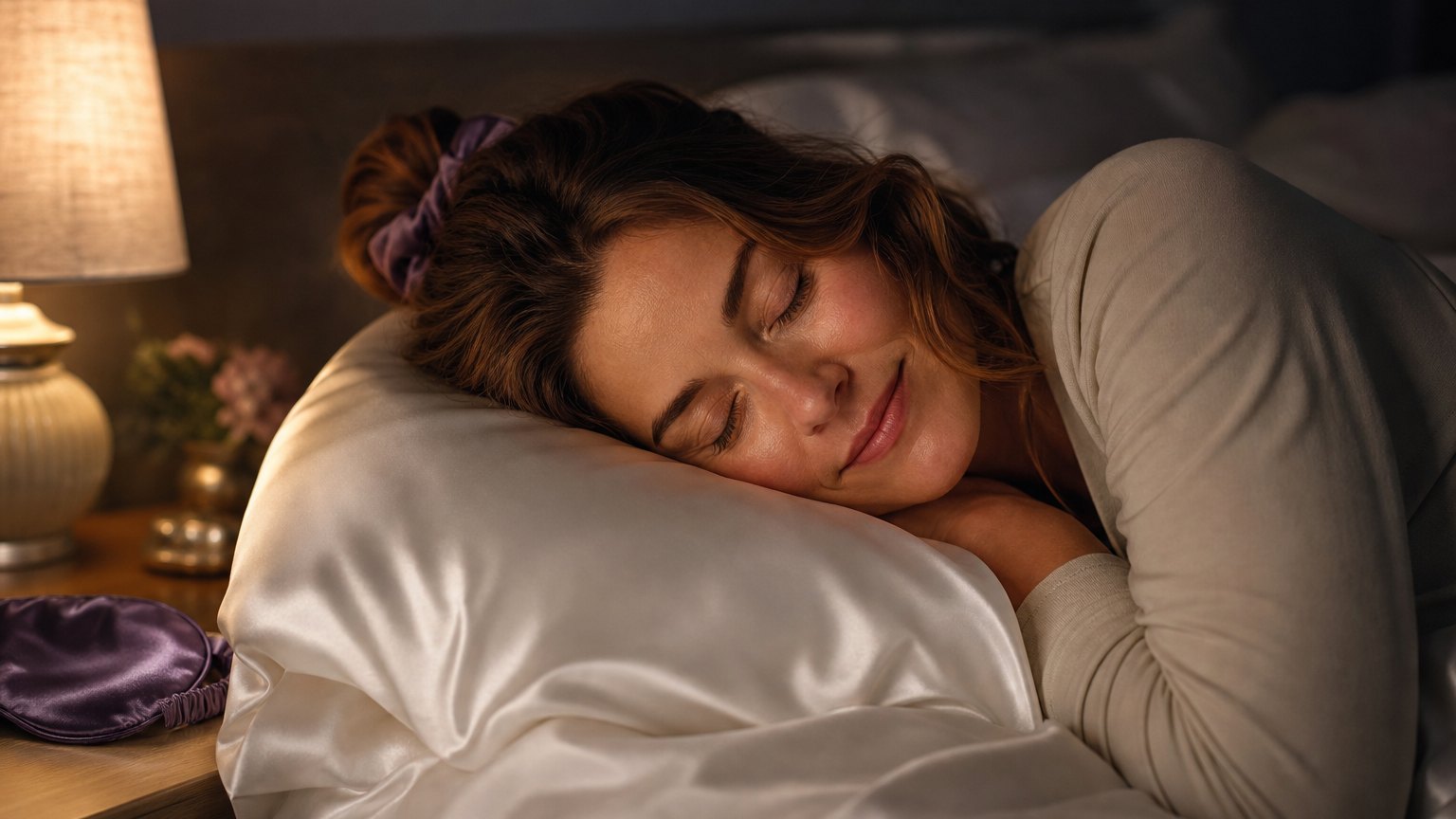
A silk self care ritual is a short nightly wind-down that pairs a calming routine with low-friction silk items, usually a mulberry silk pillowcase, sleep mask and scrunchie. It treats skin and hair gently overnight and gives your body a consistent cue to switch off. It's a comfort and sleep-hygiene habit, not a clinical treatment.
How do I start a silk bedtime ritual if I own nothing yet?
Start with the single highest-value item: a silk pillowcase, since it carries the most skin and hair contact across the night. Add a silk scrunchie and sleep mask later. Pair it with a consistent wind-down, cleansing and moisturising before bed, and keep the same timing each night for the routine to stick.
Does sleeping on silk actually improve my skin?
Silk reduces friction and pressure against skin, which can mean fewer temporary sleep creases and less irritation than cotton, per Sleep Foundation. It doesn't moisturise or treat skin, and direct clinical evidence for anti-ageing or acne benefits is limited. Treat it as a gentle comfort upgrade alongside real skincare.
How often should I wash the silk items in my ritual?
Wash a silk pillowcase roughly weekly, like other bedding, and facial-contact items such as a silk mask or scrunchie more often, since they collect oil and product faster. Always wash new silk before first use to remove manufacturing residues. Match frequency to how much skin contact each item gets.
Is a silk evening ritual better than a morning one?
They work together and neither is strictly better. The evening ritual sets up low-friction protection and a sleep cue; the morning side is about gently undoing hair wraps and cleansing without cancelling the overnight benefit. A full routine bookends sleep with both, but bedtime is where the friction protection begins.
Silk or satin for a bedtime self care routine?
Choose silk if you can. Satin is a weave and can be polyester, which feels smooth but traps more heat and is less breathable than genuine mulberry silk. Silk regulates temperature better and is gentler over time. A polyester satin case is a budget option, not an equal substitute for silk.
What momme weight is best for an everyday silk ritual?
Around 22 momme is the practical everyday choice, balancing softness, breathability and durability against frequent washing. Lower weights can thin or snag over time. 30 momme feels denser and more substantial and lasts longer, at a higher price and slightly less breathability, making it the premium upgrade for a ritual.
Can a silk sleep mask really reduce eye wrinkles?
A silk sleep mask reduces friction and pressure against the delicate skin around the eyes and blocks light, which supports sleep quality. The anti-wrinkle claim is mechanical and comfort-based rather than clinically proven, so expect a gentler wake-up rather than a treatment effect. Its light-blocking benefit for sleep is the stronger, better-supported reason to use it.
Do I still need to remove makeup if I sleep on silk?
Yes, always. Silk reduces friction but doesn't remove the day's sweat, sunscreen and grime, and sleeping in makeup can clog pores and irritate skin regardless of your pillowcase, per Cleveland Clinic. Cleansing stays a non-negotiable step in any silk self care ritual.
How long before I notice a difference from a silk bedtime ritual?
Many people notice smoother hair and fewer pillow creases within the first few mornings, since these are immediate friction effects. Longer-term skin or hair benefits are harder to measure and vary by person, because the evidence there is limited. Judge it mostly on comfort, morning feel and how well the ritual helps you wind down.
Is a luxury bedtime routine with silk worth the cost?
It can be, if you use it nightly. A quality mulberry silk pillowcase delivers a real low-friction benefit and lasts years with proper care, making the per-night cost small. The value comes from consistency, not price, so a well-maintained set used every night beats an expensive one used occasionally.
Can I use a silk pillowcase with acne-prone skin?
Yes, and a clean silk pillowcase may cause less mechanical irritation than cotton because it's smoother and can transfer less heat. However, silk doesn't treat acne, and an unwashed pillowcase of any fibre holds oil and bacteria. Wash it regularly and keep your usual acne skincare routine unchanged.
Further Reading
Sources and References
- Sleep Foundation. Silk vs Satin Sheets and Bedding. sleepfoundation.org.
- NHS, Every Mind Matters. How to Fall Asleep Faster and Sleep Better. nhs.uk.
- American Academy of Dermatology. How to Prevent Sleep Lines and Care for Skin Overnight. aad.org.
- Cleveland Clinic. What Happens When You Sleep in Your Makeup. health.clevelandclinic.org.
- OEKO-TEX. STANDARD 100 Certification. oeko-tex.com.
- Good Housekeeping. How to Wash Silk. goodhousekeeping.com.