
Is It Better to Sleep Without a Pillow?
Lunelle Team
13 min read
It depends almost entirely on how you sleep. For stomach sleepers, removing the pillow can reduce strain on the neck and lower back. For back and side sleepers, no pillow typically makes things worse.

This article works through the position-by-position evidence, the scenarios where going without a pillow is genuinely supported, and the scenarios where it is likely to cause problems. It also covers what your pillow is supposed to be doing, since the question "pillow or no pillow" is really a proxy for a more useful question: is your current sleep setup giving your spine, hair, and skin what they need overnight?
Quick Answer
For most adults, sleeping without a pillow is not better. A pillow's primary function is to keep your spine in a neutral position overnight. Stomach sleepers may benefit from a very low pillow or no pillow at all. Back sleepers need a medium-support pillow under their head. Side sleepers need a firm, higher-loft pillow to fill the gap between shoulder and head. Removing the pillow without addressing the underlying sleep position often increases neck and shoulder discomfort.
Key Takeaways
- Whether a pillow helps or hurts depends almost entirely on sleep position. There is no universal "no pillow is better" finding in the research.
- Stomach sleepers are the one group for whom a very flat or no pillow can reduce cervical strain. This position itself creates spine strain regardless of pillow.
- Back and side sleepers typically experience more neck, shoulder, and upper back discomfort without a pillow, not less.
- The Sleep Foundation and physiotherapy guidance consistently recommend pillow use for most adults, with loft and firmness matched to sleep position.
- For infants and children under two, no pillow is the safe sleep guideline. This is not the same recommendation as for adults.
- The pillowcase material matters as much as the pillow itself for skin and hair: a smooth, low-friction surface reduces crease marks and frizz regardless of pillow height.
In this article
- What a pillow actually does
- Stomach sleepers: the one exception
- Back sleepers and pillow height
- Side sleepers: why no pillow hurts
- When no pillow does make sense
- Your pillow setup and your skin
- What to look for in a pillow
- Why your pillowcase matters more than you think
- Frequently asked questions

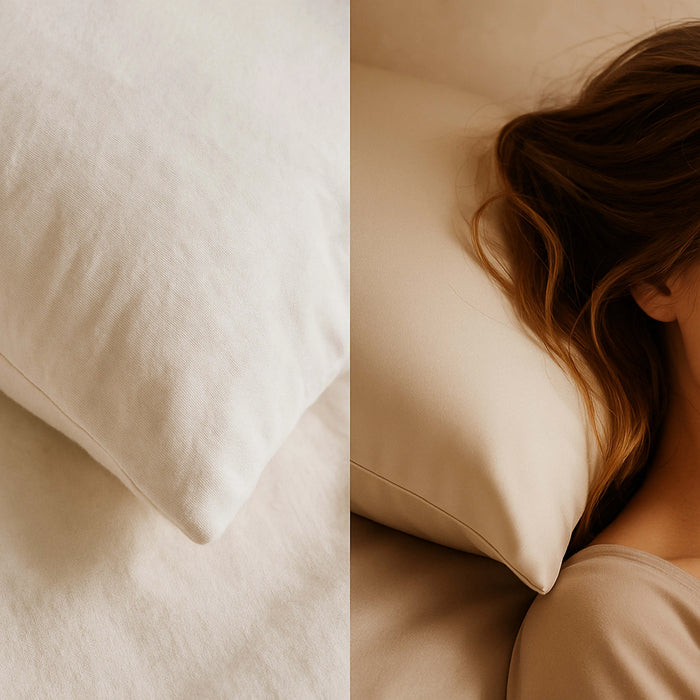
The question was about the pillow. The answer is about what covers it.
Shop Now →What Does a Pillow Actually Do?
The job of a pillow is spinal alignment. When you lie down, the natural curve of your cervical spine (the seven vertebrae in your neck) needs to be maintained in roughly the same neutral position it holds when you are standing upright. Without support, that curve can be forced into flexion or extension depending on your position, which places strain on the vertebrae, discs, and surrounding muscles over the course of a night.
The Sleep Foundation's sleep position guidance consistently frames pillow loft (height) and firmness as tools for maintaining cervical and thoracic alignment during sleep, rather than comfort accessories. This distinction matters when evaluating claims about whether a pillow is "better" or "worse."
Expert Insight: Sleep Foundation sleep health experts note that the right pillow loft depends on body size, shoulder width, and sleep position. Side sleepers typically need a loft of 4 to 6 inches to fill the gap between the mattress and their head; back sleepers do best with a medium loft that maintains the cervical curve without pushing it forward; stomach sleepers do best with very thin or no pillow to prevent hyperextension of the neck.
Sleep Foundation
Stomach Sleepers: The One Exception
If you sleep on your stomach, a very flat pillow or no pillow at all is genuinely supported by sleep health guidance. When you lie face down, a standard pillow forces your head upwards and to one side, creating sustained hyperextension and rotation of the cervical spine. Over time, this contributes to neck stiffness, upper back tension, and, for some people, headaches upon waking.
Removing the pillow or using a very thin one reduces the angle of that rotation, which is a net improvement. However, sleep specialists note that stomach sleeping is the position most associated with spinal stress overall, because the lower back tends to arch outward without support. A pillow under the pelvis or lower abdomen is often recommended alongside the flat or absent head pillow to compensate.
Pillow recommendation: Very flat pillow or no pillow. A pillow under the lower abdomen is advisable to reduce lumbar arch. This position carries the most inherent spinal stress of the three main positions regardless of pillow setup.
Back Sleepers: Why Pillow Height Matters
For back sleepers, the question is not pillow or no pillow; it is pillow loft. A back sleeper with no pillow places their head on a flat surface with the chin angling upwards, which extends the cervical curve beyond its neutral position. This can compress the joints at the back of the cervical vertebrae and strain the front neck muscles that spend the night in an elongated position.
The correct approach for back sleepers is a medium-loft pillow, typically 3 to 5 inches, that supports the head without pushing the chin forward towards the chest. The goal is a neutral curve, not the exaggerated curves that come from either too-high or no pillow.
Pillow recommendation: Medium loft (3 to 5 inches), medium firmness. No pillow is typically worse for back sleepers, not better. The pillow fills the gap between the neck and the mattress and maintains cervical curve.
 Side Sleepers: The Case Against No Pillow
Side sleeping is the most common position among adults, and it has the clearest argument against sleeping without a pillow. When you lie on your side, the gap between your mattress surface and your head equals roughly the width of your shoulder. Without a pillow to fill that gap, the neck bends sideways at an angle that strains the muscles and joints on the upper side of the neck and compresses the structures on the lower side.
For side sleepers, the consequences of no pillow, or a pillow that is too flat, are often noticeable immediately: waking with neck stiffness, shoulder discomfort, or numbness in the arm on the side you slept on. These are mechanical strain symptoms from poor alignment during the night.
Pillow recommendation: Firm, high-loft pillow (4 to 6 inches for average shoulder width; broader-shouldered people may need higher). No pillow will almost certainly cause neck and shoulder discomfort over time. A body pillow or support between the knees can further reduce spinal rotation.
Expert Insight: Cleveland Clinic physiotherapist guidance on neck pain identifies improper sleep position and insufficient pillow support as one of the most common modifiable causes of waking neck stiffness in otherwise healthy adults. Their recommendation for side sleepers is a pillow that keeps the spine in a straight horizontal line from head to hip, with the head neither dropping towards the mattress nor propped too high.
Cleveland Clinic
When Does Sleeping Without a Pillow Make Sense?
Outside of stomach sleeping, there are a few situations where going without or with minimal pillow support has legitimate support:
After certain surgeries or injuries
Specific post-operative or injury recovery protocols may require lying flat. This should always be directed by a medical professional based on the individual situation, not by general wellness advice.
Infants under 12 months (safe sleep guidelines)
The NHS, American Academy of Pediatrics, and equivalent bodies in all major markets are unanimous: infants under 12 months should sleep on a firm, flat surface without pillows, duvets, or soft bedding. This is a safe sleep guideline to reduce SIDS risk and is emphatically not the same question as whether adult pillow use is helpful. NHS safe sleep guidance provides the full infant sleeping environment recommendations.
Certain meditation or relaxation practices
Some yoga nidra and Savasana traditions specifically use a flat surface or very minimal support to encourage a particular postural awareness. This is a separate context from sleep posture for a full night.
Your Pillow Setup and Your Skin: The Friction Question
Whether you use a pillow or not, the surface your face contacts overnight has consequences. Dermatologists have identified two mechanisms through which standard pillowcases affect skin: mechanical friction and moisture absorption.
On a standard cotton pillowcase, research published in PMC on skin-textile tribology confirms that the repeated compression and sliding of facial skin against a rough surface during movement throughout the night is a contributing factor in sleep crease formation over time. Cotton's hygroscopic properties also mean it draws moisture from the skin and any products applied to it overnight.
The relationship between sleep surface friction and skin ageing is supported by dermatology literature. A study in the British Journal of Dermatology identified sleep position and surface contact as one of several mechanical factors in the development of sleep lines that over time can become persistent wrinkles. Sleeping on a low-friction surface reduces this mechanical stress regardless of whether you choose to use a pillow.
For hair, the same friction principle applies. Cotton pillowcases create surface drag that causes frizz, tangles, and mechanical stress at the hair shaft, particularly relevant for curly, coily, or chemically treated hair. You can read more about this in the complete guide to silk pillowcase benefits for hair and skin.
Expert Insight: Dr. Joshua Zeichner, director of cosmetic and clinical research in dermatology at Mount Sinai Hospital, has noted in clinical commentary that patients who sleep on their sides pressed against rough fabric over many years tend to develop more pronounced sleep-line wrinkles on the side they favour. He and other dermatologists frequently recommend switching to silk or satin pillowcases as a passive prevention strategy.
Mount Sinai Hospital / American Academy of Dermatology
What to Look for in a Pillow if You Decide to Use One
The three variables that matter are loft (height), firmness, and fill material. Spine-health.com notes that all three are position-dependent rather than universal preferences. Your sleep position determines the first two; personal preference and any sensitivities determine the third.
| Sleep Position | Ideal Loft | Ideal Firmness | Notes |
|---|---|---|---|
| Stomach | Very thin or flat, 0 to 2 inches | Soft | Pillow under lower abdomen also recommended |
| Back | Medium, 3 to 5 inches | Medium | Aim for neutral cervical curve, not flat and not strained forward |
| Side | High, 4 to 6 inches | Firm | Wider shoulders need higher loft; narrower may suit lower end |
| Combination | Medium, 3 to 5 inches | Medium | Adjustable fill helps if you switch positions during sleep |
Fill material affects heat retention, weight, and how the pillow responds to movement. Memory foam holds its shape (useful for consistent loft); down and feather compresses more over the night; latex offers good resilience; buckwheat is adjustable but heavier. For people with dust mite allergies, ACAAI guidance recommends allergen-impermeable pillow covers changed regularly.
Why Your Pillowcase Matters as Much as Your Pillow
The pillow determines spinal support. The pillowcase determines what happens to your hair and skin. These are separate problems worth solving separately.
Silk is the benchmark for low-friction bedding because its surface is inherently smooth at a fibre level, not as a result of weaving pattern alone. A silk pillowcase reduces mechanical friction on both hair and facial skin, does not absorb moisture the way cotton does, and regulates temperature by not trapping heat as readily as synthetic alternatives.
Whether you use a pillow or not, if you sleep in a position where your face or hair contacts a surface overnight, the material of that surface is not a trivial variable. For more on comparing the options, the guide to whether satin is genuinely good for hair covers the differences between silk, satin, and cotton in practical terms.

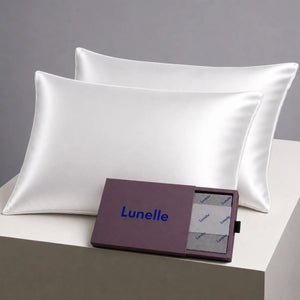
22 Momme Silk Pillowcase, Set of 2
Whether you use one pillow, two, or none at all, the surface your hair and skin contact overnight is not a neutral variable. Lunelle's 22 momme mulberry silk pillowcase creates a smooth, low-friction sleep surface that does not absorb the moisture from your skincare routine, does not create the drag that causes frizz and tangles, and does not contribute to the overnight compression marks that appear on skin in the morning. It is a passive overnight habit that requires no extra time.
- 100% Grade 6A mulberry silk, charmeuse weave
- 22 momme: smooth, durable, holds its surface through regular washing
- Suitable for all sleep positions and all pillow types
- OEKO-TEX certified
- 60-night guarantee
Frequently Asked Questions: Sleeping Without a Pillow
Is it better to sleep without a pillow?
For most adults, no. A pillow maintains cervical spine alignment during sleep. Removing it is generally beneficial only for stomach sleepers, for whom a standard pillow creates excessive neck extension. Back and side sleepers almost always do worse without a pillow.
Can sleeping without a pillow improve posture?
Not reliably. Daytime posture is primarily shaped by waking habits, workstation setup, and muscle conditioning. The main risk of removing your pillow overnight is spinal misalignment during sleep, which can increase neck and shoulder tension rather than reduce it.
Does sleeping without a pillow help with neck pain?
It can, for stomach sleepers, because the pillow was likely contributing to the problem by forcing neck rotation. For all other sleep positions, removing the pillow typically makes neck pain worse. If you sleep on your back or side and experience neck pain, a different pillow is more likely to help than no pillow.
Is sleeping without a pillow good for your spine?
Stomach sleepers: potentially yes, since a pillow increases cervical stress in this position. Back and side sleepers: no. These positions require a pillow to maintain a neutral spinal curve. Without one, the neck bends out of neutral position for the duration of sleep.
Can sleeping without a pillow reduce wrinkles?
This claim lacks strong evidence. Reducing sleep-line formation is better achieved by switching to a low-friction pillowcase material such as silk and by sleeping on your back rather than on your side or stomach. Simply removing the pillow does not address the friction and compression mechanisms involved in sleep crease formation.
Should babies sleep without a pillow?
Yes. NHS, AAP, and equivalent safe sleep guidelines recommend that infants under 12 months sleep on a firm, flat surface with no pillow, soft bedding, or loose items. This is a distinct recommendation from adult pillow guidance and relates to SIDS risk reduction, not spinal alignment.
What pillow height is best for side sleepers?
Side sleepers typically need a firm pillow with a loft of 4 to 6 inches, enough to fill the gap between the head and shoulder and keep the cervical spine in a straight horizontal line. Broader shoulders need higher loft; narrower frames may be comfortable at the lower end of that range.
Is a silk pillowcase better than cotton for sleep quality?
Silk does not directly improve sleep onset or duration, but it reduces overnight friction on hair and skin, does not absorb moisture from skincare products, and regulates temperature better than cotton, which many people find contributes to more comfortable sleep. The evidence for reduced hair breakage and sleep crease formation is well supported.
Does sleeping without a pillow help with hair growth?
There is no credible mechanism by which pillow removal would promote hair growth. Hair breakage from overnight friction is a real issue for many people, but the solution is a low-friction sleep surface (such as a silk pillowcase) or a protective sleep style, not removing the pillow.
What is the best sleep position for skin health?
Back sleeping. When sleeping on your back, the face does not contact the pillow, which eliminates compression and friction on facial skin overnight. Dermatologists frequently recommend back sleeping as the position least likely to contribute to sleep lines and crease formation.
Can you train yourself to sleep in a new position?
Yes, but it typically takes several weeks of consistent effort. Placing a pillow or rolled towel behind your back if you want to stay off your stomach, or using a body pillow to maintain lateral positioning, are common aids. Most people revert to their habitual position during deep sleep initially.
What is the healthiest way to sleep?
Sleep Foundation and most clinical guidance identifies back sleeping with the right pillow support as the position with the least mechanical stress on the spine, face, and joints. Side sleeping is common and acceptable with proper pillow support, particularly for people who snore or have sleep apnoea. Stomach sleeping creates the most mechanical strain regardless of pillow choice.
Upgrade What Your Hair and Skin Rest On Tonight
Whether you use a pillow, two pillows, or none at all, a silk pillowcase is a passive upgrade to the hours your skin and hair spend in contact with a surface.
Shop the Silk Pillowcase →60-night guarantee. Free returns if you do not notice the difference.
Further Reading
Sources and References
- Sleep Foundation. Sleeping Positions and Their Effects. sleepfoundation.org
- Sleep Foundation. How to Choose the Best Pillow. sleepfoundation.org
- NHS. Safer Sleeping Advice for Infants. nhs.uk
- PMC. A Brief Review on the Tribological Interaction Between Skin and Textiles. pmc.ncbi.nlm.nih.gov
- British Journal of Dermatology. Facial Ageing and Sleep Compression Lines. ncbi.nlm.nih.gov
- ACAAI. Dust Allergy Management. acaai.org
- Spine-health. Pillow Support and Sleeping Position. spine-health.com
- American Academy of Sleep Medicine. Healthy Sleep Habits. sleepeducation.org
- Lunelle. Silk Pillowcase Benefits for Hair and Skin. lunellesilk.com