
Sleeping With Makeup On: What It Actually Does to Your Skin
You meant to take your makeup off. Then the sofa got comfortable, one more episode became three, and suddenly it is morning with your foundation now firmly part of the pillowcase. Sleeping with makeup on is one of the most common beauty slip-ups there is, and the honest version is this: doing it once in a while will not ruin your skin, but making a habit of it genuinely can.
Overnight, makeup traps oil, bacteria and pollution against skin that is trying to repair itself, which can lead to clogged pores, dullness and irritation. This guide explains exactly what happens hour by hour, how serious the damage becomes over time, and what to do the next time you are simply too tired to reach for the cleanser.
Quick Answer
Sleeping with makeup on occasionally is unlikely to cause lasting harm, but doing it regularly can clog pores, worsen acne, irritate eyes and accelerate visible ageing. Makeup traps sweat, oil, bacteria and pollutants against skin overnight, interrupting its natural repair cycle. Cleanse before bed whenever possible, and keep a micellar backup by the bed.
Key Takeaways
- One missed cleanse is a minor setback, not a disaster; chronic sleeping in makeup is where real damage begins.
- Makeup left on overnight traps oil, bacteria and environmental grime, which can clog pores and trigger breakouts.
- Eye makeup carries its own risks, including irritation, styes and lash loss, so removing mascara and liner matters most.
- Skin does most of its barrier repair and cell turnover overnight, and a layer of makeup gets in the way.
- Transferred makeup turns your pillowcase into a bacteria reservoir, so a clean, washable sleep surface matters more than most people think.
In This Article
- What happens when you sleep with makeup on?
- Can makeup damage skin overnight?
- What foundation and face makeup do while you sleep
- Why sleeping in eye makeup is its own problem
- Your makeup, your pillowcase and your breakouts
- Does sleeping in makeup cause acne?
- Sleeping in makeup damage over time
- Occasional slip vs nightly habit
- What to do if you fell asleep in makeup
- A cleaner sleep surface for skin that works overnight
- Frequently Asked Questions
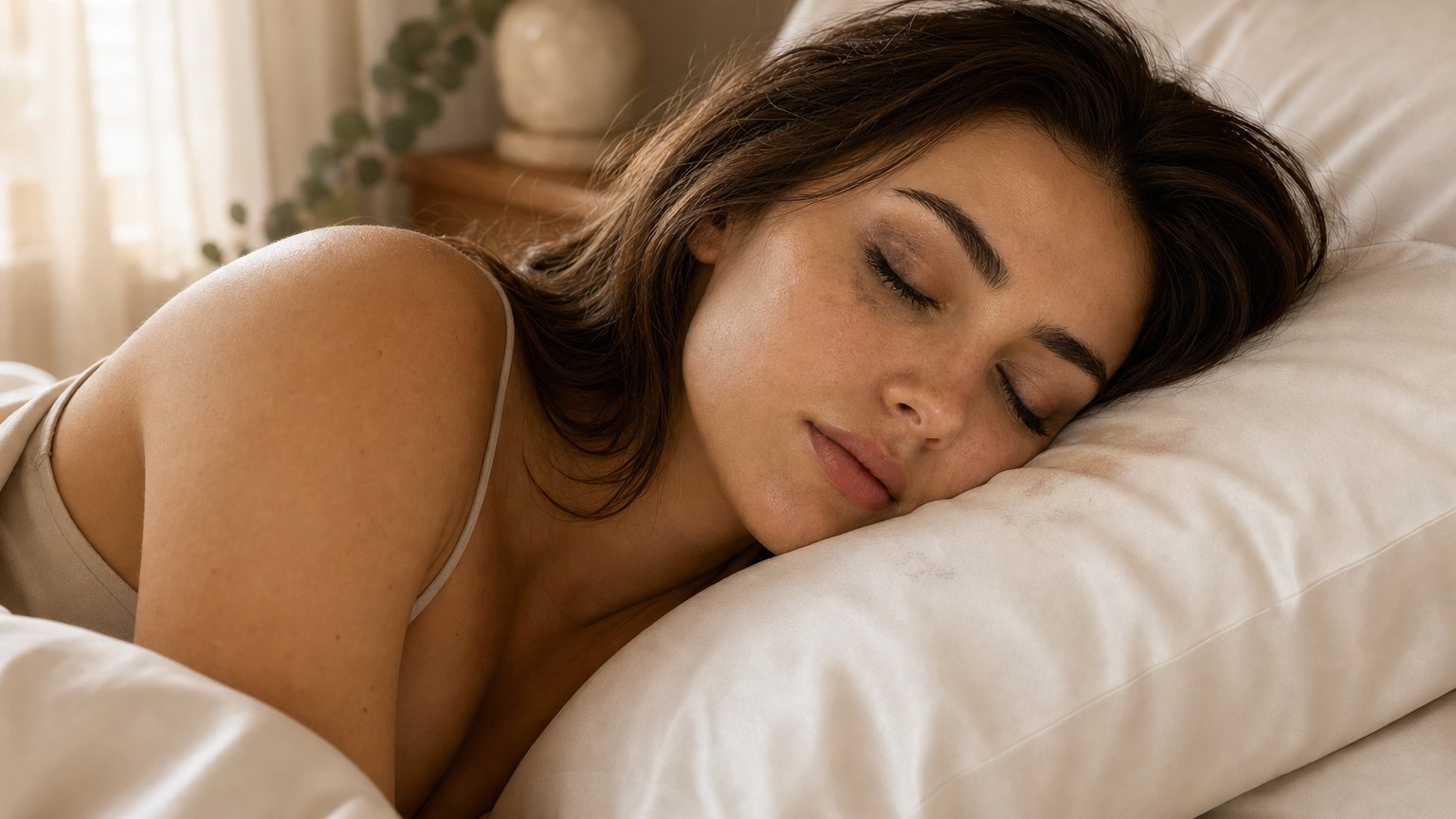
What happens when you sleep with makeup on?
When you sleep with makeup on your skin, a film of foundation, powder and oil sits over your pores while your skin is trying to shed dead cells, rebalance oil and rebuild its barrier. That film mixes with the sweat and sebum you produce overnight and the pollution particles that settled on your face during the day.
The result is a warm, occlusive layer that bacteria love and that stops skin functioning as it should. A single night rarely shows much beyond slight dullness or a stray spot. Repeat it night after night and the small insults start compounding into visible, stubborn problems.
Expert Insight: The American Academy of Dermatology stresses that washing your face before bed removes the dirt, oil and makeup that build up during the day, and that skipping it lets that debris sit against skin overnight.
Your skin does its best work while you are unconscious, and a full face of makeup is an uninvited guest at that party.
Can makeup damage skin overnight?
Yes, makeup can damage skin overnight, though the extent depends heavily on how often it happens. Overnight is when skin ramps up cell turnover and barrier repair, so anything blocking that process has an outsized effect compared with the same layer worn during a busy day.
The main overnight problems are occlusion and oxidative stress. Makeup traps sebum and sweat, which encourages clogged pores. It also holds onto the free radicals from pollution and daytime UV exposure, and those free radicals keep attacking skin cells and collagen while you rest.
Expert Insight: Cleveland Clinic notes that leaving makeup on overnight traps dirt and bacteria in pores and can contribute to breakouts, clogged pores and dull, irritated skin over time.
There is an honest caveat worth stating. Much of the evidence here is about dermatological principles and mechanisms rather than large clinical trials specifically on sleeping in makeup, because that study would be hard to run ethically. The direction of the effect is well accepted, even where a precise figure is not.

What foundation and face makeup do while you sleep
Foundation, concealer and powder are designed to sit on the surface and stay put, which is exactly the problem overnight. Face makeup left on during sleep acts like a lid over your pores, mixing with the oil your skin naturally produces at night and creating ideal conditions for congestion.
Heavier, longwear and matte formulas tend to be the most occlusive, while silicone-heavy primers add another sealing layer. Even so-called non-comedogenic products are formulated to be worn and then removed, not slept in for eight hours on top of a day's wear.
Expert Insight: The American Academy of Dermatology advises choosing products labelled non-comedogenic to reduce pore-clogging, but the same guidance assumes makeup is removed rather than left on continuously.
There is also a dehydration angle. Some long-wear formulas and setting powders draw moisture from the skin's surface, so a night in full face makeup can leave skin looking flat and feeling tight by morning, especially if you skipped moisturiser too.
Why sleeping in eye makeup is its own problem
Sleeping in eye makeup is arguably worse than sleeping in foundation because the eye area is delicate and prone to infection. Mascara, eyeliner and shadow left on overnight can flake into the eyes, block the tiny oil glands along the lash line and irritate the surface of the eye.
Over time this contributes to blepharitis, styes and general redness. Rubbing your eyes against a pillow while mascara is still on also tugs at lashes, which can lead to lash breakage and fallout.
Expert Insight: The American Academy of Ophthalmology warns that failing to remove eye makeup can clog the glands and follicles around the lashes, leading to irritation, infection and styes, and recommends removing eye makeup before sleep.
If you wear lash extensions, gentle overnight care matters even more, and our guide to whether a silk pillowcase can reduce lash fallout overnight covers how friction plays into lash loss.
Your makeup, your pillowcase and your breakouts
The problem: when you sleep with face makeup on, most of it does not stay on your face. It transfers onto your pillowcase, along with the oil, sweat and bacteria from your skin, and that residue builds up load after load. The next night you press a clean-looking but bacteria-laden surface right back against your skin.
The solution: a pillowcase that is easy to wash, less absorbent of the oils that feed bacteria, and gentle enough that it does not drag makeup deeper into your pores while you toss and turn. This is where the fabric under your face genuinely earns its keep.
Cotton is highly absorbent and holds onto residue and moisture, which is why a cotton pillowcase can start to feel and smell grubby quickly. A tightly woven mulberry silk pillowcase is less absorbent and creates less friction, so it stays cleaner between washes and is kinder to skin that already has makeup on it.

Does sleeping in makeup cause acne?
Sleeping in makeup does not directly cause acne as a disease, but it reliably makes breakouts more likely and more stubborn. The mechanism is straightforward: trapped oil, dead skin cells and bacteria clog follicles, and clogged follicles are where whiteheads, blackheads and inflamed spots begin.
People sometimes describe a specific kind of breakout after sleeping in makeup, occasionally called acne cosmetica, which is congestion triggered or worsened by leave-on cosmetic residue. If you are acne-prone already, a night in full face makeup can undo a fortnight of careful routine.
Expert Insight: The British Association of Dermatologists notes that clogged pores are central to acne formation, and reducing anything that blocks follicles, including thick or leftover cosmetics, supports clearer skin.
If you want to understand the difference between the various marks that show up, our explainer on whether a zit and a pimple are actually different breaks down what each one is and how to treat it.

Sleeping in makeup damage over time: what really adds up
The most significant sleeping in makeup damage is cumulative, not overnight. Repeatedly trapping pollution and free radicals against skin while blocking its overnight repair contributes to oxidative stress, and oxidative stress is closely linked to collagen breakdown, dullness and premature fine lines.
Skin's barrier also suffers. A compromised barrier means more moisture loss, more sensitivity and a rougher texture, which makes makeup sit worse the next day and starts a frustrating loop. None of this happens after one missed cleanse, but over months and years the pattern shows on the surface.
Expert Insight: The Sleep Foundation explains that good sleep hygiene supports the body's overnight restorative processes, and a clean, comfortable sleep environment is part of that; skin repair is one of the systems that benefits from undisturbed rest.
Source: Sleep Foundation, Sleep Hygiene
Nobody ages a decade from one lazy night, but the skin keeps a very patient tally.
Occasional slip vs nightly habit: how worried should you be?
An occasional lapse and a nightly habit are genuinely different in their consequences, and it helps to see them side by side. The table below sets realistic expectations rather than scare tactics, so you can judge your own risk honestly.
| Factor | Occasional (once in a while) | Habitual (most nights) |
|---|---|---|
| Pore congestion | Minimal, usually clears quickly | Persistent clogging and blackheads |
| Breakouts | Maybe a stray spot | Recurring, harder-to-treat acne |
| Eye health | Mild irritation at most | Blepharitis, styes, lash loss |
| Skin ageing | No meaningful effect | Cumulative dullness and fine lines |
| Barrier and hydration | Temporary tightness | Ongoing sensitivity and dryness |
| Verdict | Not a disaster, just cleanse tomorrow | Worth breaking the habit properly |
The takeaway is reassuring if you slipped up last night and worrying if it is your routine. Aim to make cleansing the default and treat missed nights as the rare exception, not the norm.
What to do if you fell asleep in makeup
If you woke up in yesterday's makeup, do not panic and do not over-scrub. Aggressive cleansing on already-irritated skin makes things worse. Follow a gentle recovery routine that removes the residue without stripping your barrier.
- Cleanse gently once. Use a cream or micellar cleanser to lift makeup, then a mild second cleanse if needed. Avoid harsh foaming washes this morning.
- Skip strong actives today. Hold off on retinoids, strong acids and scrubs while your skin recovers, to avoid stacking irritation.
- Rehydrate. Apply a simple hydrating serum and a barrier-supporting moisturiser to calm any tightness.
- Protect. Use sunscreen if you are going out, because a stressed barrier is more vulnerable to UV.
- Change your pillowcase. The transferred makeup and bacteria are now on the fabric, so swap it for a clean one.
Expert Insight: Byrdie, drawing on board-certified dermatologists, recommends keeping micellar water or cleansing balm on the bedside table so tired evenings still end in a quick makeup removal rather than none at all.
Source: Byrdie
Decision Checklist: Are you protecting your skin overnight?
- Do you cleanse thoroughly most nights, even tired ones?
- Do you always remove eye makeup, including mascara and liner?
- Do you keep a micellar backup within arm's reach of the bed?
- Do you wash your pillowcase at least twice a week?
- Is your sleep surface low-friction and easy to keep clean?
- Do you use non-comedogenic makeup if you are acne-prone?
- Do you follow a gentle recovery routine after a missed night?
For a fuller picture of how your sleep setup affects your skin and hair, our guide for hot sleepers and skin-conscious sleepers connects temperature, friction and fabric to nightly skin health.
A cleaner sleep surface for skin that works overnight
The problem: even when you cleanse well, your face still rests against the same fabric for hours, and that fabric accumulates oil, product and bacteria. For heavier sleepers, side sleepers and anyone who occasionally nods off in makeup, a more absorbent surface makes the situation worse.
The solution: a denser, higher-momme silk pillowcase that stays smooth, resists soaking up oils and feels genuinely luxurious to wash regularly. If you want to understand why the weight matters, our explainer on what momme weight in silk actually means is a useful primer.

Expert Insight: OEKO-TEX STANDARD 100 certification means a textile has been tested for harmful substances, which matters for anything pressed against your face for eight hours a night, especially skin that is already prone to irritation.
Source: OEKO-TEX STANDARD 100
A silk pillowcase is not a substitute for removing your makeup. It is a supporting act that keeps your sleep surface cleaner and gentler, so on the nights you do everything right, your skin gets the calm environment it needs.
Give your skin a cleaner place to sleep
A low-friction, easy-to-wash mulberry silk pillowcase keeps oil, residue and bacteria off your face while your skin repairs overnight. Try it risk-free with our 60-night guarantee.
Shop the Collection →Free delivery · 60-night guarantee · Set of 2
Frequently Asked Questions: Sleeping With Makeup On

Is it bad to sleep with makeup on once?
Sleeping with makeup on once is not a disaster. You might notice slight dullness or a stray spot, but a single night rarely causes lasting harm. Cleanse gently the next morning, skip strong actives for the day, and rehydrate your skin to help it recover quickly.
What happens if you sleep in makeup every night?
Sleeping in makeup every night compounds small problems into visible ones. Expect recurring clogged pores, more stubborn breakouts, eye irritation and, over months, cumulative dullness and early fine lines from trapped free radicals interfering with overnight skin repair. Breaking the habit is genuinely worthwhile for acne-prone skin.
Can sleeping in makeup cause acne?
Sleeping in makeup does not cause acne as a disease, but it reliably worsens it. Trapped oil, dead cells and bacteria clog follicles, which is where spots begin. The British Association of Dermatologists highlights clogged pores as central to acne, so removing leftover cosmetics supports clearer skin.
Can makeup damage skin overnight?
Yes, makeup can damage skin overnight, mainly through occlusion and oxidative stress. It traps sweat, oil and pollution against skin while cell turnover and barrier repair peak, per Cleveland Clinic. Occasional nights do little, but repeated ones contribute to congestion, sensitivity and dullness over time.
Is it worse to sleep in eye makeup than foundation?
Sleeping in eye makeup carries distinct risks because the eye area is delicate. The American Academy of Ophthalmology warns that leftover mascara and liner can clog lash-line glands and cause irritation, styes and lash loss. Always remove eye makeup first, even when you are too tired to do a full cleanse.
Can makeup still damage skin overnight if it is non-comedogenic?
Non-comedogenic makeup is less likely to clog pores, but it is still formulated to be worn and then removed, not slept in for eight hours on top of a day's wear. Leaving it on overnight still traps sweat, oil and bacteria, so removal remains the goal.
What should I do if I fall asleep with makeup on?
Cleanse gently once with a cream or micellar cleanser rather than scrubbing. Skip retinoids and acids that day, apply a hydrating serum and barrier moisturiser, use sunscreen if going out, and change your pillowcase. Byrdie recommends keeping micellar water bedside so tired nights still end in quick removal.
Are makeup wipes enough to remove makeup before bed?
Makeup wipes are a decent emergency option but a poor everyday habit. They smear residue rather than fully removing it and can drag on delicate skin. Use them as a last resort on exhausted nights, and follow with a proper cleanse whenever you can the next day.
How long does skin take to recover after sleeping in makeup?
Most skin recovers from a single night within a day or two once you cleanse and rehydrate. Congestion or a spot may linger a little longer. Chronic sleeping in makeup takes far longer to reverse, because barrier damage and recurring breakouts build up gradually.
Does sleeping in makeup ruin your pillowcase?
Sleeping in makeup transfers foundation, oil and bacteria onto your pillowcase, which builds up and can stain. Cotton absorbs and holds this residue readily. A machine-washable mulberry silk pillowcase is less absorbent and easier to keep clean, so it stays fresher between washes.
Can I sleep in tinted moisturiser or BB cream?
Tinted moisturiser and BB cream are lighter than full foundation, but they still sit on the skin and mix with overnight oil and sweat. Sleeping in them is better than heavy makeup, but not better than a clean face. Remove them whenever possible for clearer skin.
Does a silk pillowcase help if I sometimes sleep in makeup?
A silk pillowcase helps by keeping your sleep surface cleaner and reducing friction, but it does not replace makeup removal. Its lower absorbency and machine-washable nature mean less residue and bacteria build up against your face, supporting skin on the nights you cleanse properly.
Sources and References
- American Academy of Dermatology. Face Washing 101. aad.org.
- American Academy of Dermatology. Acne: Skin Care Tips. aad.org.
- Cleveland Clinic Health Essentials. Is It Bad To Sleep With Makeup On? health.clevelandclinic.org.
- American Academy of Ophthalmology. Makeup and Eye Safety. aao.org.
- British Association of Dermatologists. Acne patient information. bad.org.uk.
- Sleep Foundation. Sleep Hygiene. sleepfoundation.org.
- Byrdie. What Happens When You Sleep in Makeup. byrdie.com.
- OEKO-TEX. STANDARD 100. oeko-tex.com.