
OEKO-TEX Certified Silk: What It Means and Why It Matters
Lunelle Team
16 min read
Few things are more quietly unsatisfying than spending serious money on silk, specifically on the premise of a safer, gentler nightly experience for your skin and hair, and then realising the product page contained exactly zero verifiable information about what is actually in the fabric. The description called it "non-toxic." It also called it "cloud-soft" and "beauty-sleep approved," phrases that cost nothing to write and prove nothing at all.
Textile safety is not typically the exciting part of a bedding purchase. But a pillowcase is in contact with your skin for seven or eight hours every night, sometimes alongside freshly applied serums, sometimes with your most fragile or chemically-treated hair, and occasionally (if the evening warranted it) with the elegant sleeper abandon of someone who forgot they were supposed to care about any of this. OEKO-TEX notes that toxics in textiles can affect health through skin contact, breathing, and ingestion, which is a useful reminder that "pretty fabric" and "verified safe fabric" are not automatically the same thing.
That said, it also helps to keep expectations grounded. The strongest and most consistent case for silk pillowcases is reduced friction, cooler comfort, and less overnight tugging on hair and skin. The case for dramatic anti-aging miracles is considerably shakier, and reputable sources including Sleep Foundation and Good Housekeeping are careful to say so. What OEKO-TEX certification adds is not more dramatic beauty claims. It adds the verifiable assurance that the fabric resting against your face every night has been independently tested for harmful substances, not merely marketed as if it had been.
Quick Answer
OEKO-TEX certified silk typically refers to silk carrying the OEKO-TEX STANDARD 100 label, which means the finished textile and all its components have been tested against over 1,000 potentially harmful substances. For silk pillowcases, which fall under direct skin-contact products (Product Class 2), this certification is a meaningful assurance that the fabric has been independently tested, not just described as safe. It does not mean the silk is organic, nor does it guarantee full supply-chain transparency. It means what the label says: the finished product has been tested for harmful substances and passed.
Key Takeaways
- OEKO-TEX STANDARD 100 tests the finished textile and all its components (threads, closures, accessories) against over 1,000 harmful substances. Certificates are issued for one year and are verifiable online.
- Silk pillowcases fall under OEKO-TEX Product Class 2 (direct skin contact), which has stricter testing criteria than products worn over clothing.
- OEKO-TEX STANDARD 100 is not the same as organic certification. It tests for harmful substances in the finished product, not the full supply chain or farming practices.
- You can and should verify an OEKO-TEX certificate using the official Label Check tool at oeko-tex.com. A valid certificate number is far more useful than marketing copy.
- TRI Princeton, an independent scientific institute focused on hair and textiles, reports lower friction between silk and hair than between cotton and hair, supporting the core friction-reduction case for silk pillowcases.
- Sleep Foundation explicitly notes that silk is not a miracle cure for wrinkles and that rigorous clinical evidence for dramatic skin claims is limited. The verified benefits are friction reduction, thermal comfort, and a gentler surface for hair.
In this article
- Why textile certification matters for pillowcases
- What OEKO-TEX STANDARD 100 actually means
- MADE IN GREEN: when you need more than safety testing
- How to verify an OEKO-TEX certificate
- How OEKO-TEX compares to other certifications
- What certified silk does for hair
- What certified silk does for skin
- How to read a silk product page before buying
- Frequently asked questions

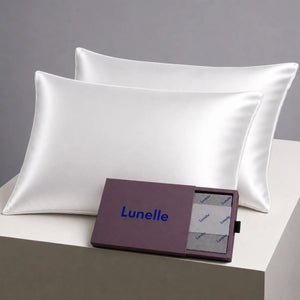
Certified to contain what the label claims it contains. In a category where that sentence does more work than it should.
Shop Now →Why textile certification matters for pillowcases
When shoppers search for oeko-tex certified silk, they are usually trying to solve two overlapping problems at once. The first is the performance question: does silk genuinely deliver the benefits attributed to it? The second is the safety question: is the specific fabric touching my face every night verified to be free from harmful residues?
Both questions are reasonable. Peer-reviewed hair science has established a clear connection between friction and hair damage. A published overview of hair cosmetics in PMC (NIH) confirms that cuticle abrasion and protein loss are friction-related mechanisms, and TRI Princeton, an independent scientific institute focused on hair, skin, and textiles, reports lower friction between silk and hair than between cotton and hair. The friction reduction case is not based on brand claims; it is based on independently measured material properties.
The safety question is harder to answer from a product page alone. Textile processing involves a range of chemical inputs: dye fixatives, softeners, finishing agents, and in some cases, formaldehyde-based wrinkle-resistance treatments. Not all of these are disclosed voluntarily, and phrases like "safe silk" or "non-toxic bedding" are marketing descriptions, not test results. A verifiable OEKO-TEX certification number is the difference between a description and an independently-confirmed fact.
"OEKO-TEX says toxics in textiles can affect health through breathing, skin contact, and saliva, which is a helpful reminder that 'premium fabric' and 'skin-friendly fabric' are not synonymous."
OEKO-TEX, What OEKO-TEX Labels Mean and Why They Matter
This matters more for bedding than for many other textile categories. Your pillowcase is not worn briefly over other clothing; it is in direct, prolonged contact with your face, neck, and hair throughout the night, sometimes overlapping with a freshly-applied retinoid or a rich occlusive moisturiser that increases absorption. The case for a verified safe fabric is not anxious overcaution. It is proportionate to the contact level.
What OEKO-TEX STANDARD 100 actually means
For bedding, OEKO-TEX STANDARD 100 is the certification label most people are referring to when they ask about oeko-tex certified silk. According to OEKO-TEX, this label applies to textiles tested for harmful substances from yarn to finished product. Every certified item, including threads, buttons, zippers, and accessories, is tested against a list of over 1,000 potentially harmful substances, and the criteria are reviewed at least once a year.
For silk pillowcases specifically, the relevant product class is Class 2: direct skin contact. OEKO-TEX explicitly states that the more intensive the skin contact, the stricter the testing requirements. Bed linens fall into this class, meaning a certified silk pillowcase has been tested under a more rigorous standard than, say, a curtain fabric or an upholstery textile.
It is equally important to understand what STANDARD 100 does not cover. It does not certify that the silk is organic. It does not confirm that the manufacturing process was environmentally sound, or that the supply chain from silkworm to finished product involved no harmful practices. It is a finished-product test for harmful substances. Thorough. Independently conducted. Annually renewed. But limited in scope to what it tests.
A less widely known but practically useful detail: OEKO-TEX issues each certificate for a period of one year. This creates an incentive for brands to maintain standards rather than certify once and coast. A certificate that was valid in 2021 and has not been renewed is not a current assurance. This is one reason verifying the certificate number matters, not just accepting the label image at face value.
OEKO-TEX MADE IN GREEN: when you need more than safety testing
For shoppers who want assurance that extends beyond harmful-substance testing in the finished product, OEKO-TEX's MADE IN GREEN label goes further. It adds traceability: products carrying this label can be tracked back through their production facilities, and those facilities must meet OEKO-TEX's environmental and social requirements.
The practical distinction is this: STANDARD 100 answers the question "does this finished product contain harmful substances?" MADE IN GREEN answers that question and adds "and was it made in facilities that meet environmental and social standards?" The two labels address different concerns, and for many buyers, STANDARD 100 is the more immediately relevant one for a pillowcase purchase. Both are legitimate. Neither is required to call the other inferior.
| Certification | Tests finished product? | Supply chain traceability? | Environmental standards? | Annually renewed? |
|---|---|---|---|---|
| OEKO-TEX STANDARD 100 | Yes (1,000+ substances) | No | No | Yes |
| OEKO-TEX MADE IN GREEN | Yes | Yes | Yes (facility-level) | Yes |
| GOTS (Global Organic Textile Standard) | Yes | Yes | Yes (organic fibres required) | Yes (annual) |
| No certification / "non-toxic" claim | No independent testing | No | No | Not applicable |
How to verify an OEKO-TEX certificate
The most practical step a buyer can take is to verify a claimed OEKO-TEX certification before purchasing, rather than accepting a label image on a product page as sufficient proof. OEKO-TEX provides a free public tool for this: the Label Check, available at oeko-tex.com.
How to verify a certificate
- Find the certificate number on the product page, the packaging, or the certification tag on the item itself.
- Go to the OEKO-TEX Label Check at oeko-tex.com.
- Enter the certificate number exactly as shown (including dashes and letter prefixes).
- Alternatively, scan the QR code on the OEKO-TEX label if one is provided.
- Confirm the certificate is current (not expired), issued to the correct manufacturer, and covers the relevant product category.
- A valid result will show the certificate holder, the product type covered, and the expiry date. A certificate that cannot be found or has expired is not a current assurance.
This takes approximately thirty seconds and is the single most useful step a buyer can take when evaluating a silk pillowcase claim. Any brand genuinely holding a valid OEKO-TEX certificate will include the number on the product page, because a verifiable number is a stronger marketing asset than a label image that anyone can add to a listing.
"OEKO-TEX provides a Label Check tool so you can verify whether a certificate is valid. Its STANDARD 100 page notes that certificates are issued for one year. A verifiable certificate number is a meaningfully stronger signal than a label image without a number."
OEKO-TEX, STANDARD 100 Certification Process
How OEKO-TEX compares to other certifications
Beyond OEKO-TEX, the certifications most commonly encountered in the silk and luxury bedding space include GOTS (Global Organic Textile Standard), which requires organic fibre sourcing alongside processing and social standards. For silk specifically, GOTS certification is less common than for cotton because wild and cultivated silk production does not fit the same "organic agriculture" framework that GOTS was primarily designed around. OEKO-TEX STANDARD 100 is the more widely held and practically accessible certification for finished silk products.
Some brands also reference ISO laboratory testing, third-party batch testing, or in-house safety standards. These may or may not be rigorous, but they are not equivalent to a publicly verifiable, independently renewed OEKO-TEX certificate. The distinguishing feature of OEKO-TEX is not just that testing happens, but that the certificate number is public, searchable, and annually renewed, creating ongoing accountability rather than a one-time credentialing event.
What OEKO-TEX certified silk does for hair
The case for silk and hair health is mechanical, not magical. The smooth charmeuse surface creates less friction against the hair shaft than coarser woven fabrics. TRI Princeton, which focuses on independent research into hair, skin, and textile interactions, reports measurably lower friction between silk and hair than between cotton and hair. Less friction means less overnight cuticle disturbance: fewer tangles in the morning, less frizz for those with textured or curly hair, and less mechanical wear on already-fragile or colour-treated strands.
The AAD's guidance on curly hair specifically includes sleeping on silk or satin as one of six evidence-informed protective measures for reducing overnight friction and breakage. This is the substantive, peer-backed case: not a transformation, but a meaningful reduction in one recurrent source of hair wear. If your hair is already dry, chemically treated, heat-styled, or simply prone to overnight tangling, reducing one friction source during the hours when you are not actively managing it is a rational choice.
The OEKO-TEX aspect is directly relevant to hair health for a different reason. The scalp is one of the more absorption-active areas of the body, and hair products including leave-ins and overnight treatments create a film that is then in continuous contact with the pillowcase surface. A certified fabric has been tested to confirm that the surface in contact with that layer of products does not introduce its own set of residual chemicals into the equation.

What OEKO-TEX certified silk does for skin
For skin, the logic follows a similar path: less friction means less overnight compression and tugging on facial skin, which Sleep Foundation notes may reduce temporary morning creases compared to rougher fabrics. The qualification there matters. Sleep Foundation is careful to note that silk is not a proven treatment for wrinkles, and that rigorous clinical evidence for the dramatic skin transformation claims sometimes made by luxury bedding brands is limited. The honest, evidence-based case is modest: smoother surface, potentially fewer overnight creases, a gentler experience for reactive or easily irritated skin.
For sensitive skin in particular, the chemical safety aspect of OEKO-TEX becomes more relevant, not less. The skin's barrier function varies, and what sits at or below the barrier level (fresh serums, prescription topicals, fragile compromised skin) is more susceptible to environmental inputs than intact, well-hydrated skin. A certified fabric removes one variable from that equation. It does not guarantee everything will be fine, as the American Academy of Allergy, Asthma and Immunology notes that silk allergy, while uncommon, has been reported. But it does mean the fabric itself has been tested for the most common harmful textile residues.
"Sleep Foundation notes that silk is not necessarily hypoallergenic, and the case for dramatic skin benefits including acne prevention and wrinkle reversal lacks rigorous clinical support. The supported benefits are friction reduction and thermal comfort. Buy silk for those reasons."
Sleep Foundation, Benefits of a Silk Pillowcase
The thermal comfort aspect is also skin-relevant for a different reason. Sleep Foundation describes silk as cool to the touch and more breathable than synthetic satin, which matters for skin during sleep because temperature fluctuation contributes to overnight moisture loss and, for some people, skin reactivity. A fabric that regulates rather than traps heat around the face is a practical advantage, particularly for those prone to night sweats or hot sleeping.
You can find a full overview of the silk benefit evidence in the complete silk pillowcase benefits guide, which covers the research in more depth.
Silk that has been tested, not just described that way
The problem: the bedding category is full of products that use safety-adjacent language, "non-toxic," "skin-safe," "clean beauty-approved," without any independently verifiable backing for those claims. For a product in prolonged nightly contact with the skin of your face and scalp, that gap between claimed and confirmed matters.
The solution: a silk pillowcase where the safety claim is backed by a verifiable certificate, not a font choice.
22 Momme Silk Pillowcase, Set of 2

OEKO-TEX STANDARD 100 certified, 100% Grade 6A mulberry silk, 22 momme. The certification means the fabric and all its components have been independently tested against over 1,000 potentially harmful substances. The Grade 6A designation refers to the highest quality grading in the standard silk grading system, indicating the finest, most consistently lustrous silk fibres. These are the details that belong on the product page rather than buried in footnotes or omitted entirely.
- 100% Grade 6A mulberry silk
- 22 momme: the weight Good Housekeeping identifies as the practical quality threshold
- OEKO-TEX STANDARD 100 certified, Product Class 2 (direct skin contact)
- Charmeuse weave for a smooth, low-friction surface
- Envelope closure
- Machine washable on delicate
- 60-night guarantee
How to read a silk product page before buying
The most common reason shoppers end up with a silk pillowcase that underperforms is not that the category fails to deliver. It is that the product page omitted the information that would have predicted the underperformance. The following five points distinguish a genuinely well-specified silk pillowcase from one that is relying on presentation rather than substance.
What to look for on a silk product page
- Fibre content stated as 100% silk. "Silk blend," "silk-like," and "satin" are not silk. If the fibre content is not explicitly stated, assume it is not pure silk.
- Silk type named (ideally mulberry). Mulberry silk is generally considered the highest quality for pillowcases. Good Housekeeping's testing consistently finds mulberry silk pillowcases outperform alternatives on smoothness and durability.
- Momme weight specified. Good Housekeeping recommends 22 momme or higher as a practical quality benchmark. Products that omit the momme weight are either below the threshold or concealing it for a reason.
- A verifiable OEKO-TEX certification number. Not a label image. A certificate number you can enter into the OEKO-TEX Label Check and confirm is current.
- Clear care instructions. Silk requires specific handling. A product page with no care guidance is a product page that is not interested in how long the pillowcase lasts.
A product that meets all five of those criteria is already in the top tier of what the market offers. Most do not. The presence of a dramatic marketing headline and the absence of a momme weight is a reliable signal to keep looking.
"Good Housekeeping's testing found that the best-performing silk pillowcases were 22 momme or higher. Mulberry silk is generally considered the highest quality option. A product that omits either of these details is one where the omission may not be accidental."
Good Housekeeping, 7 Best Silk Pillowcases of 2026, Tested and Reviewed

Silk that tells you what it is
OEKO-TEX certified. 100% Grade 6A mulberry silk. 22 momme weight. All specified upfront, because a pillow your face rests on every night deserves more than a convincing product photo.
Shop the 22 Momme Pillowcase →Also available in 30 momme for a denser, heavier feel. 60-night guarantee on both.
Frequently Asked Questions: OEKO-TEX Certified Silk

What does OEKO-TEX certified silk mean?
It means the silk has OEKO-TEX STANDARD 100 certification, confirming that the finished textile and all its components have been tested against over 1,000 potentially harmful substances. For silk pillowcases, which fall under Product Class 2 (direct skin contact), the testing criteria are stricter than for textiles worn over clothing. The certificate is issued for one year and can be verified publicly at oeko-tex.com.
Is OEKO-TEX the same as organic silk?
No. OEKO-TEX STANDARD 100 tests the finished product for harmful substances. It does not certify that the silk was produced organically, nor does it confirm the farming practices, environmental conditions during production, or full supply-chain standards. OEKO-TEX MADE IN GREEN goes further by adding traceability and facility-level environmental and social standards. Neither is the same as GOTS organic certification.
How do I verify an OEKO-TEX certificate for a silk pillowcase?
Go to the OEKO-TEX Label Check at oeko-tex.com and enter the certificate number shown on the product page or the product tag. A valid result will show the certificate holder, the product type covered, and the expiry date. If a product claims OEKO-TEX certification but provides no certificate number, that is not a verifiable claim.
Is silk really better than satin for hair?
Silk is a fibre; satin is a weave. A satin pillowcase may be made from polyester, rayon, or silk. Polyester satin can still be smoother than rough cotton, but Sleep Foundation notes that silk is typically more breathable than satin made from synthetic materials. TRI Princeton reports lower friction between silk and hair than between cotton and hair. If you want the natural-fibre breathability, thermal comfort, and certified-safety options associated with silk, satin described without fibre content is not automatically a substitute.
Do silk pillowcases really reduce wrinkles?
The Sleep Foundation is specific on this point: there is no peer-reviewed clinical evidence that silk pillowcases prevent or reverse wrinkles. The supported case is for friction reduction, which may reduce temporary morning creases and lessen overnight mechanical drag on skin. Longer-term wrinkle prevention involves sun protection, skincare, genetics, and sleep position, all of which a pillowcase cannot substitute for. The friction benefits are real; the wrinkle reversal claims are not supported by evidence.
What momme weight should I look for in a certified silk pillowcase?
Good Housekeeping's testing identifies 22 momme or higher as the practical quality threshold. Pillowcases below this weight tend to feel less substantial and may be less durable over time. The momme weight describes silk density: higher momme means more silk fibre per unit area, which typically translates to better durability and a more substantial feel. A product page that does not specify momme weight is not required to be hiding a below-threshold product, but it is reasonable to ask why the information is absent.
Is OEKO-TEX certification worth paying more for?
The premium for a certified product over an uncertified one is typically modest in comparison to the overall cost of a quality silk pillowcase. For a product in direct, prolonged contact with your face every night, the difference between marketing copy describing safety and an independently verified certificate is meaningful. If the choice is between an uncertified product and a certified one at a similar price point, the certified option is the rational choice.
Can I be allergic to OEKO-TEX certified silk?
OEKO-TEX certification tests for harmful substances in the finished product but does not guarantee that every individual will have no reaction to silk as a fibre. The American Academy of Allergy, Asthma and Immunology notes that allergic reactions to silk have been reported, though they are uncommon. Certification reduces the risk of reactions to residual chemicals in the fabric. It does not eliminate the possibility of an individual sensitivity to silk protein itself. Those with known textile allergy histories should seek medical advice.
What is Grade 6A mulberry silk?
Silk grading assesses the consistency, lustre, and fineness of the silk fibre. Grade 6A is the highest classification in the common A-grading system, indicating the finest, most evenly spun filaments with the highest lustre and the lowest rate of irregularities. For pillowcases, Grade 6A mulberry silk represents the most premium raw material. It is worth confirming this claim is substantiated on the product page rather than simply present as a listed attribute without context.
Does OEKO-TEX certification mean the silk will not fade?
No. OEKO-TEX STANDARD 100 tests for harmful substances, not colourfastness or long-term colour stability. Fading is affected by UV exposure, washing method, water chemistry, and dye formulation, none of which are part of the STANDARD 100 test criteria. To protect colour, shade dry all silk and use a pH-neutral detergent. These are care practices, not certification requirements.
Is silk pillowcase certification more important than thread count?
Thread count is not a standard measurement applied to silk in the same way it is to cotton. The relevant metric for silk is momme weight, which measures density rather than thread count. A silk product page that uses thread count rather than momme weight may be borrowing a cotton metric to create a comparison that does not translate. Momme weight (ideally 22 or above) and OEKO-TEX certification together are more meaningful specifications than any thread count figure for silk.
How does OEKO-TEX certification interact with silk care?
Certification applies to the finished product at the point of purchase. Subsequent care affects the fabric's feel, colour, and longevity, but does not retroactively affect the certification status. The same care principles apply to certified and uncertified silk: pH-neutral detergent, cool water, a delicate cycle or hand wash, and shade drying. Harsh washing does not affect whether the fabric was certified; it affects whether the fabric remains in good condition.
Further Reading
Sources and References
- OEKO-TEX. What OEKO-TEX Labels Mean and Why They Matter. oeko-tex.com
- OEKO-TEX. OEKO-TEX STANDARD 100. oeko-tex.com
- OEKO-TEX. OEKO-TEX MADE IN GREEN. oeko-tex.com
- Sleep Foundation. Benefits of a Silk Pillowcase. sleepfoundation.org
- Sleep Foundation. Satin vs. Silk Pillowcase. sleepfoundation.org
- Good Housekeeping. 7 Best Silk Pillowcases of 2026, Tested and Reviewed. goodhousekeeping.com
- TRI Princeton. Everyone Is Talking About Silk Pillowcases. triprinceton.org
- American Academy of Dermatology. 6 Curly Hair Care Tips from Dermatologists. aad.org
- PMC / NIH. Hair Cosmetics: An Overview. pmc.ncbi.nlm.nih.gov
- Global Organic Textile Standard. GOTS: The Standard. global-standard.org
- American Academy of Allergy, Asthma and Immunology. Allergies. aaaai.org