
Rosemary Oil for Hair Growth: Does It Really Work?
If you have scrolled through hair videos lately, you have almost certainly met rosemary oil, the humble kitchen herb reborn as a scalp saviour. The claim is bold: massage it in, wait a few months, and watch thinning patches fill back in. So does rosemary oil for hair growth genuinely work, or is it another beautifully filmed placebo? The honest answer is that it has more evidence behind it than most viral remedies, though considerably less than the internet implies.
This guide unpacks what the research actually shows, how to use rosemary oil on your scalp properly, how it compares to minoxidil, the realistic timeline for results, and how to protect the fragile new growth you are working so hard to keep.
Quick Answer
Rosemary oil shows modest but real evidence for pattern (androgenetic) hair thinning. A 2015 SKINMED trial found it performed comparably to 2% minoxidil over six months. It works by improving scalp circulation and calming inflammation, but it will not reverse medical, genetic, or scarring hair loss. Dilute it, massage it in two to three times weekly, and expect results in three to six months.
Key Takeaways
- The strongest evidence for rosemary oil comes from a 2015 study that found it matched 2% minoxidil for androgenetic alopecia over six months, with less scalp itching.
- Rosemary oil is thought to work on the scalp by boosting microcirculation, reducing inflammation, and possibly moderating the hormone linked to pattern thinning.
- It must be diluted in a carrier oil, massaged in, and used consistently for months. It is not an overnight fix.
- Rosemary oil addresses one contributing factor. It cannot treat hair loss caused by thyroid issues, iron deficiency, genetics, or scarring conditions, which need medical assessment.
- Reducing overnight friction with a silk pillowcase protects new, fragile regrowth so your rosemary routine is not undone while you sleep.
In This Article
- Does rosemary oil for hair growth actually work?
- How does rosemary oil work on the scalp?
- How to use rosemary oil for hair growth
- Rosemary oil vs minoxidil: the honest comparison
- Rosemary oil vs rosemary water and other forms
- Which hair loss responds best?
- Protecting fragile new growth overnight
- Side effects and safety
- Realistic timeline and expectations
- Common mistakes to avoid
- Frequently asked questions
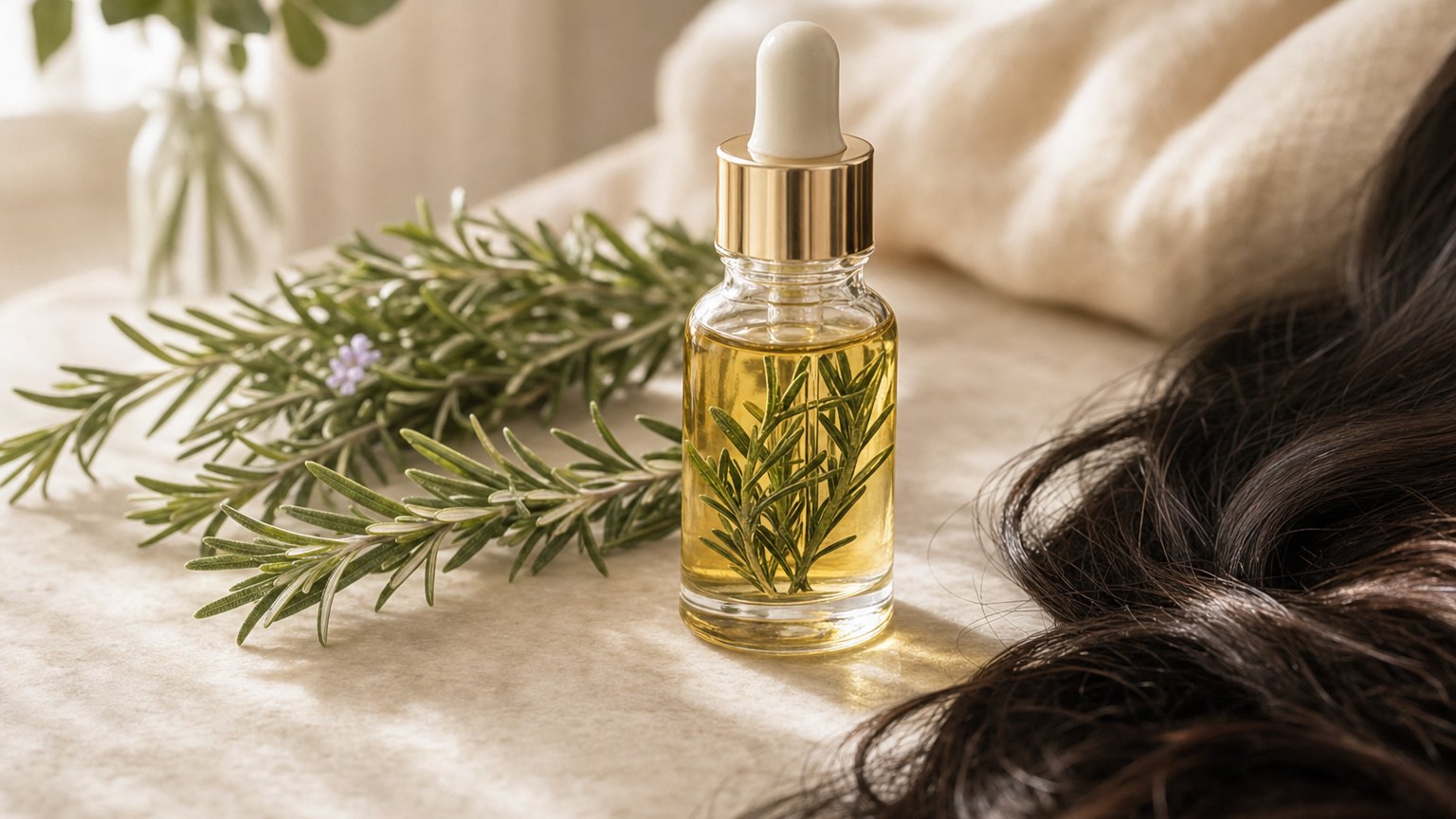
Does Rosemary Oil for Hair Growth Actually Work?
Rosemary oil has genuine, if modest, evidence behind it for one specific type of hair loss. The most cited proof is a 2015 randomised trial published in the journal SKINMED, which compared rosemary essential oil to 2% minoxidil in 100 men with androgenetic alopecia (male pattern thinning).
According to the 2015 SKINMED study by Panahi and colleagues, both groups showed a significant increase in hair count after six months, with no meaningful difference between rosemary oil and minoxidil. The rosemary group also reported less scalp itching. That is a striking result for a plant oil.
The caveats matter, though. It was a single study, in men with pattern thinning only, using an essential oil that was not standardised across brands. It does not prove rosemary regrows hair lost to genetics, thyroid problems, or scarring conditions.
Expert Insight: A separate 1998 trial published in Archives of Dermatology found that daily scalp massage with an aromatherapy blend including rosemary, thyme, lavender, and cedarwood produced significantly more improvement in alopecia areata than a carrier oil alone, suggesting a real, if small, biological effect.
Source: Hay, Jamieson & Ormerod, Archives of Dermatology (1998)
So the fair verdict is this: rosemary oil is one of the very few natural hair remedies with peer-reviewed support, but the evidence base is thin, and results are gradual rather than dramatic. Treat viral before-and-afters with the same scepticism you would any wellness clip.
A kitchen herb outperforming a pharmacy product in one small trial is interesting news, not a cure carved in stone.
How Does Rosemary Oil Work on the Scalp?
Rosemary oil is thought to support hair growth through a combination of increased blood flow, reduced inflammation, and possible hormonal moderation at the follicle. None of these mechanisms is fully proven in humans, but each has a plausible basis.
The circulation theory is the most established. Massaging rosemary oil into the scalp is believed to stimulate microcirculation, delivering more oxygen and nutrients to the follicles. Cleveland Clinic notes that rosemary oil may improve circulation, which can help follicles stay active and healthy.
Rosemary is also rich in antioxidant and anti-inflammatory compounds such as carnosic acid. A calmer, less inflamed scalp is a better environment for growth, particularly if irritation or flaking has been a background problem.
The most speculative theory is that rosemary may moderate the effect of dihydrotestosterone (DHT), the hormone implicated in pattern thinning, which is broadly how minoxidil-alternatives are hoped to work. This one remains largely theoretical in humans.
Expert Insight: The American Academy of Dermatology emphasises that hair loss has many causes, including hormones, thyroid disease, iron deficiency, and autoimmune conditions, and that persistent shedding warrants a professional diagnosis rather than self-treatment alone.
Source: American Academy of Dermatology
The practical takeaway: rosemary oil is a scalp intervention, not a systemic one. If your thinning is driven by something happening inside your body, an oil on the surface will only ever do so much.

How to Use Rosemary Oil for Hair Growth
Use rosemary oil diluted, massaged into the scalp, and applied consistently two to three times a week. The single most important rule is dilution: pure rosemary essential oil is potent and can irritate or even burn the skin if applied neat.
Step 1: Dilute it. Mix roughly three to five drops of rosemary essential oil into one tablespoon of a carrier oil such as jojoba, argan, or coconut oil. Alternatively, buy a pre-diluted rosemary oil formulated for scalp use so the ratio is done for you.
Step 2: Patch test. Apply a small amount to the inner forearm and wait 24 hours before putting it anywhere near your scalp. This catches sensitivities before they become a problem.
Step 3: Massage the scalp. Section the hair, apply to the scalp rather than the lengths, and massage with your fingertips for five to ten minutes. The massage itself supports circulation, so do not rush it.
Step 4: Leave it on. Leave for at least 30 minutes, or overnight for a deeper treatment. Then shampoo out. Two to three sessions a week is the pattern most closely matching the research protocols.
Expert Insight: Cleveland Clinic advises always diluting rosemary essential oil in a carrier oil before applying it to the scalp, and cautions that undiluted essential oils can cause irritation or allergic reactions.
Source: Cleveland Clinic
Rosemary oil folds neatly into a broader routine rather than replacing it. For the daily habits that genuinely support the scalp, our guide to a hair care routine for growth covers the fundamentals that make any active worth using.
Rosemary Oil vs Minoxidil: The Honest Comparison
Minoxidil remains the better-evidenced, faster-acting option, while rosemary oil is the gentler, natural alternative with a single supportive trial behind it. Both deserve an honest look before you choose, because they suit different priorities.
Minoxidil is a clinically established, over-the-counter treatment with decades of data for pattern hair loss. Rosemary oil, by contrast, rests largely on the 2015 comparison trial and its plausible mechanisms. Neither works if you stop using it, and neither addresses non-pattern causes.
| Factor | Rosemary oil | Minoxidil (2%) |
|---|---|---|
| Evidence base | One notable 2015 trial plus mechanism studies | Decades of clinical data |
| Speed of results | 3 to 6 months, gradual | 3 to 6 months, often more consistent |
| Scalp irritation | Lower in the 2015 trial | Itching and flaking reported by some |
| Best suited to | Mild pattern thinning, natural-first users | Established pattern hair loss |
| Cost | Low, one bottle lasts months | Low to moderate, ongoing |
| Must be continued | Yes | Yes |
| Verdict | A reasonable natural first step or complement | The stronger evidence-based choice for meaningful thinning |
For many people the sensible approach is not either-or. Some use rosemary oil as a gentle starting point, and others use it alongside minoxidil to support scalp comfort. If your thinning is significant, minoxidil has the data on its side.
Rosemary Oil vs Rosemary Water and Other Forms
Rosemary oil is more concentrated and better studied than rosemary water, which is the version most viral videos actually feature. The distinction matters because they are not interchangeable.
Rosemary water is made by steeping or boiling rosemary in water and spritzing or rinsing it through the hair. It is gentle and pleasant, but it is far more dilute than an essential or infused oil, and it has no dedicated clinical trial behind it. Consider it a light scalp refresher rather than a treatment.
Rosemary essential oil is the concentrated distillate used in the research, and it is what you dilute into a carrier. Rosemary-infused oil sits in between, made by steeping the herb in a carrier oil, offering a milder, ready-to-use option.
If you want to follow the evidence, a diluted essential oil massaged into the scalp is closest to what the studies used. Rosemary water is lovely, but it is the herbal-tea version of the treatment.
Expert Insight: The American Academy of Dermatology notes that scalp massage itself may help stimulate hair growth, which means part of the benefit people attribute to rosemary products may come from the massage technique used to apply them.
Source: American Academy of Dermatology
Which Hair Loss Responds Best to Rosemary Oil?
Rosemary oil is most likely to help mild to moderate androgenetic (pattern) thinning, which is the population studied in the 2015 trial. It may also modestly support alopecia areata based on the older aromatherapy research, though that used a blend, not rosemary alone.
It is far less likely to help hair loss driven by medical or structural causes. Scarring alopecias, telogen effluvium from stress or illness, thyroid dysfunction, iron deficiency, and hair loss from medication all need clinical management, not an oil.
Rosemary oil can also be a sensible supportive measure for people whose scalp is simply irritated or congested, since its anti-inflammatory profile may calm the surface. If your scalp itches persistently at night, our pillar guide to why the back of your head itches at night and how to stop it is worth reading before you assume oil is the answer.
Decision Checklist
- Is your thinning gradual and diffuse rather than sudden or patchy? Rosemary oil is more suited to slow pattern thinning.
- Have you ruled out medical causes with a GP or dermatologist? Persistent loss needs a diagnosis first.
- Can you commit to two to three sessions a week for at least three months? Consistency is non-negotiable.
- Will you always dilute it and patch test first? Skipping this risks irritation.
- Are you protecting new regrowth from overnight friction? Fragile new hair breaks easily.
Protecting Fragile New Growth Overnight
The problem: new hair grows in fine and fragile, and it is exactly the hair most easily snapped by friction. You can spend months coaxing regrowth with rosemary oil, then quietly undo the progress by rubbing those baby hairs against a rough cotton pillowcase for eight hours every night.
The solution: a smoother sleep surface that lets hair glide rather than catch. The Sleep Foundation notes that silk is gentler on hair than cotton because its smooth texture reduces snagging and friction. Silk also absorbs less moisture, so overnight oil treatments stay in the hair rather than soaking into the fabric.
For anyone actively working on regrowth, that combination matters. Less friction means fewer broken new hairs, and lower absorbency means your rosemary or leave-in treatment is not wicked away before it can work.

A silk pillowcase does not grow hair. It removes a persistent background stressor so the hair you are growing has a fair chance of staying attached. For the fuller picture, see whether a silk pillowcase for hair actually works.
Side Effects and Safety of Rosemary Oil
Rosemary oil is generally well tolerated when diluted, but it is not risk-free. The most common issues are scalp irritation, redness, and itching, usually from applying it too concentrated or too often.
Always patch test before first use, and stop immediately if you notice burning, rash, or worsening flaking. People with sensitive skin or eczema should be especially cautious and start with a low concentration.
Pregnancy and breastfeeding: essential oils, including rosemary, are often advised against or used only with medical guidance during pregnancy. If you are pregnant or breastfeeding, check with your midwife or GP before using rosemary essential oil on the scalp.
Keep it away from the eyes, do not apply to broken or inflamed skin, and never ingest essential oil. If you use minoxidil or a prescribed scalp treatment, ask your clinician before layering rosemary oil on top.
Expert Insight: The Sleep Foundation highlights that silk is hypoallergenic and naturally resistant to dust mites and mould, which makes it a sensible sleep surface for anyone whose scalp is prone to irritation or sensitivity.
Source: Sleep Foundation
Realistic Timeline and Expectations
Expect three to six months of consistent use before judging results, which mirrors the timeline in the 2015 trial. Hair grows slowly, so nothing meaningful will show in a week or two, whatever the internet promises.
In the first month you may notice a calmer, less itchy scalp and slightly less shedding during washing. Visible changes in density or new baby hairs typically take three months or more to appear, and they are subtle rather than transformative.
Consistency is everything. Sporadic use will not replicate the research conditions, and stopping means any gains gradually reverse, just as they do with minoxidil. Set a realistic bar: modest thickening and better scalp comfort, not a full reversal of years of thinning.
If a hair treatment shows dramatic results in a fortnight, be suspicious of the treatment, not impressed by it.
Common Mistakes to Avoid
Most rosemary oil disappointment comes from a handful of avoidable errors. Fixing them gives the treatment its best shot.
- Using it neat. Undiluted essential oil can irritate or burn. Always dilute in a carrier or buy pre-diluted.
- Applying to the lengths, not the scalp. Growth happens at the follicle, so the scalp is where it belongs.
- Giving up after a few weeks. Results need months, not days.
- Skipping the patch test. A 24-hour test prevents most reactions.
- Ignoring the real cause. If loss is medical, rosemary oil will not fix it. Get a diagnosis.
- Undoing progress overnight. Rough bedding snaps the fragile new hairs you are trying to keep.
Washing habits matter too. Over-washing or under-washing can leave the scalp less receptive, so it is worth understanding how often to wash your hair for hair growth alongside any oil routine.
A Heavier Overnight Routine Deserves a Denser Silk
The problem: if you leave rosemary oil in overnight or layer several treatments, standard bedding absorbs product, stains easily, and offers less consistent slip across a long night's sleep.
The solution: a heavier, denser silk that holds up to frequent washing and delivers a more substantial, cocooning surface for treatment-heavy routines.

If you are unsure which weight suits you, our comparison of whether the 30 momme silk pillowcase is worth the higher price breaks down the trade-offs.
Give Your Regrowth a Fighting Chance
Stop friction from undoing your hard-won new hair. Sleep on pure mulberry silk, backed by our 60-night guarantee, and let your routine work while you rest.
Shop the Collection →Free delivery · 60-night guarantee · Set of 2
Frequently Asked Questions: Rosemary Oil for Hair Growth

Does rosemary oil actually work for hair growth?
Rosemary oil has modest but genuine evidence for pattern thinning. A 2015 SKINMED trial found it matched 2% minoxidil over six months in men with androgenetic alopecia. Results are gradual and it will not treat medical or genetic hair loss, so keep expectations realistic.
How long does rosemary oil take to grow hair?
Expect three to six months of consistent use before judging results, matching the timeline in the main clinical trial. You may notice a calmer scalp and less shedding within weeks, but visible density changes take months and tend to be subtle rather than dramatic.
Can I leave rosemary oil in my hair overnight?
Yes, leaving diluted rosemary oil on overnight is a common deep-treatment method. Always dilute it first, protect your bedding, and shampoo it out in the morning. Sleeping on silk helps keep the oil in your hair rather than absorbed into the fabric.
How often should I use rosemary oil for hair growth?
Two to three times a week is the pattern most closely aligned with the research. Using it daily offers no proven added benefit and raises the risk of scalp irritation, so consistency over several months matters more than frequency.
Do I need to dilute rosemary oil before applying it?
Yes, always dilute rosemary essential oil in a carrier oil such as jojoba or coconut, or use a pre-diluted product. Cleveland Clinic warns that undiluted essential oils can cause irritation or allergic reactions on the scalp.
Is rosemary oil better than minoxidil?
Not better, but comparable in one trial and gentler for some. Minoxidil has decades of clinical data, while rosemary oil rests largely on the 2015 study. Rosemary caused less scalp itching in that trial, making it a reasonable natural alternative or complement for milder thinning.
Can rosemary oil regrow a receding hairline?
Possibly modestly, if the recession is early pattern thinning rather than complete follicle loss. Rosemary oil cannot revive follicles that have fully stopped producing hair. For an established receding hairline, see a dermatologist to assess what is realistically treatable.
Rosemary oil or rosemary water: which is better for hair?
Rosemary oil is more concentrated and better studied than rosemary water. Rosemary water is a gentle scalp refresher with no dedicated clinical trial, while diluted rosemary oil massaged into the scalp is closest to what the research actually used.
Can I use rosemary oil and minoxidil together?
Many people do, but check with a clinician first. There is no strong evidence on combining them, and layering actives can increase irritation. If you use a prescribed scalp treatment, ask your doctor before adding rosemary oil to avoid unwanted interactions.
Is rosemary oil safe during pregnancy?
Rosemary essential oil is often advised against or used only with medical guidance during pregnancy and breastfeeding. If you are pregnant, check with your midwife or GP before applying rosemary essential oil to your scalp, and avoid ingesting it.
Does rosemary oil have side effects?
The most common side effects are scalp irritation, redness, and itching, usually from using it too concentrated or too often. Patch test before first use, keep it away from the eyes, and stop immediately if you notice burning or a rash.
Does a silk pillowcase help hair grow?
A silk pillowcase does not grow hair, but it reduces overnight friction that snaps fragile new hairs. The Sleep Foundation notes silk is gentler on hair than cotton, which helps protect regrowth you are nurturing with treatments like rosemary oil.
Further Reading
Sources and References
- Panahi Y, et al. Rosemary oil vs minoxidil 2% for the treatment of androgenetic alopecia: a randomized comparative trial. SKINMED (2015). pubmed.ncbi.nlm.nih.gov
- Hay IC, Jamieson M, Ormerod AD. Randomized trial of aromatherapy for alopecia areata. Archives of Dermatology (1998). pubmed.ncbi.nlm.nih.gov
- Cleveland Clinic. Rosemary Oil for Hair. health.clevelandclinic.org
- American Academy of Dermatology. Hair Loss: Causes and Diagnosis. aad.org
- Sleep Foundation. Benefits of a Silk Pillowcase. sleepfoundation.org