
Hair Elasticity and Silk: Can a Silk Pillowcase Really Help?
Lunelle Team
13 min read
Hair elasticity is the measure of whether your hair springs back when stretched or simply snaps. It tells you more about your hair's structural health than almost any other single test you can do at home. And while most people looking to improve it reach immediately for a conditioner, a protein treatment, or a hot oil mask, one contributing factor often goes unaddressed entirely: where your hair spends seven or eight hours every single night.

This article covers what hair elasticity actually means, how to test it, what genuinely affects it, and specifically what the research says about whether a silk pillowcase makes a meaningful difference. There is a lot of marketing language in this space. We will stick to what is actually supported.
Quick Answer
A silk pillowcase can help protect hair elasticity indirectly by reducing overnight mechanical stress. Research published in the International Journal of Trichology confirms that cuticle damage from mechanical stress contributes to hair fibre fracture, and TRI Princeton's friction testing has demonstrated lower friction between silk and hair than between cotton and hair. Silk does not restore protein bonds, rebuild damaged keratin, or reverse over-processing. But as part of a broader hair care routine, removing a nightly friction source is a well-supported and practical choice, particularly for fragile, curly, colour-treated, or over-processed hair.
Key Takeaways
- Hair elasticity is the ability of a strand to stretch and return without snapping. Good elasticity indicates a healthy protein (keratin) and moisture balance. Poor elasticity indicates either brittleness (lack of moisture) or over-processing (protein bonds compromised).
- The wet strand elasticity test is a reliable at-home assessment tool. A healthy strand should stretch to roughly 30% of its length and return without breaking.
- Cotton pillowcases create friction during sleep; over time, this contributes to cuticle roughening, increased breakage, and split ends. The American Academy of Dermatology recommends reducing mechanical stress on hair as a primary strategy for fragile hair health.
- Silk and satin are not the same thing. Silk is a natural protein fibre; satin is a weave structure typically made from polyester. The two reduce friction by similar mechanisms, but silk is more breathable, more temperature-regulating, and more durable with regular washing.
- A silk pillowcase is most noticeable for people with curly, natural, fragile, colour-treated, or over-processed hair. The effect is cumulative and works alongside good conditioning practice, not instead of it.
In this article
- What is hair elasticity?
- How to test your hair elasticity at home
- Why your pillowcase affects hair elasticity
- Traditional elasticity fixes and their limits
- Silk vs satin: what is the actual difference?
- Who notices the biggest difference with silk?
- What to look for in a silk pillowcase
- Frequently asked questions

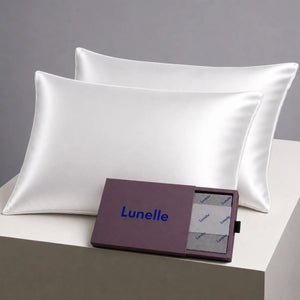
Measurably lower friction than cotton overnight. Particularly effective for curly, colour-treated, or fragile hair.
Shop Now →What is hair elasticity?
Hair elasticity is the ability of a hair strand to stretch under tension and then return to its original length without breaking. Research published in the International Journal of Trichology describes hair fibre mechanical properties as a central indicator of structural health, with elasticity reflecting the integrity of the cortex and the keratin protein bonds within it.
A strand with good elasticity has a well-maintained protein structure and sufficient moisture to allow movement without fracture. A strand with poor elasticity is either too dry (brittle, snaps immediately with minimal stretch) or over-processed (the protein bonds have been compromised by chemical treatments, excessive heat, or prolonged mechanical stress, and the strand stretches but does not spring back).
The practical implication is straightforward: hair with good elasticity resists everyday damage, holds styles well, and recovers from styling manipulation without snapping. Hair with poor elasticity breaks easily, does not hold curl or wave definition, and tends to frizz significantly because the cuticle is raised and irregular.
"The hair fibre is principally composed of keratin, a protein that forms the cortical cells making up the bulk of the hair shaft. These fibres give hair its tensile strength and elasticity. Damage to the cortex through chemical processing, excessive heat, or prolonged mechanical stress degrades these properties directly." This is why treatments targeting protein replenishment (bond builders, keratin treatments) focus specifically on restoring cortex integrity rather than surface conditioning alone.
How to test your hair elasticity at home
The wet strand test is the most reliable at-home assessment, and it takes about thirty seconds. Here is how to do it accurately.
The wet strand elasticity test
Take a single shed strand from your brush or shower drain. Do not pull a strand from your scalp. Wet it with water and hold it gently between both index fingers, roughly five centimetres apart. Stretch it slowly and steadily. Observe what happens and then release it.
Good elasticity: the strand stretches to roughly 30% beyond its original length without snapping, then returns to approximately its original length when released. This indicates a healthy protein-moisture balance.
Brittle or low-moisture result: the strand snaps almost immediately with minimal stretch. This is low elasticity caused by insufficient moisture. The strand cannot flex because it is dry and stiff. The primary response here is deep conditioning and hydration.
Over-processed or protein-deficient result: the strand stretches further than expected, perhaps 50% or more of its length, then does not return. It stays elongated or breaks at the point of stretch. This indicates compromised protein bonds. The strand can move but has lost the structural integrity to spring back. The response here is protein treatment before moisture work.
"Testing hair elasticity in the wet state is informative because water penetrates the cortex and reveals the mechanical properties of the protein structure directly, rather than just the surface cuticle layer. Dry testing primarily reflects cuticle condition; wet testing reflects the internal cortex." Hair health professionals use wet strand testing specifically because it bypasses surface conditioning effects and gives a more accurate reading of structural integrity.
Source: International Journal of Trichology, hair fibre research
Why your pillowcase affects hair elasticity

The connection between pillowcase material and hair elasticity is not a marketing claim. It is a mechanical one. Here is the chain of causation.
During sleep, most people move their head significantly throughout the night. Each movement creates friction between the hair and the pillow surface. On a cotton pillowcase, that friction is relatively high because cotton has an irregular, textured weave structure. TRI Princeton, a leading textile research institute, has demonstrated in direct testing that friction between silk and hair is measurably lower than between cotton and hair. This is the core physical fact the silk pillowcase claim rests on.
Why does friction matter for elasticity? The International Journal of Trichology notes that cuticle damage from repeated mechanical stress contributes directly to hair fibre fracture. The cuticle is the outer protective layer of each hair strand. When the cuticle is repeatedly roughened by friction, it weakens. A weakened cuticle allows moisture to escape more easily, which affects elasticity. It also exposes the cortex to further damage, which degrades the protein bonds that give hair its stretch and recovery.
The American Academy of Dermatology explicitly recommends reducing mechanical stress during sleep as a strategy for protecting fragile or breakage-prone hair. Specifically, the AAD identifies sleeping on a silk or satin pillowcase as one of the primary overnight protective measures for hair prone to breakage.
The effect is cumulative, not immediate. One night on a silk pillowcase does not restore compromised elasticity. Eight hours a night, every night, over weeks and months, progressively reduces the mechanical stress your hair absorbs while you sleep. That reduction accumulates into less cuticle damage, better moisture retention, and reduced breakage over time.
"Friction from hair rubbing against rough surfaces during sleep contributes to cuticle lifting and damage, particularly along the mid-shaft and ends where the strand experiences the most movement. Protective hairstyles and smoother sleep surfaces can reduce this ongoing source of mechanical stress." The AAD's guidance on hair care specifically identifies sleep as an underappreciated window for both causing and preventing breakage.
Source: American Academy of Dermatology
Traditional elasticity fixes and their limits
Most approaches to improving hair elasticity focus on one of two things: adding protein or adding moisture. Both are necessary and both can be effective. The context and limitation of each is worth understanding.
Protein treatments and bond builders
For over-processed or protein-deficient hair, treatments targeting the internal cortex are the most direct intervention. Bond builders work by reconnecting the disulfide bonds in the cortex that have been fractured by chemical processing. Protein masks and keratin treatments deposit protein that helps temporarily reinforce the cortex structure. These are appropriate for hair that stretches excessively and does not spring back.
Deep conditioning and moisture treatments
For dry, brittle hair that snaps immediately, moisture is the primary need. Deep conditioners with humectants draw water into the cortex and improve the strand's ability to flex without breaking. Leave-in conditioners and hair oils seal moisture in and reduce the rate of moisture loss.
The limitation of treatment-only approaches
The challenge with both categories is that they address the deficit without necessarily addressing the cause. If the cause of ongoing elasticity problems is accumulated mechanical damage from nightly friction, conditioners and protein treatments are repairing what the next eight hours of sleep will begin damaging again. Addressing the friction source alongside treatment creates a more sustainable outcome. This is the practical case for silk as part of a hair care routine rather than an alternative to it.
"The most effective approaches to hair damage reduction are those that address the underlying cause rather than just managing the symptoms. For hair experiencing repeated mechanical stress, reducing that stress at the source is more effective long-term than exclusively using repair treatments." This principle is reflected in the AAD's hair care guidelines, which focus on reducing mechanical stress as a first intervention rather than an afterthought.
Source: American Academy of Dermatology hair care research

Silk vs satin: what is the actual difference?
This distinction matters and is consistently blurred in product marketing, so it is worth being explicit about it.
Silk is a fibre. Specifically, it is a natural protein fibre produced by silkworms. Merriam-Webster defines silk as a fine continuous thread produced by silkworms. Mulberry silk, which is the grade used in premium pillowcases, is produced by silkworms fed exclusively on mulberry leaves, resulting in longer, more uniform fibres.
Satin is a weave structure, not a fibre. Merriam-Webster defines satin as a fabric with a glossy surface produced by a specific weaving technique. That weave can be applied to polyester, nylon, acetate, or silk. When a product is described as a "satin pillowcase," you are almost certainly looking at polyester woven in a satin pattern.
Both reduce friction compared to cotton because their smooth surfaces create less resistance against hair fibres. But the materials differ in several important ways:
| Property | 100% Mulberry Silk | Synthetic Satin (polyester) |
|---|---|---|
| Fibre type | Natural protein fibre | Synthetic polymer |
| Friction reduction vs cotton | Excellent (confirmed by TRI Princeton testing) | Good (better than cotton) |
| Breathability | Good; temperature-regulating by nature | Lower; traps heat more readily |
| Moisture interaction | Low absorbency; releases moisture readily | Low absorbency but does not release moisture |
| Static generation | Low static | Can generate static, increasing frizz |
| Longevity with regular washing | Several years with proper care | Typically 1 to 2 years before surface degrades |
| OEKO-TEX certification | Available; confirms chemical safety | Available, less common at entry price points |
For hair elasticity specifically, the static difference is worth noting. Polyester satin can generate static electricity, which causes hair to frizz and increases the likelihood of tangling overnight. Static friction is an additional source of mechanical stress that silk does not introduce. The full comparison between satin and silk pillowcases covers this in more detail if you are weighing both options.
Synthetic fabrics like polyester can build up static charge during regular use, which attracts hair fibres and increases tangling and frictional force overnight. This is particularly relevant for fine or chemically treated hair where the cuticle is already compromised and more vulnerable to additional mechanical stress. Static charge is a variable that satin-vs-silk comparisons often overlook despite its practical relevance to overnight hair friction.
Who notices the biggest difference with silk?
A silk pillowcase is not equally impactful for everyone. The people who notice the most tangible difference are those whose hair is already under mechanical or chemical stress, where the removal of one additional friction source produces a visible result relatively quickly.
Curly and natural hair
Curly hair has a spiral or helical structure that creates more surface contact with a rough pillow surface than straight hair. The cuticle on curly hair is also more prone to lifting at the outer curves of each coil. The AAD specifically recommends silk or satin for natural and curly hair types experiencing breakage and loss of curl definition. Silk pillowcases are a component of many protective sleep routines for natural hair alongside bonnets, pineappling, and braiding.
Colour-treated or bleached hair
Chemical treatments lift the cuticle and break protein bonds to alter pigment. The cuticle does not fully return to its pre-treatment state. A strand of bleached hair is structurally more vulnerable than a strand of unprocessed hair, which means additional friction from a cotton pillowcase creates proportionally more damage. The specific case for silk pillowcases with bleached hair covers the cuticle mechanics in more detail.
Fine or fragile hair
Fine hair has a smaller diameter, which means less cortex mass to absorb mechanical stress before fracture occurs. What a thicker strand absorbs without damage can snap a fine strand. For fine hair, every reduction in mechanical stress across a night's sleep is proportionally more significant.
Hair with extensions or bonds
Extension bonds and tape are attachment points that experience mechanical stress when hair moves against a rough surface overnight. Silk reduces the friction that can dislodge bonds prematurely or stress the natural hair at the attachment point.
People experiencing postpartum hair loss
Postpartum hair loss involves the shedding of hairs that have moved into the resting phase during pregnancy. As these shed, the emerging new growth is extremely fine and fragile. Silk pillowcases are often recommended during this period specifically because the new growth strands break easily and every reduction in friction matters.
What to look for in a silk pillowcase
Not all silk pillowcases are equal, and the marketing language around this product category is genuinely confusing. These are the specifications that actually matter.
100% mulberry silk, stated clearly
If a product does not specify the fibre, that is a reason to be cautious. Mulberry silk is the industry standard for pillowcase quality because its longer, more uniform fibres produce a smoother surface and a more durable fabric. Understanding what mulberry silk is and how it compares to other silk types is useful context when evaluating product claims.
Momme weight: 22 is the practical minimum
Momme is the weight measurement specific to silk, roughly analogous to thread count in cotton but more meaningful as a quality indicator. Sleep Foundation places the ideal range at 19 to 25 momme, and Good Housekeeping's testing found most top-performing pillowcases at 22 momme or higher. Below 19 momme, the fabric is thin enough that it may not maintain its smooth surface quality well over time.
OEKO-TEX certification
OEKO-TEX Standard 100 certification confirms that a fabric has been tested and found free from harmful chemicals at every stage of production. For a product that spends eight hours against your hair and skin every night, this is a useful quality and safety signal.
Machine washability
A silk pillowcase needs to be washed regularly. Good Housekeeping recommends washing roughly once a week. If the care instructions require dry cleaning, that is a practical barrier to regular washing. Quality 22 momme silk pillowcases are machine washable on a gentle cycle with mild detergent and air dry without issue.
Silk Pillowcase Quality Checklist for Hair Health
- 100% mulberry silk stated on product page
- 22 momme minimum (22 to 25 is the ideal range)
- Grade 6A or Grade A silk specified where possible
- OEKO-TEX Standard 100 certified
- Machine washable on gentle cycle
- Envelope or hidden zip closure
- Set of 2 (so one is always ready while the other washes)
22 Momme Silk Pillowcase, Set of 2

For hair that is already working to recover from colour, chemical processing, or mechanical damage, removing a nightly friction source is one of the most sensible additions to a care routine. 22 momme Grade 6A mulberry silk, OEKO-TEX certified, machine washable, set of 2.
- 100% Grade 6A mulberry silk, 22 momme charmeuse weave
- OEKO-TEX Standard 100 certified
- Machine washable, gentle cycle, air dry
- Envelope closure, no zips to catch hair
- Set of 2, standard and king sizes available
Want More Weight? Try 30 Momme.
The 22 momme is where most people start. The 30 momme is where they often end up: noticeably denser, softer, and more substantial.
Shop 30 Momme →Same mulberry silk, heavier weight. Set of 2. Browse all Lunelle silk
Frequently Asked Questions: Hair Elasticity and Silk
Can a silk pillowcase actually improve hair elasticity?
Indirectly, yes. A silk pillowcase does not rebuild protein bonds or restore keratin. But it reduces the overnight mechanical friction that contributes to cuticle damage and moisture loss, both of which degrade elasticity over time. By removing one source of ongoing damage, silk helps preserve and protect the elasticity your conditioning work is building.
How do I know if my hair has low elasticity?
Use the wet strand test. Take a shed strand from your brush, wet it, and gently stretch it. If it snaps with minimal stretch, your hair is brittle and needs moisture. If it stretches beyond about 30% of its length and does not spring back, your hair is over-processed and needs protein treatment. If it stretches slightly and returns to its original length, elasticity is good.
What is the difference between silk and satin for hair?
Silk is a natural protein fibre. Satin is a weave structure usually made from polyester. Both reduce friction compared to cotton. Silk has advantages: it does not generate static, it is more breathable, and it does not trap heat in the same way. Polyester satin can generate static, which increases frizz and adds a secondary friction source for fine or fragile hair.
Does a silk pillowcase help with frizz?
Yes, for friction-related frizz. Frizz caused by the cuticle being roughened and lifting overnight is directly addressed by a silk pillowcase's smoother surface. Frizz caused by humidity, product build-up, or damaged cuticles at a deeper level requires conditioning and product-based approaches. Silk handles the mechanical component; it does not override chemical or environmental frizz causes.
Is a silk pillowcase better than a hair bonnet?
They address the same friction problem by different means and can be used together. A silk or satin bonnet fully encloses the hair, eliminating pillow contact entirely. A silk pillowcase keeps hair loose and unenclosed, which some people prefer for comfort. For high-shrinkage natural hair or very fragile hair, a bonnet over a silk pillowcase can offer maximum protection. For most other hair types, a silk pillowcase alone is sufficient.
How long does it take to see results from a silk pillowcase?
Most people notice less frizz and improved morning texture within one to two weeks. Reduction in breakage takes longer to observe because it shows up as less hair in the brush over weeks rather than days. Improvements in elasticity from reduced mechanical damage accumulate over months of consistent use.
What momme weight is best for hair?
22 momme is the practical sweet spot. Sleep Foundation places the ideal range at 19 to 25 momme. At 22 momme, the fabric is heavy enough to maintain its smooth surface quality through regular washing, which directly supports its friction-reducing function. Below 19 momme, the fabric may become thinner and less effective over time.
Can silk pillowcases help with postpartum hair loss?
Postpartum hair loss (telogen effluvium) is hormonal and resolves naturally. A silk pillowcase does not prevent it or speed recovery. What it does is reduce the friction-related breakage of the new fine growth that emerges as hair regrows. New postpartum growth is very fragile, and silk reduces one avoidable source of mechanical stress on it.
Is a silk pillowcase good for bleached hair?
Yes, and particularly so. Bleaching lifts the cuticle and breaks disulfide bonds that do not fully repair. A bleached hair strand is structurally more vulnerable than unprocessed hair, which means additional friction creates proportionally more damage. Silk pillowcases are a sensible protective measure for anyone using regular bleach, highlights, or lightening services. They work alongside bond-building treatments, not instead of them.
How should I wash a silk pillowcase?
Machine wash on a gentle or delicate cycle in a mesh laundry bag with a mild detergent. Air dry rather than tumble dry. Good Housekeeping recommends washing once a week to prevent product residue and natural oils from accumulating on the surface. Avoid high heat at every stage.
Do silk pillowcases work for all hair types?
They benefit most hair types, but the difference is most noticeable for hair that is already under mechanical or chemical stress: curly, natural, colour-treated, fine, or fragile hair. For straight, unprocessed hair with good elasticity, the effect is real but less dramatic. For damaged or fragile hair, removing a nightly friction source tends to produce visible results more quickly.
Sources and References
- Dias M.F.R.G. Hair Cosmetics: An Overview. International Journal of Trichology. ncbi.nlm.nih.gov
- TRI Princeton. Fibre and Textile Testing Research. triprinceton.org
- American Academy of Dermatology. Tips for Healthy Hair. aad.org
- Sleep Foundation. Silk Pillowcase Benefits. sleepfoundation.org
- Good Housekeeping Institute. Best Silk Pillowcases, Expert Tested. goodhousekeeping.com
- Merriam-Webster. Definition: Silk. merriam-webster.com
- Merriam-Webster. Definition: Satin. merriam-webster.com
- British Association of Dermatologists. Patient Information: Eczema and Clothing. bad.org.uk
- Healthline. Hair Porosity: What It Means and Why It Matters. healthline.com
- Healthline. How to Test Hair Elasticity. healthline.com