
Silk Bonnet for Locs: Is It Worth It, and Do You Still Need a Silk Pillowcase?
Lunelle Team
16 min read
If you have ever gone to bed with freshly moisturised locs and woken up looking like your pillowcase spent the night auditioning for the role of "miniature lint factory," you are very much not alone. Sleeping with locs sounds passive, but anyone who actually has them knows it involves a full set of decisions: about frizz, about dryness, about the mysterious ache from tying something too tightly because you were determined to protect your hair at all costs, and about the specific misery of finding fluff embedded in a loc that took six months to form.
A silk bonnet for locs is genuinely worth it for most people. It reduces friction, helps preserve moisture, limits lint transfer from bedding, and protects the look of your locs overnight. But here is the more useful version of that answer: for locs, the smartest nighttime setup is usually not bonnet versus pillowcase. It is bonnet plus pillowcase, with the bonnet doing the primary work and a silk pillow acting as the intelligent backup for when the bonnet inevitably moves, slips, or loses its argument with your sleep position.
This article covers why locs need nighttime protection, whether a silk or satin bonnet is better, how a silk pillowcase fits in, and how to build a practical overnight routine that does not require a seventeen-step process before you are allowed to go to sleep.
Quick Answer
A silk or satin bonnet for locs is worth it: it reduces friction, limits lint transfer, helps preserve moisture, and protects the look of your locs overnight. For the best protection, combine a bonnet with a silk pillowcase. The bonnet does the heavy lifting; the pillowcase is the backup for when the bonnet shifts during sleep, and it provides skin benefits your face benefits from regardless. Choose a roomy, adjustable-band bonnet made from real silk or smooth satin, and pair it with a mulberry silk pillowcase at 22 momme or above.
Key Takeaways
- The American Academy of Dermatology recommends silk or satin bonnets or pillowcases for curly and coily hair to reduce overnight friction, reduce frizz, and help retain moisture. This guidance applies directly to loc wearers, who face all of these issues nightly.
- Locs trap lint more readily than loose hair. Loc specialists consistently highlight bonnet use as the most practical way to limit fibre transfer from bedding and pyjamas, which is not glamorous advice but is extremely useful in practice.
- Silk is a natural fibre; satin is a weave structure often made from synthetic materials. Sleep Foundation explains the distinction clearly: satin can be made from polyester, nylon, or silk, and two "satin" bonnets can behave very differently in use.
- A silk pillowcase is not redundant if you already wear a bonnet. Bonnets slip, ties loosen, and people move during sleep. A silk pillow provides backup coverage when the bonnet shifts and delivers skin benefits (reduced facial friction) that the bonnet does not.
- For longer locs, bonnet fit matters significantly. An oversized bonnet that accommodates bra-length or waist-length locs comfortably is a different product from a standard-size cap, and the wrong fit creates more tension than protection.
- Wet locs at bedtime are more fragile than dry locs. Cleveland Clinic dermatology guidance notes that wet hair is more vulnerable to friction-related breakage. Locs take longer to dry than loose hair; going to bed with damp locs significantly increases overnight mechanical damage risk.
In this article
- Why locs need nighttime protection
- Are silk bonnets good for locs?
- Silk versus satin: does it matter for a bonnet?
- Where the silk pillowcase fits in
- How to build a practical overnight routine for locs
- What to look for when choosing a bonnet for locs
- Specific considerations for longer and thicker locs
- Frequently asked questions

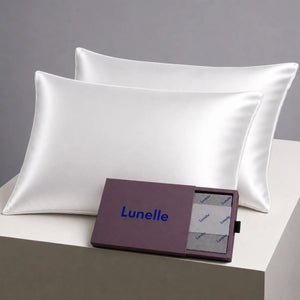
Because bonnets slip, and the pillow should be ready for when they do.
Shop Now →Why locs need nighttime protection
Locs are not especially forgiving of rough treatment, particularly overnight. The combination of friction, dryness, and lint accumulation that cotton bedding creates is a specific and ongoing problem for loc wearers, not merely the general hair-care concern it is for loose-hair styles.
The American Academy of Dermatology recommends satin or silk bonnets or pillowcases to reduce friction and help prevent breakage for curly and coily hair, noting that these hair types tend to be drier and more prone to mechanical damage than straighter textures. That guidance applies directly to locs, which share the underlying hair structure of the coily and tightly textured types that most benefit from friction-reduction strategies.
Friction is the first problem. When locs rub against cotton bedding during sleep, the surface contact rough-abrades the outer loc surface, contributes to frizz, and can work against the tightness of newer or maturing locs. Sleep Foundation's guidance on silk pillowcases notes that silk's smoother surface is gentler on hair and less likely to snag the cuticle, while its lower absorbency compared with cotton may help hair retain moisture overnight. Both of these properties matter for locs.
The second problem is moisture. Locs can be prone to dryness, partly because the densely packed structure of a mature loc makes it harder for moisture to penetrate evenly, and partly because cotton bedding actively draws moisture out of the hair shaft during contact. Anything that reduces that overnight moisture loss is directly relevant to loc health.
The third problem is lint. This one gets mentioned less often in general hair care guidance but is specific to loc wearers and is, frankly, the thing that loc specialists raise most consistently. Locs trap fibres from bedding, pyjamas, and towels more readily than loose hair because of their textured surface structure. Dr Locs and loc care specialists specifically warn that bedsheets, pillows, and nightwear contribute to lint buildup in locs, and that a bonnet is the simplest way to significantly reduce it. This is not glamorous advice. It is extremely practical.
Are silk bonnets good for locs?
Yes, and the case for using one is stronger than the general hair-care advice often suggests. The primary argument for a bonnet over a pillowcase alone is coverage. A bonnet surrounds the hair from all angles, rather than protecting only one side, which helps keep locs contained, reduces rubbing from any direction, and makes it easier to maintain a retwist or preserve the look of shorter or newer locs that might not stay in place during sleep.
Allure's beauty panel has described silk and satin bonnets as ideal for nighttime hair protection because they reduce friction, frizz, and breakage while also helping preserve moisture and style integrity overnight. Loc-wearing contributors specifically noted that a lightweight bonnet reduced friction and dryness without pulling on the locs, and that oversized options were essential for accommodating longer lengths comfortably.
For thicker, longer, or more mature locs, the bonnet is often the only viable option for keeping all the hair covered and protected without the gathering creating pressure on the scalp. The right bonnet for long locs is a different object from a standard-size sleep cap, and choosing the wrong size is a reliable way to wake up with a headache and still-frizzy locs.
The honest caveat is that clinical evidence specifically for silk bonnets and loc health is limited. Most of the advice draws on general research around friction, moisture, and textured hair care, combined with consistent professional practice from dermatologists, cosmetologists, and loc specialists. NHS England's review of therapeutic silk garments for eczema found the quality of evidence low to very low overall, which is a useful reminder not to attribute miraculous properties to silk fabric. Helpful, yes. Magical, no. The practical case for wearing a bonnet with locs is very strong. The evidence base for any single specific benefit claim is thinner.
Silk versus satin: does it matter for a bonnet?
The silk-versus-satin question for bonnets is the same one that comes up for pillowcases, and the answer is similar. Silk is a natural fibre; satin is a weave structure. Sleep Foundation explains clearly that satin is not a material but a construction method, meaning satin can be made from silk, polyester, nylon, or other fibres. Two bonnets sold as "satin" may be completely different products.
For most loc wearers, a smooth satin bonnet (whatever the underlying fibre) is a practical and effective choice. Sleep Foundation notes that satin can reduce friction and can be a good choice for hair health and sensitive skin. Satin bonnets are typically less expensive than silk ones and are widely available in sizes that fit longer and thicker locs well. If the primary goals are friction reduction and lint prevention, a smooth satin bonnet does both.
Where silk tends to pull ahead is in breathability and static. Silk is a natural protein fibre that is more breathable than most synthetic alternatives, which matters for hot sleepers or anyone who wakes up with a warm scalp. Silk also generates less static electricity than polyester, which is relevant for loose flyaways at the hairline and the condition of any exposed loc ends. For people who want the most comfortable and least static-prone nighttime option, real silk is the better choice. For people who want effective protection at a lower price, a well-made satin bonnet is a strong alternative.
Where the silk pillowcase fits in
If you already wear a bonnet, the argument for also using a silk pillowcase is less obvious than if you sleep without one. But it is still a sound argument, for a few reasons that the bonnet does not address.
The most practical reason is that bonnets slip. Ties loosen. People toss and turn. Even the best-fitting bonnet with a well-adjusted band will occasionally migrate during sleep, leaving part of the locs exposed to the pillowcase surface. A silk pillow means that when this happens (not if), the exposed locs land on a smooth, low-friction surface rather than on cotton. Sleep Foundation specifically notes that silk is gentler on skin, can help reduce sleep creases, and may be especially appealing for sensitive or irritation-prone skin. That benefit applies to your face, which the bonnet does not cover at all, every single night.
The second reason is the skin benefit. Your face is in direct contact with the pillow all night, regardless of whether you wear a bonnet. Cleveland Clinic's guidance on silk pillowcases notes that the smoother surface may reduce facial friction and temporary sleep creases compared with cotton. The Aesthetic Society has documented that compression and shear during sleep contribute to sleep lines over time. These benefits exist independently of whatever your bonnet is doing for your locs, and they are worth having.
The consistent advice from textured-hair specialists, including those cited in Allure's loc care coverage, is that the best overnight setup uses a bonnet as the primary protection and a silk pillowcase as the intelligent safety net. This is also the approach recommended by the evidence on satin and silk for hair care generally: the two items address slightly different aspects of the same overnight protection problem, and using both is more complete than choosing one.

How to build a practical overnight routine for locs
The most useful overnight loc routine is not the most elaborate one. It is the most consistent one. Here is what consistently works, ordered by importance.
Ensure your locs are dry before going to bed whenever possible. Cleveland Clinic dermatologist guidance notes that wet hair is more fragile than dry hair, and that friction against a sleep surface can contribute significantly to breakage when the hair is in that more vulnerable state. Locs retain water longer than loose hair because of their density and structure. Sleeping on wet or damp locs is a specific risk, both for breakage and for scalp health.
Gather your locs loosely before covering them. The AAD specifically recommends avoiding tight pulling on textured hair and using loose, protective nighttime styles. For medium locs, a loose gathering with a wide silk or fabric-covered tie keeps the weight of the hair off the nape and reduces tangling without applying the tension that can cause traction stress at the hairline. For longer locs, a gentle twist or loose pony group can make the bonnet fit easier and more securely.
Apply a bonnet that fits properly. Roomy is better than snug. A bonnet that requires effort to pull over a full head of locs is generating tension at the hairline every time it is worn. The adjustable band or tie should be secure enough to stay in place but not so tight that it leaves an impression. If you wake up with a line across your forehead or a tight feeling at the nape, the bonnet is too small or too tight.
Sleep on a silk pillowcase as the backup layer. This requires no daily action and works automatically when the bonnet shifts. It also works for your skin independently of your locs.
For the detailed version of how to care for locs across washing, moisturising, and handling decisions, understanding what healthy hair looks like at the structural level gives useful context for evaluating whether your current routine is working.
What to look for when choosing a bonnet for locs
Not all bonnets are equal, and the difference between a well-chosen bonnet and a poorly fitting one is significant for comfort and effectiveness. Here are the specifications that matter most for loc wearers specifically.
Size: roomy enough to accommodate your full loc volume
Standard bonnets are sized for loose hair styles and will often be too small for a full head of mature, thick, or longer locs. Look for bonnets described as oversized, double-layered, or specifically designed for locs, dreadlocks, or natural hair with volume. A bonnet that fits your locs comfortably without pulling at the cap or sitting too high on the forehead is a fundamentally different wearing experience from one that technically contains the hair but at the cost of constant tension.
Fastening: adjustable band, not drawstring alone
Drawstring closures work for loose hair but can be difficult to tighten sufficiently to stay in place around a heavier or more voluminous loc mass. An adjustable elastic band or adjustable tie gives more control over the fit and is less likely to slip off during sleep. Many loc-specific bonnets use a wider band and a gentler elastic specifically to address this.
Material: silk or smooth satin, not fluffy or looped fabrics
Anything with a textured inner surface defeats the purpose. Look for a smooth face on the inside of the bonnet, whether silk or satin. Avoid bonnets with a velvet, terrycloth, or jersey lining. The inner surface is the one doing the work, and it needs to be smooth to reduce friction and lint transfer effectively.
Care: machine washable is preferable
A bonnet worn nightly will need washing regularly. One that requires dry cleaning is a bonnet that will eventually stop being washed regularly. Machine washable on a delicate cycle, with air-drying, is the practical option for a nightly-use item.
30 Momme Silk Pillowcase, Set of 2

The 30 momme version is the right pairing for a serious loc care setup. When your bonnet provides primary coverage and the pillow acts as backup, both items need to perform consistently over time. The denser, heavier 30 momme fabric holds its smooth surface quality through regular washing longer than lighter alternatives, which matters for a daily-use item.
- 100% Grade 6A mulberry silk, 30 momme
- Charmeuse weave: smooth face side for minimal friction against exposed loc ends
- Lower absorbency than cotton, helping loc moisture retention when the bonnet shifts
- Machine washable on a gentle cycle; air-dry
- Set of 2 in white; fits standard and queen pillows
Specific considerations for longer and thicker locs
Longer locs introduce challenges that a standard bonnet does not fully address. Waist-length or longer locs cannot be fully contained in most bonnets, which means a portion of the loc length will always be in contact with the sleep surface. For this reason, loc care specialists who work with longer lengths consistently recommend the bonnet-plus-silk-pillow combination rather than either alone.
Celebrity stylists working with clients who have long locs recommend gathering the locs upward into a loose piled arrangement and sleeping in a silk bonnet, with a silk pillowcase as the secondary surface. The weight of longer locs also means the bonnet band needs to be able to accommodate the pull without slipping. A very heavy loc mass on a standard band is usually enough to dislodge it during the night regardless of how carefully it is applied.
For locs thick enough that even a roomy bonnet sits with tension, consider a silk pillowcase as the primary protection tool and gather the locs loosely at one side of the pillow rather than attempting to contain them in a cap that will not stay in place. The goal is friction reduction, moisture retention, and lint prevention. Any combination of bonnet and pillowcase that achieves all three reliably is the right answer, even if it is unconventional.
Frequently Asked Questions: Silk Bonnet for Locs

Is a silk bonnet worth it for locs?
Yes, for most loc wearers. A silk or satin bonnet reduces friction, helps retain moisture, limits lint transfer from bedding, and helps preserve the look of your locs overnight. The best setup for complete overnight protection is a bonnet as primary coverage plus a silk pillowcase as backup for when the bonnet shifts. For shorter or starter locs, a bonnet alone may be sufficient; for longer or thicker locs, the combination is more reliable.
Is silk or satin better for locs in a bonnet?
Both reduce friction compared with unlined fabrics or cotton. Real silk is more breathable than most polyester satin and generates less static, which is relevant for loose flyaways at the hairline. Satin (even polyester) is effective at reducing friction and is usually less expensive and easier to find in sizes suitable for large loc volumes. For most loc wearers, a well-made satin bonnet is a strong practical choice; real silk is the preferred option for hot sleepers or anyone who wants the most breathable natural-fibre option.
Do I need a silk pillowcase if I already wear a bonnet with my locs?
It is recommended, yes. Bonnets slip during sleep, and a silk pillowcase provides a lower-friction backup surface for when that happens. More importantly, a silk pillowcase protects your face throughout the night regardless of what the bonnet is doing for your locs. Sleep Foundation notes that silk is gentler on skin and may reduce temporary sleep creases. The bonnet and pillowcase address slightly different overnight protection needs, and using both is more complete than choosing one.
How do I stop my bonnet from slipping off when sleeping with locs?
Choose a bonnet with an adjustable elastic band rather than a drawstring, as adjustable bands hold more reliably against the weight of a full loc mass. An oversized bonnet that fits without pulling reduces the tension that causes slipping. Some loc wearers also use a loose silk or fabric tie over the bonnet as a secondary anchor. If slipping is consistent despite the right size and fastening, a well-chosen silk pillowcase becomes more important as the reliable backup.
Can I sleep without a bonnet if I have a silk pillowcase with locs?
Yes, and for some loc wearers with shorter or tighter styles, a silk pillowcase alone is sufficient. For longer, thicker, or more voluminous locs, a bonnet provides fuller coverage and reduces tangling from locs moving independently during sleep. The combination of bonnet and silk pillow is the most complete approach, but a good silk pillowcase alone is meaningfully better than cotton, and it works for your skin simultaneously.
How do I sleep with locs to reduce frizz?
Use a silk or satin bonnet that fits comfortably without pulling, gather locs loosely before covering them, and ensure locs are dry before bed. Sleep on a silk pillowcase as a backup surface for any exposed lengths. Avoid cotton wraps, towels, or abrasive fabrics around locs at night. For very long locs, gather them loosely to one side or pile loosely upward inside an oversized bonnet to prevent tangling at the nape.
Does a silk bonnet help with loc dryness?
It helps by reducing moisture loss from friction and by limiting contact with absorbent cotton bedding. Sleep Foundation notes that silk's lower absorbency than cotton means it draws less moisture out of hair during contact. A bonnet provides an additional enclosed environment around the locs that reduces direct contact with the air and the bedding surface, which can help retain more of any moisture or product applied before bed. It is not a substitute for proper loc moisturising but it does reduce overnight losses.
Why do my locs keep getting lint from my bonnet?
Lint in a bonnet typically comes from the inner lining of the bonnet itself (if it is made from a fluffy, textured, or loosely knitted fabric) or from the bedding that the bonnet comes into contact with around the edges. For a silk or smooth satin bonnet, lint transfer is minimal because the smooth inner face does not shed fibres. If you are experiencing lint despite using a smooth bonnet, check whether the outer surface of the bonnet is in contact with the bedding and whether your bedding itself is a high-lint source.
Should I moisturise my locs before putting on a bonnet for sleep?
Yes, if your locs need it. Apply a lightweight leave-in spray, water-based moisturiser, or oil to the loc surface and ends before bed, then cover. Avoid heavy products that will transfer excessively to the bonnet fabric. Ensure the locs are not wet from the application before covering, as damp locs under a bonnet can create a warm, humid environment that increases the risk of scalp issues over time. A light mist is fine; soaking is not.
What size bonnet do I need for long or thick locs?
Oversized is almost always the correct choice for locs. Standard bonnets designed for loose hair are frequently too small to comfortably accommodate a full head of mature, thick, or longer locs. Look for bonnets described as extra-large, double-layered, or designed specifically for natural hair with high volume. A bonnet that requires significant effort to pull over your full loc mass will create tension, reduce overnight comfort, and slip off more readily than one with a comfortable fit.
How often should I wash a silk bonnet or pillowcase used with locs?
The bonnet should be washed at least once a week, more frequently if you apply heavy products before bed. The pillowcase should be washed weekly. Both should be laundered in a mesh bag on a gentle or delicate machine cycle and air-dried. Product residue and scalp oils accumulate quickly on nighttime hair accessories and reduce their effectiveness at friction reduction if not cleaned regularly. Silk and smooth satin both hold their surface quality through regular gentle washing.
Complete Your Overnight Loc Protection
A bonnet handles the primary coverage. A silk pillowcase handles everything else: the gap when the bonnet moves, and the skin that the bonnet doesn't cover.
Shop 22 Momme →Or choose the 30 Momme option for a denser fabric that holds up well through regular washing. Both are 100% mulberry silk. Set of 2.
Further Reading
Sources and References
- American Academy of Dermatology. How to Stop Hair Breakage. aad.org
- Sleep Foundation. Silk Pillowcase: Benefits for Hair and Skin. sleepfoundation.org
- Sleep Foundation. Silk vs Satin Pillowcase. sleepfoundation.org
- Cleveland Clinic. Is a Silk Pillowcase Actually Better for Your Hair and Skin?health.clevelandclinic.org
- Allure. The Best Silk Bonnets for Natural Hair. allure.com
- NHS England. Therapeutic Silk Garments for Eczema. england.nhs.uk
- The Aesthetic Society. Sleep Position and Facial Skin Compression. aestheticsociety.org
- Dr Locs. How to Prevent Lint in Locs. drlocs.com
- Good Housekeeping Institute. Best Silk Pillowcases, Tested by Experts. goodhousekeeping.com