
Silk for Chemo Hair Regrowth: What It Can Actually Do
Lunelle Team
15 min read
Post-chemotherapy regrowth is often finer, softer, and more fragile than the hair before treatment, and protecting it requires a different kind of attention from ordinary hair care. If you are wondering whether silk for chemo hair regrowth is genuinely useful or simply a beauty category borrowing medical credibility it has not earned, the answer is specific: a silk pillowcase will not make follicles regrow faster, but it may reduce friction on fragile new hair, limit tangling during a phase when strands are at their most vulnerable, and provide a gentler sleep surface for a scalp that may still be tender or reactive. That distinction matters because the realistic benefit is real, and the inflated claim is not.
Quick Answer
Silk for chemo hair regrowth will not accelerate follicle recovery, but it may genuinely help by reducing friction on fragile new hair, providing a gentler surface for a sensitive scalp, and minimising overnight tangling and breakage. Memorial Sloan Kettering Cancer Center and Macmillan Cancer Support both recommend silk or satin pillowcases as part of supportive hair care during and after chemotherapy. The benefit is protective comfort, not a growth treatment.
Key Takeaways
- Silk does not accelerate chemo hair regrowth. Hair recovery after chemotherapy depends on follicle health and treatment type. Silk provides protection and comfort, not a follicle treatment.
- Major cancer care organisations specifically recommend silk or satin pillowcases for patients managing hair loss and regrowth, citing smoother fabric as a way to reduce tangling.
- Post-chemo regrowth is often finer, softer, and sometimes curlier than hair before treatment. These texture changes make fragile strands more prone to friction damage and tangling, which is where silk helps most.
- Satin and silk are not the same. Silk is a natural fibre. Satin is a weave that is often polyester. For post-chemo scalps that may be sensitive or dry, the distinction between natural and synthetic fabric matters.
In this article

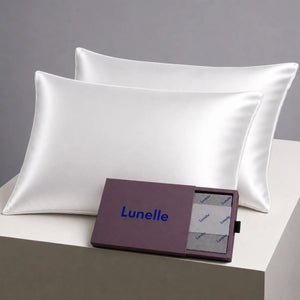
A gentler surface for fragile regrowth and a sensitive scalp. Recommended by cancer care organisations for exactly this reason.
Shop Now →Why Does Post-Chemo Hair Need Such Careful Handling?
Chemotherapy-related hair loss often begins within a few weeks of starting treatment. The scalp can feel tender during this period, and the experience of losing hair, and then watching it return, carries its own emotional weight that sits alongside the physical. Most people do see regrowth after treatment ends, though the timeline varies considerably. Some guidance from cancer centres notes that initial regrowth may begin within weeks of completing treatment, while fuller recovery often takes six to twelve months. The new hair may be softer, finer, curlier, or simply different from what it was before treatment.
Mayo Clinic notes that new post-chemo hair can be especially fragile, and that it may be more easily damaged by styling products and heat while the scalp remains sensitive. Dana-Farber Cancer Institute describes post-treatment hair as "soft, new hair" that warrants gentle handling. This is not a caution that applies to hair in general: it applies to the specific biological state of hair at this particular stage of recovery.
Expert Insight
MD Anderson Cancer Center advises patients to avoid extra chemicals during the regrowth phase if they add discomfort, and to use mild, sensitive-skin-appropriate shampoos and cleansers. The recommendation reflects a broader principle in post-treatment hair care: the scalp may remain reactive and the new hair fragile for some time after chemotherapy ends. Gentler products and surfaces are not a luxury recommendation during this phase. They are a practical one.
Source: MD Anderson Cancer Center (mdanderson.org)
Understanding why fragile regrowth needs gentler handling is useful not because it changes what you do, but because it explains why the ordinary advice about hair care changes after treatment. Hair that has come through chemotherapy is not just "delicate" in a stylistic sense. It is in a genuine state of biological recovery, and the choices made during that window matter more than they would at a different time.
What fragile regrowth actually needs
When people think about supporting hair regrowth after chemotherapy, the focus often lands on speed: what will make it come back faster? That is entirely understandable. But from a hair health perspective, what post-chemo regrowth needs most in the early months is not acceleration. It is protection from the things that can damage it before it has properly established itself.
There are three consistent priorities across the guidance offered by cancer care centres and dermatologists. Separately, knowing the signs of genuinely healthy hair is useful as a baseline -- it helps you track whether regrowth is progressing as expected.
Less irritation to the scalp
Both the chemotherapy itself and the regrowth process can leave the scalp dry, itchy, sensitive, or uncomfortable. Macmillan Cancer Support recommends using fragrance-free moisturiser if the scalp is dry or flaky, and advises natural-fibre pillowcases because synthetic fibres can irritate the scalp during this period. MD Anderson recommends minimising chemical exposure during regrowth and choosing milder cleansers. The scalp during this phase benefits from the same approach used for sensitive or reactive skin: reduce the number of potential irritants.
Less mechanical stress on the hair shaft
Hair cosmetics research consistently identifies friction, tension, and mechanical handling as primary drivers of fibre damage and breakage. When hair is fine, short, and newly emerged, it is more vulnerable to these forces than established hair. Reviews in the cosmetic science literature note that reducing interfibre friction helps with detangling, frizz, and breakage. The logic applies both to how you brush or style regrowth, and to what surfaces it encounters at rest.
Expert Insight
Cancer Research UK, Dana-Farber Cancer Institute, and MD Anderson all note that post-chemotherapy hair can return with a different texture: curlier, finer, or softer than the hair before treatment. This phenomenon is common enough to have acquired the informal name "chemo curls." Curlier or finer hair is structurally more prone to tangling, dryness, and friction-related damage, which is why the gentle-handling advice becomes more rather than less important if your regrowth comes back with a different texture.
Sources: Cancer Research UK, Dana-Farber Cancer Institute, MD Anderson
Realistic expectations
The post-chemo haircare market includes a great many products that imply more than they can deliver. Over-the-counter growth serums, scalp stimulators, and various oils may be soothing and some may even help with scalp condition, but none of them reliably reverse chemotherapy-induced alopecia on a defined schedule. MD Anderson states plainly that it is difficult to say what products will help with regrowth after chemotherapy, and suggests avoiding extra chemicals that may add discomfort. The American Academy of Dermatology notes that dermatologists may sometimes recommend minoxidil after treatment, but this is a clinical decision rather than a general suggestion.
The case for silk sits outside the growth-treatment category entirely. It is not claiming to stimulate follicles. It is making a much more modest and much better-supported claim: a smoother sleep surface reduces friction on fragile hair and is more comfortable for a sensitive scalp. That is the appropriate framing, and it is one that the major cancer care organisations support.
Is Silk Better Than Satin for Post-Chemo Scalps?
One of the most common points of confusion in this area is whether silk and satin are interchangeable terms. They are not. For a detailed breakdown of how the two compare for hair in general, our guide on whether satin is actually good for hair covers the full picture. Understanding the difference is particularly relevant for post-chemo care, because the choice between a natural fibre and a synthetic one has practical implications for scalp sensitivity.
Silk is a natural protein fibre, most commonly produced from the cocoons of the silkworm Bombyx mori. It is breathable, temperature-regulating, and has a long history of use in textiles and traditional medicine contexts. Satin, as Britannica explains, is a weave structure rather than a fibre. Satin fabric can be made from silk, but it is most commonly made from polyester or other synthetic materials. A "satin pillowcase" at a budget price point is almost certainly polyester. It may be smoother than cotton, but it will not breathe in the same way, and it may feel warmer and less comfortable against sensitive skin.
| Property | 100% mulberry silk | Polyester satin | Cotton |
|---|---|---|---|
| Friction on hair | Very low | Low | Medium-high |
| Breathability | Excellent | Poor | Good |
| Moisture absorption | Low | Very low | High |
| Scalp comfort for sensitive skin | High (natural fibre) | Moderate (synthetic) | Moderate (can be rough) |
| Recommended by cancer care orgs | Yes (explicitly) | Yes (often alongside silk) | No specific recommendation |
| Care requirements | Gentle wash, cool water | Machine washable | Easy care |
Macmillan Cancer Support specifically advises natural-fibre pillowcases and notes that synthetic fibres can irritate the scalp. Memorial Sloan Kettering mentions both satin and silk pillowcases as options that reduce tangling. Both are smoother than standard cotton, but for readers whose scalps are reactive, sensitive, or still recovering from treatment, the breathability and natural-fibre properties of real silk have a meaningful advantage over synthetic satin.
What Can Silk Actually Do for Chemo Hair Regrowth?
The case for using silk for post cancer hair care rests on a few specific mechanisms, all of which are better supported by evidence than the broader marketing claims sometimes made about silk bedding.

Reduced friction on fragile new hair
Hair moves during sleep. On a rough cotton pillowcase, that movement creates repeated friction against the hair shaft. On a smoother surface, hair slides more freely. Textile research notes lower friction values for silk compared with cotton, and Memorial Sloan Kettering specifically tells patients that sleeping on a satin or silk pillowcase can reduce hair tangling because of the smoother surface. For short, fine, newly grown post-chemo hair, which has less structural mass to protect it, reducing overnight friction is a practical and meaningful benefit.
Greater comfort for a sensitive scalp
Macmillan notes that during and after chemotherapy, the scalp may be dry, itchy, or easily irritated, and that natural-fibre pillowcases can be more comfortable than synthetic alternatives. Dermatology literature also supports the principle that smooth, soft textiles are less likely to cause friction-related irritation on compromised skin than rougher surfaces. For scalps that are still reactive from treatment, the surface they spend the night against is a relevant variable.
Less tangling for changed hair texture
Post-chemo hair often returns with more curl or a finer texture than it had before treatment. Curlier hair is structurally more prone to tangling, and finer hair has a smaller shaft diameter, which makes it more vulnerable to mechanical damage. This is also the phase where hair static can become more noticeable, particularly when new growth is short, fine, and making contact with synthetic fabrics. Silk's smooth surface allows even fine or curly hair to move without catching, which reduces the overnight tangle formation that is particularly frustrating during regrowth when strands are still short and unpredictable.
A more comfortable sleep environment during recovery
Recovery from cancer treatment involves far more than medical management. Comfort, rest, and quality of sleep matter. If a tender scalp is waking you up at night, or if the friction of a rough pillowcase is adding to existing skin sensitivity, improving your sleep surface is not a trivial concern. Silk is cooler, softer, and more comfortable than most alternatives. That matters, especially during a period when many aspects of daily comfort have been disrupted by treatment.
What Do the Major Cancer Care Organisations Recommend?
The endorsement of silk and satin pillowcases for post-chemo hair care does not come from beauty marketing. It comes from the clinical organisations that work directly with patients managing hair loss and regrowth as a result of treatment.
Expert Insight
Memorial Sloan Kettering Cancer Center recommends sleeping on a satin or silk pillowcase for patients managing hair loss related to cancer treatment. The guidance states directly that these fabrics are smoother and can reduce hair tangles. This recommendation sits within MSKCC's broader patient education around hair loss, not within a beauty context, which is a meaningful distinction when evaluating the reliability of the advice.
Source: Memorial Sloan Kettering Cancer Center (mskcc.org)
Expert Insight
Macmillan Cancer Support advises that natural-fibre pillowcases such as silk can help during hair loss and regrowth, and specifically notes that synthetic fibres may irritate the scalp during this period. Macmillan's guidance is written for patients and carers managing the practical effects of cancer treatment, and the inclusion of natural-fibre pillowcases reflects its relevance to patient comfort rather than aspirational beauty advice.
Source: Macmillan Cancer Support (macmillan.org.uk)
Cancer Research UK, Dana-Farber Cancer Institute, and Mayo Clinic all advise gentle handling, avoidance of heat styling and harsh chemicals, and mild cleansers during the regrowth phase. While not every source names a specific pillowcase material, the consistent thread across all of them is that reducing mechanical stress and chemical irritation is the practical priority during recovery. A silk pillowcase addresses the mechanical side of that equation during the eight hours when you are not making any active haircare choices at all.
Building a gentle post-chemo hair and sleep routine
Silk is one component of a broader approach to post-treatment hair care. Here is how it fits alongside other practical steps recommended by cancer care organisations.
Gentle post-chemo hair care: a practical checklist
- Use a mild, fragrance-free shampoo formulated for sensitive scalps
- Wash hair gently with fingertips, not nails, and avoid scrubbing
- Pat dry with a soft towel rather than rubbing
- Avoid heat styling tools during the fragile early regrowth phase
- Use a wide-tooth comb or soft-bristle brush, starting from the ends; how often you wash during regrowth matters too -- most guidance suggests less frequent washing to preserve natural oils in fragile new hair
- Sleep on a silk or satin pillowcase to reduce overnight friction and tangling
- Apply fragrance-free scalp moisturiser if the scalp is dry or flaky
- Avoid tight hairstyles that place tension on the hairline or follicles
- Consult your oncology or dermatology team before starting any new active ingredients or growth products
A sleep surface designed for sensitive hair and skin
The problem: post-chemo hair is at its most fragile during the regrowth phase. A rough cotton pillowcase creates repeated friction over eight hours of sleep, causing tangling, breakage, and scalp irritation at precisely the time when both hair and skin need the gentlest possible handling.
The solution: a sleep surface with a smooth, natural-fibre weave that hair can move against freely.
22 Momme Silk Pillowcase, Set of 2
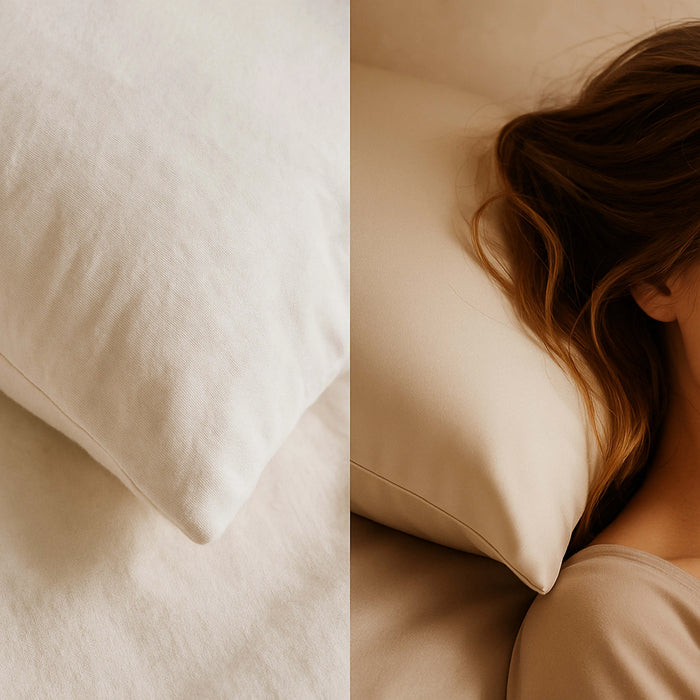
Made from 100% Grade 6A mulberry silk, the same natural fibre recommended by Macmillan and Memorial Sloan Kettering for cancer-related hair care. The charmeuse weave creates a smooth surface that allows fragile, regrowing hair to move without catching, and the natural fibre breathes rather than trapping heat, which is more comfortable for sensitive scalps. This is the silk pillowcase for readers who want a practical, well-supported choice during a delicate recovery period.
- 100% Grade 6A mulberry silk (the natural fibre Macmillan recommends over synthetics)
- 22 momme weight for durability and a substantial, smooth feel
- Charmeuse weave for low friction on fragile new hair
- OEKO-TEX certified, free from harmful chemicals
- Breathable natural fibre, more comfortable for sensitive scalps than polyester satin
- Machine washable on a gentle cycle
- 60-night guarantee
What Results Should You Realistically Expect from Silk?
The most important thing to say about silk for chemo hair regrowth is also the most straightforward: it is a comfort and protection measure, not a treatment. Hair recovery after chemotherapy depends on follicle health, treatment type, duration, dosage, and individual biology. None of those variables are influenced by a pillowcase.
What a silk pillowcase does influence is the environment in which fragile regrowth is operating every night. It reduces friction. It limits tangling. It provides a gentler surface for a scalp that may still be sensitive months after treatment ends. These are real benefits, and they are supported by the organisations that provide clinical care to people going through exactly this experience.
If you are also considering additional products for supporting hair regrowth, the most appropriate step is to discuss them with your oncology team or a dermatologist who is familiar with your treatment history. The American Academy of Dermatology notes that dermatologists may recommend minoxidil for some patients after chemotherapy, and that the specific decision depends on clinical factors that vary by person. Random over-the-counter growth products, purchased without guidance during a phase when the scalp may still be sensitive, carry risk that is not always immediately visible.
A silk pillowcase carries no such risk. It is supportive, it is comfortable, and it aligns directly with what the major cancer care organisations recommend. For readers at this stage of recovery, that combination of simplicity and credible endorsement is worth something.
Recommended by cancer care organisations. Gentle enough for post-treatment recovery.
100% mulberry silk. OEKO-TEX certified. Machine washable. 60-night guarantee.
Shop the 22 Momme Pillowcase →For those who prefer the densest, most substantial silk option, the 30 Momme Silk Pillowcase is also available. Both carry the 60-night guarantee.
Frequently Asked Questions: Silk for Chemo Hair Regrowth
Does silk help chemo hair grow back faster?
No. Hair regrowth after chemotherapy depends on follicle recovery, treatment type, and individual biology. A silk pillowcase may protect fragile new hair by reducing friction and tangling, but it does not stimulate follicles or accelerate the regrowth timeline. The benefit is protective, not therapeutic.
Is silk or satin better for post-chemo hair?
Both are smoother than standard cotton and can help reduce tangling. Memorial Sloan Kettering mentions both satin and silk. The practical difference is that silk is a natural fibre, while satin is a weave that is usually made from polyester. Macmillan Cancer Support specifically recommends natural-fibre pillowcases and notes that synthetic fibres can irritate a sensitive scalp. For that reason, 100% mulberry silk is generally the preferred choice during post-treatment recovery.
Why does post-chemo hair sometimes come back curlier?
This is a recognised phenomenon that cancer care organisations including Cancer Research UK and Dana-Farber describe in their patient guidance. Chemotherapy can temporarily alter the hair follicle's shape, which changes the texture of the hair it produces. The curls are often temporary and may relax as regrowth continues, though this varies by individual and treatment type. Curlier regrowth is also more prone to tangling, which makes a smooth sleep surface particularly useful during this phase.
Can a silk pillowcase help a sensitive scalp after chemo?
It may. Macmillan Cancer Support notes that natural-fibre pillowcases such as silk can be helpful, while synthetic fibres may irritate the scalp. If your scalp feels dry, itchy, or easily irritated during or after treatment, a natural silk pillowcase provides a softer, more breathable surface than standard cotton or polyester alternatives.
When can I start using heat on my hair after chemo?
Most cancer care guidance recommends avoiding heat styling tools during the early fragile regrowth phase. Mayo Clinic notes that new post-chemo hair may be more easily damaged by heat while the scalp remains sensitive. The specific timeline varies by individual and treatment. This is a question worth discussing directly with your oncology team or a dermatologist who is familiar with your treatment history.
Should I use minoxidil after chemotherapy?
Possibly, under clinical guidance. The American Academy of Dermatology notes that dermatologists may sometimes recommend minoxidil after cancer treatment, but this is a clinical decision based on individual factors. It is not a general recommendation and should not be started without consulting your oncology or dermatology team first, particularly while the scalp may still be sensitive.
How soon after chemo ends should I expect hair to come back?
Initial regrowth often begins within several weeks of completing chemotherapy, but fuller recovery typically takes six to twelve months, according to guidance from cancer centres including Mayo Clinic and Cancer Research UK. The timeline depends on the type of chemotherapy, dosage, duration, and individual biology. Some people see regrowth sooner; others take longer. If regrowth seems delayed or if you have concerns, speak with your oncology team.
Is it safe to dye or colour hair after chemo?
Most cancer care guidance recommends waiting until regrowth is well established before introducing chemical processes such as colouring or perming. MD Anderson and Macmillan both advise minimising chemical exposure during the regrowth phase while the scalp remains sensitive. A general recommendation is to wait at least six months after completing treatment before colouring, but this is best confirmed with your oncology team based on your specific treatment history.
Does a silk pillowcase help skin as well as hair during recovery?
It may provide some comfort benefits for sensitive or dry skin. Silk's smooth surface creates less friction than cotton, and it is a natural fibre that breathes rather than trapping heat. Dermatology literature shows that smooth fabrics are more comfortable for compromised or reactive skin. The anti-wrinkle and anti-acne claims sometimes made about silk pillowcases are not well supported by rigorous clinical evidence. The genuine benefit is friction reduction and comfort, which applies to both hair and skin.
How do I care for a silk pillowcase so it lasts?
Hand wash in cool water with a gentle, pH-neutral detergent, or machine wash on a delicate cycle at a low temperature. Do not wring, bleach, or tumble dry. Dry flat away from direct sunlight. A well-cared-for silk pillowcase will maintain its smoothness and integrity through regular washing. See the care label for the specific guidance applicable to your pillowcase.
When should I speak to a doctor about slow hair regrowth after chemo?
If you are concerned about the pace of your regrowth, notice inflammation, rash, pain, or persistent hair loss beyond the expected recovery window, speak with your oncology team or a dermatologist. While chemotherapy-related hair loss is usually temporary, some cases take longer or can become persistent. Your clinical team is the right first contact for any concerns about regrowth that are outside your expected timeline.
Further Reading
Sources and References
- Mayo Clinic. Chemotherapy and hair loss: What to expect during treatment.mayoclinic.org
- MD Anderson Cancer Center. Hair loss after chemotherapy: 10 things to know.mdanderson.org
- Gavazzoni Dias MF. Hair Cosmetics: An Overview.PMC / NIH
- Dana-Farber Cancer Institute. Hair Loss During Cancer Treatment.dana-farber.org
- Hu X et al. A review on the structure of Bombyx mori silk fibroin fiber.PubMed
- Memorial Sloan Kettering Cancer Center. Hair Loss and Your Cancer Treatment.mskcc.org
- Britannica. Satin: Silk, Polyester, Weave.britannica.com
- Macmillan Cancer Support. Cancer hair care.macmillan.org.uk
- Cancer Research UK. Hair loss, hair thinning and cancer drugs.cancerresearchuk.org
- American Academy of Dermatology. 7 ways cancer treatments affect your skin and how to get relief.aad.org
- Sleep Foundation. Satin vs. Silk Pillowcase.sleepfoundation.org