
Charmeuse vs Satin Fabric: What Actually Matters for Hair, Skin, and Sleep
Lunelle Team
15 min read
Few things in bedding shopping are quite as quietly confusing as the charmeuse versus satin question. Both can be silky-looking. Both can produce a smooth, lustrous surface. Both appear in pillowcase product descriptions with approximately equal confidence. And yet they are not the same thing, the products made from them are not equivalent, and the difference matters if you are buying a silk pillowcase specifically because you want a certain set of properties for your hair and skin.
The shorter version: satin describes how a fabric is woven. Charmeuse describes a specific type of that weave in a lightweight, fluid construction. Neither word tells you what fibre the fabric is made from, which is where the real performance difference lies. Two pillowcases can look identical on a product page and be genuinely different products once you check the fibre content. Sleep Foundation notes that silk pillowcases reduce friction against hair and absorb less moisture than cotton, but these benefits belong to silk as a fibre, not to satin as a weave. A polyester satin pillowcase may look similar to a silk charmeuse one in a photograph. It does not perform similarly in use.
This guide breaks down what charmeuse and satin actually are, why the distinction matters for hair, skin, and sleep, and what to look for when choosing a silk pillowcase so the product matches the description.
Quick Answer
Satin is a weave structure, not a fibre. Charmeuse is a specific, lightweight type of satin-weave fabric, typically made from silk. When a pillowcase is described as "silk charmeuse," it means it is made from silk fibre woven in a satin construction, giving a smooth, glossy face and a matte reverse. The benefits most people associate with silk pillowcases (reduced friction, lower moisture absorption, temperature regulation) come from the silk fibre, not the satin weave. A polyester satin pillowcase and a silk charmeuse pillowcase can look similar but perform differently in every property that matters for hair, skin, and overnight comfort.
Key Takeaways
- Satin is not a fibre; it is a weave. Merriam-Webster defines satin as "a fabric in satin weave with lustrous face and dull back." It can be made from silk, polyester, nylon, acetate, or blends. Two satin pillowcases from different brands can have completely different fibre content.
- Charmeuse is a specific satin-weave fabric, typically lightweight and fluid, with a glossy front face and matte reverse. Smithsonian textile records describe silk charmeuse as a lightweight satin-weave silk with a distinctive drape. "Silk charmeuse" specifies both the fibre (silk) and the weave construction (charmeuse satin).
- The performance benefits most associated with silk pillowcases come from silk as a fibre: lower friction against hair cuticles, lower moisture absorption than cotton, breathability, and temperature regulation. These properties exist because of the fibre, not the weave.
- TRI Princeton's hair-friction testing found silk produced the lowest friction against hair of the fabrics tested. This is a property of silk fibre, which would apply whether the silk is woven in a charmeuse, twill, or other construction. The satin weave adds a smooth face; the silk fibre provides the deeper performance properties.
- Sleep Foundation is explicit that there is no peer-reviewed clinical evidence proving that silk pillowcases prevent acne or wrinkles. The established, evidence-supported benefits are friction-related: reduced overnight frizz, reduced static, and reduced mechanical hair breakage. Do not buy silk for the anti-ageing story.
- For pillowcases, 22 momme is the practical quality threshold where durability, softness, and performance are well balanced. Below 19 momme, the weave is too thin to hold its surface quality reliably. Momme is a measurement of silk fabric weight, not a universal bedding standard.
In this article
- Charmeuse vs satin fabric explained
- Why fabric type matters for hair, skin, and sleep
- Silk charmeuse vs synthetic satin: the real performance gap
- Why satin is not the villain of the bedding aisle
- Silk pillowcase claims: what the evidence supports
- What to look for when buying a silk pillowcase
- Static, breathability, and the details that show up over time
- Charmeuse vs satin: a direct comparison
- Frequently asked questions

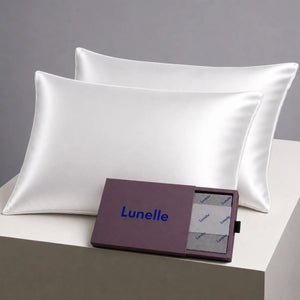
Two pillowcases can look identical on a product page. The fibre content is where the resemblance ends.
Shop Now →Charmeuse vs satin fabric explained
Here is the clearest version of a distinction that most product pages obscure. Satin is a weave structure, not a fibre. Merriam-Webster defines satin as "a fabric in satin weave with lustrous face and dull back." Sleep Foundation makes the distinction directly: satin is a type of weave, not a material, which means the word "satin" on a product label tells you about the construction method, not the fibre used. Satin can be made from silk, polyester, nylon, acetate, rayon, or blends. The surface lustre of a satin weave comes from the structure of the fabric, not from the nature of the fibre.
Charmeuse is a specific type of satin-weave fabric. Merriam-Webster defines it as "a fine semilustrous crepe in satin weave." In textile terms, charmeuse is characterised by its lightweight, fluid drape, its smooth and glossy front face, and its matte reverse. Smithsonian textile records describe silk charmeuse as a lightweight satin-weave silk, distinct from heavier satin-weave silks that have more body and less of that liquid drape quality. The defining characteristics of charmeuse are its lightness and fluidity, which is why it has become the standard weave for premium silk pillowcases.
So when a pillowcase is described as "silk charmeuse," it is telling you two things: the fibre is silk, and the weave construction is the specific fluid satin-weave variant called charmeuse. When a pillowcase is described simply as "satin," it is telling you one thing: the weave method. The fibre could be anything. That is the entire distinction, and it is worth knowing before making a purchase.
For a deeper dive into what mulberry silk is and why it is considered the premium fibre option, the full guide covers the production process, fibre characteristics, and what distinguishes mulberry silk from other silk types.
Why fabric type matters for hair, skin, and sleep
Hair care and skin care routines focus heavily on products applied to the hair and face. The surface those areas spend eight hours against is less discussed, but it is not irrelevant. For hair specifically, friction during sleep contributes to cuticle damage, tangling, frizz, and mechanical breakage in ways that are well-documented in dermatology and hair-science literature.
A large review of hair cosmetics in the International Journal of Trichology notes that cuticle damage contributes to hair fibre fracture and that reducing friction is one of the primary ways to reduce mechanical breakage and weathering over time. Sleep Foundation similarly explains that smoother pillowcase materials reduce snagging and pulling on hair, which may translate to less frizz and less overnight breakage. This matters most for curly, dry, colour-treated, extension-wearing, or already-fragile hair, where the cuticle is more exposed and the hair shaft is closer to its breaking threshold.
For skin, the picture is more nuanced. Sleep Foundation notes that silk absorbs less moisture than cotton, which may help skin retain more hydration overnight, and that the smooth texture may reduce temporary morning creases because it tugs less on the skin. But it also says clearly that the wrinkle-prevention claims are not backed by rigorous clinical studies. The honest position is that a silk pillowcase may reduce acute friction on the face and may reduce temporary sleep marks, but it is not a clinically proven anti-ageing intervention. Buy it for the hair benefits and the comfort. If the skin also improves, that is a welcome side effect.
Comfort is also a genuine variable. Silk is a natural protein fibre with good moisture-regain properties (approximately 11%, meaning it can absorb and release moisture without feeling damp). Sleep Foundation notes that silk is breathable and moisture-wicking, making it popular with hot sleepers who find standard or synthetic bedding traps heat. Synthetic satin, made from polyester, is smooth but less breathable, which can make it feel warmer and less comfortable for people who run hot during the night.
Silk charmeuse vs synthetic satin: the real performance gap
Once you understand that both silk charmeuse and polyester satin produce a smooth, satin-weave surface, the question becomes: what is actually different when you use them? The answer comes down to four properties: friction, static, breathability, and durability.
Friction against hair
TRI Princeton's hair-friction testing found that silk produced the lowest friction against hair of all the fabrics tested, with satin following behind. The result is primarily attributable to the silk fibre's smooth, continuous filament structure, which creates a genuinely low-friction surface. Polyester satin is also smoother than cotton, but polyester fibres have a different surface chemistry and generate more static charge than silk, which affects how hair behaves on contact.
Static generation
Silk is a natural protein fibre with a tendency to remain static-neutral in most indoor humidity conditions. Polyester is a synthetic fibre that generates significant electrostatic charge, particularly in dry conditions. For hair that is already fragile, prone to frizz, or naturally textured, the difference in static generation between a silk and a polyester sleep surface can be noticeable in how the hair looks and behaves by morning.
Breathability and temperature regulation
Silk has a moisture regain of approximately 11%, meaning it absorbs a small amount of moisture from the environment and from contact with the skin, then releases it, helping to moderate temperature and humidity at the surface. Polyester has a moisture regain of less than 1%. For a pillowcase that spends eight hours against your face, that difference in moisture handling creates a meaningfully different experience for hot sleepers or anyone who finds synthetic fabrics uncomfortably warm.
Durability and surface quality over time
Good Housekeeping's testing panel notes that higher-quality silk pillowcases hold up well in abrasion resistance testing and maintain their surface quality through regular washing. The long, uniform fibres of mulberry silk produce a more stable weave structure than shorter, less uniform synthetic fibres, which means the smooth charmeuse surface degrades more slowly with use and washing. A quality silk charmeuse pillowcase bought at a good momme weight is typically a several-year purchase rather than a seasonal one.
Why satin is not the villain of the bedding aisle
It would be easy to read the above as "satin is bad, silk is good." That is not quite the right conclusion. For a detailed examination of what a satin pillowcase actually offers, the full comparison is more nuanced than the marketing often suggests.
Satin pillowcases, including polyester satin ones, genuinely do reduce friction and snagging compared with standard cotton. They can help with overnight frizz and some degree of tangles. They are considerably less expensive than real silk. For someone who wants to try the concept of a smoother sleep surface without committing to the cost of silk, a quality satin pillowcase is a reasonable starting point. The friction reduction benefit is real, even if it is less complete than with silk.
The gap between silk and synthetic satin shows up most clearly for: hot sleepers who notice a difference in overnight temperature; people with very dry or porous hair who notice static and moisture differences; and people who want a product that will maintain its quality through regular washing over several years rather than needing replacement within twelve months. If none of those factors apply, the case for silk over satin is weaker, and satin is a perfectly reasonable choice.

Silk pillowcase claims: what the evidence supports and what it doesn't
The silk pillowcase category attracts a significant amount of overclaiming. Before deciding whether charmeuse silk is worth the cost over synthetic satin, it is worth being clear about what the evidence actually supports versus what gets repeated mainly because it sounds good.
What the evidence supports: silk's smooth surface reduces friction against hair cuticles, which may reduce overnight frizz and breakage. This is well-supported mechanically by TRI Princeton's friction testing and consistent with the AAD's recommendation to reduce mechanical stress on fragile hair during sleep. Silk absorbs less moisture than cotton, meaning the hair and skin retain more hydration on contact. Silk is more breathable than polyester satin, which is relevant for overnight comfort.
What the evidence does not support: silk pillowcases preventing acne, preventing wrinkles, improving skin elasticity, or producing clinically measurable anti-ageing effects. Sleep Foundation states this explicitly: there is no peer-reviewed clinical evidence backing the wrinkle or acne prevention claims. The evidence is mechanistically plausible (less friction, less skin compression) but not demonstrated at a clinical trial level. A silk pillowcase is a quality sleep upgrade with well-supported friction and moisture-management benefits. It is not a skincare treatment.
Regular washing also matters. Sleep Foundation recommends washing pillowcases approximately once a week. A silk pillowcase that is not washed regularly accumulates product residue, skin oil, and bacteria in exactly the same way a cotton one does. The silk fibre is not antimicrobial just because it is silk. The benefits depend on the pillowcase being clean.
What to look for when buying a silk pillowcase
Now that the charmeuse versus satin distinction is clear, here is what to look for to ensure the product you buy matches the description you have been reading about.
100% mulberry silk, stated clearly
Mulberry silk is produced by silkworms fed exclusively on mulberry leaves, producing longer, more uniform fibres than wild or mixed-diet silk alternatives. Good Housekeeping and Sleep Foundation consistently identify mulberry silk as the preferred specification for pillowcases because the longer fibres produce a more durable and smoother surface. If a product page says "100% silk" without specifying mulberry, ask or look for independent certification. For the complete guide to what to look for in a silk pillowcase for hair and skin, the in-depth version covers certification, grade, and what to check on a product page.
Charmeuse weave stated, not just "satin"
A product page that says "silk charmeuse" is giving you specific information. A product page that says "satin" without specifying the fibre may be describing a polyester construction. If the product is genuinely silk charmeuse, it will say so. If it relies solely on "satin" language and smooth-looking product photographs, that is a reasonable reason to check the fibre content before purchasing.
Momme weight: 19 to 25, with 22 as the sweet spot
Momme is the weight measurement used for silk fabrics, not to be confused with thread count, which is a measurement for woven fabrics generally. Sleep Foundation places the ideal range for silk pillowcases at 19 to 25 momme. Good Housekeeping's testing found top performers at 22 momme or above. Below 19 momme, the fabric is thinner and more prone to surface degradation over time. At 22 momme, the fabric feels substantial without being stiff, and holds its smooth surface quality through regular washing reliably.
Grade A or 6A mulberry silk
Silk is graded by the quality and uniformity of the fibres. Grade A is the top quality tier, with 6A being the most premium subdivision. A product page that specifies Grade A or 6A mulberry silk is giving you a verifiable quality indicator. One that does not mention grade at all may be using lower-tier material while relying on the general silk premium perception.
30 Momme Silk Pillowcase, Set of 2

If you have worked through this article and decided the fibre content matters, the 30 momme version is the answer to the upper end of that decision. Denser than the standard 22 momme, noticeably heavier and more substantial, and designed to hold its surface quality through regular washing over a long period. The charmeuse weave provides the smooth face side; the Grade 6A mulberry silk fibre provides everything else.
- 100% Grade 6A mulberry silk, 30 momme
- Charmeuse weave: smooth, fluid face side against hair and skin
- Lower friction against hair than cotton, per TRI Princeton testing of silk fabrics
- More breathable than polyester satin: better for hot sleepers
- Machine washable on a gentle cycle; air-dry; set of 2 in white
Static, breathability, and the details that show up over time
The differences between silk charmeuse and polyester satin that the photographs do not show up are the ones that accumulate over weeks and months of use. Static is the one that most people notice first.
Polyester generates static charge as it moves against skin and hair during sleep. This is the physics of synthetic polymer fibres: they accumulate and hold electrostatic charge more readily than natural protein fibres. Silk, as a natural protein, behaves more like skin and hair in terms of charge accumulation. The comparison between satin and silk for overnight hair management covers this in more detail, but the short version is that anyone whose hair already tends towards static frizz will likely notice a difference when switching from polyester satin to silk charmeuse.
Breathability matters most in the first hour of sleep and during hot nights. Polyester does not breathe, which means the surface between your face and the pillow becomes warmer faster than with silk. For most people this is a background discomfort; for people who already run hot or sleep in warm rooms, it can be enough to affect sleep quality. Silk, with its moisture regain properties and better air permeability, maintains a cooler and more comfortable surface temperature through the night.
Finally, there is the durability question. Silk charmeuse at 22 momme is a product that, with proper care, should last three to five years of weekly use before showing significant surface degradation. A polyester satin pillowcase at a similar price point typically shows surface wear (pilling, snagging, reduction in smoothness) in the first one to two years. Per night of use, the quality silk is often the more economical choice over a three to five year window.
Charmeuse vs satin: a direct comparison
| Property | Silk Charmeuse | Polyester Satin |
|---|---|---|
| Fibre type | Natural protein (silk) | Synthetic polymer (polyester) |
| Surface friction against hair | Lowest of fabrics tested (TRI Princeton) | Lower than cotton; higher than silk |
| Static generation | Low (natural protein fibre) | Higher (synthetic fibre) |
| Breathability | Good; moisture regain ~11% | Low; moisture regain under 1% |
| Moisture absorption from hair/skin | Lower than cotton; absorbs and releases moisture | Low absorption but does not release moisture |
| Surface quality longevity | 3 to 5 years with proper care | 1 to 2 years before visible wear |
| Price range | Higher | Lower |
| Suitable for hot sleepers | Yes | Less so |
Frequently Asked Questions: Charmeuse vs Satin Fabric
What is the difference between charmeuse and satin?
Satin is a weave construction method that produces a smooth, lustrous face and a dull reverse. Charmeuse is a specific type of satin-weave fabric, typically lightweight and very fluid, with a glossy front and matte back. Crucially, neither word specifies the fibre: satin can be made from silk, polyester, nylon, or other materials. Charmeuse is usually made from silk, but can technically be made from synthetics. "Silk charmeuse" specifies both the fibre (silk) and the weave construction (charmeuse), which is why it is the more precise and informative label for a quality silk pillowcase.
Is charmeuse the same as silk?
Not exactly. Charmeuse describes a weave construction, not a fibre. It is typically made from silk, but the word charmeuse alone does not guarantee silk content. "Silk charmeuse" is the combination that confirms both the fibre and the construction. Most high-quality silk pillowcases use a charmeuse weave because its smooth, fluid surface is ideal for the face-to-pillow contact that hair and skin experience overnight. But always check that the product specifies both "silk" and "charmeuse" rather than relying on the charmeuse label alone.
Is charmeuse silk or satin better for hair?
Silk charmeuse, in the sense of real silk woven in a charmeuse construction, is better for hair than polyester satin. TRI Princeton's testing found silk produces the lowest friction against hair. Silk also generates less static than polyester, which is relevant for frizz. A good-quality polyester satin is still better than standard cotton for friction and tangling, but real silk charmeuse offers more consistent performance, lower static, and better breathability. For hair that is fragile, textured, or colour-treated, the performance gap is more noticeable.
Can satin pillowcases be as good as silk?
For friction reduction alone, a good-quality satin pillowcase (whatever the fibre) is meaningfully better than cotton and can deliver most of the overnight frizz and tangling benefits. Where satin falls short of silk is in breathability, static generation, and long-term surface durability. For hot sleepers, for hair prone to static, or for anyone looking at a multi-year product lifespan, these differences are relevant. For a basic friction reduction upgrade at a lower price, quality satin is a reasonable choice.
What momme weight should a silk charmeuse pillowcase be?
Sleep Foundation recommends 19 to 25 momme as the ideal range for silk pillowcases. Good Housekeeping's testing found most top performers at 22 momme or above. Charmeuse, being a lighter satin-weave construction, tends to sit in the lighter end of this range while still performing well. At 22 momme, the fabric is substantial, durable, and smooth. Below 19 momme, charmeuse begins to feel thin and is more prone to developing small snags or surface degradation with regular use.
Does a silk charmeuse pillowcase prevent wrinkles?
There is no peer-reviewed clinical evidence supporting the claim that silk pillowcases prevent wrinkles. Sleep Foundation states this explicitly. The mechanistic argument (silk creates less compression and drag on the skin than cotton) is plausible, but it has not been demonstrated at a clinical trial level. A silk pillowcase may reduce temporary sleep marks and acute friction on the face. It is not a substitute for sunscreen, retinoids, or other clinically demonstrated interventions for skin ageing. Buy it for the hair benefits. If the skin also improves, that is a bonus.
Why is charmeuse commonly used for silk pillowcases?
Charmeuse's characteristic combination of a smooth, glossy face and a lightweight, fluid drape makes it particularly well-suited for pillowcases. The smooth face side produces the low-friction surface that benefits hair and skin. The fluid drape means the fabric conforms well to the pillow surface and moves with the head rather than bunching or creating pressure ridges. Heavier satin-weave silks with more body are used for other applications (satin ribbons, heavier garment fabrics) where structure matters more than drape. For a pillowcase, charmeuse's softness and fluidity are features, not limitations.
Is sateen the same as charmeuse or satin?
Sateen is a satin-weave fabric made from cotton, not silk or other fibres. Cotton Incorporated notes that "sateen" distinguishes the cotton version of the satin weave from "satin," which traditionally referred to a silk-containing satin-weave fabric. In practice, sateen is used primarily for cotton bed sheets where a smoother feel than standard percale is desired. It is not the same as charmeuse or silk satin, and its fibre properties are those of cotton (rougher surface, higher moisture absorption) rather than silk.
How do I identify if a "satin" pillowcase is actually silk or polyester?
Check the fibre content label, which by law must be disclosed on any sold textile product. The label will list the percentage of each fibre. "100% polyester" or "100% nylon" means the product is synthetic satin. "100% mulberry silk" or "100% silk" means it is real silk. If a product describes itself as "satin" without listing fibre content, that is a gap worth investigating before purchasing. Legitimate silk products will specify the fibre clearly. Products that rely on visual presentation and satin-weave terminology without fibre disclosure are often synthetic.
What is Grade 6A mulberry silk and why does it matter?
Mulberry silk is graded by the quality and uniformity of the raw silk filaments. Grade A is the highest quality tier, representing the longest and most uniform fibres; 6A is the most premium subdivision within Grade A. Higher grades produce smoother, more consistent, and more durable fabric. For a pillowcase used nightly and washed weekly, fibre grade affects how long the charmeuse surface remains smooth and glossy. A Grade 6A mulberry silk pillowcase will typically maintain its surface quality through years of regular use in a way that lower-grade silk or synthetic alternatives may not.
Can I machine wash a silk charmeuse pillowcase?
Yes, most quality silk charmeuse pillowcases at 22 momme and above are machine washable on a gentle or delicate cycle, provided they are protected in a mesh laundry bag and air-dried rather than tumble-dried. Good Housekeeping's testing confirmed that higher-quality silk pillowcases hold up well through regular gentle washing. Weekly washing is the recommended routine. Products that require dry-cleaning only are more fragile constructions and should be considered carefully before purchasing as daily-use items.
Silk Charmeuse, Properly Specified
100% Grade 6A mulberry silk in a charmeuse weave. The specification is clear because it matters. Both options are machine washable and available as a set of two.
Shop 22 Momme →Or choose the 30 Momme option for a denser, heavier charmeuse weave. Both are real silk. Set of 2 in white.
Further Reading
Sources and References
- Merriam-Webster. Definition of Satin. merriam-webster.com
- Merriam-Webster. Definition of Charmeuse. merriam-webster.com
- Sleep Foundation. Silk Pillowcase: Benefits for Hair and Skin. sleepfoundation.org
- Sleep Foundation. Silk vs Satin Pillowcase. sleepfoundation.org
- Smithsonian Institution. Textile Collections: Charmeuse and Satin-Weave Silks. si.edu
- Dias M.F.R.G. Hair Cosmetics: An Overview. International Journal of Trichology. ncbi.nlm.nih.gov
- TRI Princeton. Hair Friction and Fabric Testing. triprinceton.org
- Good Housekeeping Institute. Best Silk Pillowcases, Tested by Experts. goodhousekeeping.com
- American Academy of Dermatology. How to Stop Hair Breakage. aad.org
- Cotton Incorporated. Fabric Glossary: Satin and Sateen. cottoninc.com