
When to Replace Your Silk Pillowcase: The Signs
Lunelle Team
13 min read
A silk pillowcase does not come with a replacement reminder. There is no mileage counter, no indicator light, no polite notification that the benefits you bought it for have quietly stopped applying. You are expected to notice on your own, which most people do not, until they are lying awake wondering why their hair looks the same as it did before they made the upgrade.

The answer to when to replace a silk pillowcase is not a fixed date. It is a set of physical signs that tell you the fabric is no longer performing the way silk is supposed to. A high-quality 22 momme mulberry silk pillowcase, cared for correctly, can last two to five years. Sleep Foundation notes that silk pillowcases offer lasting benefits for hair and skin when the fabric maintains its smooth surface integrity. One that has been hot-washed, machine-dried, or exposed to bleach can look tired within months. The calendar is less useful than knowing what to look for.
Quick Answer
Replace your silk pillowcase when it no longer feels smooth against your skin, when you can see visible thinning, pilling, or snags on the surface, when the sheen has faded and the fabric appears dull or flat, or when seams are straining or fraying. A well-cared-for 22 momme mulberry silk pillowcase typically lasts two to five years. Harsh washing, hot water, enzyme detergents, and sun exposure shorten that timeline significantly.
Key Takeaways
- Replace your silk pillowcase based on physical wear signs, not a fixed schedule. The key indicators are surface roughness, loss of sheen, thinning, pilling, and seam stress.
- A high-quality 22 momme mulberry silk pillowcase lasts two to five years with correct care. A 30 momme lasts longer because the denser weave has more structural resilience.
- The four main factors that shorten lifespan are: high wash temperatures, enzyme detergents (which digest silk's protein fibre), prolonged sun exposure, and mechanical agitation (tumble dryers, rough cycles).
- A worn silk pillowcase can create more friction than a new cotton one. Once the fibre surface has roughened, you are not getting the benefit you bought it for.
- Benzoyl peroxide in acne products can bleach and degrade silk. If you use it at night, apply it and allow it to fully absorb before laying your face on the pillow, or use a dedicated pillowcase for those nights.
- Replace both pillowcases in a set at the same time. Alternating between a worn and a fresh pillowcase produces uneven results on your hair and skin.
In this article
- How long does a silk pillowcase last?
- The signs it is time to replace it
- Why a worn silk pillowcase can be worse than cotton
- What shortens silk pillowcase lifespan
- Skincare products and silk: what to watch for
- A practical replacement guide
- What to look for when replacing
- Frequently asked questions

Once you know what to replace it with, this is what to replace it with.
Shop Now →How Long Does a Silk Pillowcase Actually Last?
Premium silk pillowcase brands typically cite two to five years as the expected lifespan of a high-quality mulberry silk pillowcase under correct care conditions. That range is broad because lifespan depends on four variables: momme weight, use frequency, wash frequency, and how well it is washed.
| Momme Weight | Care Quality | Estimated Lifespan |
|---|---|---|
| 19 momme | Good (cool wash, gentle detergent, air dry) | 1 to 2 years |
| 22 momme | Good (cool wash, gentle detergent, air dry) | 2 to 4 years |
| 30 momme | Good (cool wash, gentle detergent, air dry) | 3 to 5 years or more |
| Any momme | Poor (hot wash, tumble dry, enzyme detergent) | 6 to 18 months |
Higher momme weight extends lifespan because a denser weave has more structural resilience. More silk per square metre means more fibre to withstand the mechanical stress of repeated washing, overnight movement, and contact with skincare products. For more on what momme weight actually means and why it matters, the complete silk care guide covers the relationship between fibre quality and durability in practical terms.
Expert Insight: The Canadian Conservation Institute notes that silk is particularly vulnerable to light damage among natural fibres, degrading faster under UV exposure than wool or cotton equivalents. They recommend storing silk textiles away from light when not in use, and treating light exposure as one of the primary accelerants of silk ageing, alongside heat and chemical exposure. This is why a silk pillowcase dried repeatedly in direct sunlight ages faster than its momme weight would suggest.
Canadian Conservation Institute
The Signs It Is Time to Replace Your Silk Pillowcase
The clearest way to assess a silk pillowcase is to run your hand across both surfaces of the fabric when it is clean and dry. New silk feels consistently smooth, with no catching or drag. Worn silk has areas that feel rougher than others, or has lost the fluid, almost slippery feel that makes it useful for hair and skin.
Replace Your Silk Pillowcase If You Notice:
- The fabric no longer feels smooth against your skin or palm when you run your hand over it
- Visible pilling, snags, or pulled threads on the surface
- Thinning areas where the weave is less dense or the fabric appears translucent
- Permanent yellowing or discolouration that does not wash out
- Seams that are fraying, straining, or separating at the edges
- A flat or dull appearance with noticeably less lustre than when new
- Your hair feels more tangled or frizzy in the morning despite consistent overnight care
- Persistent odours that do not wash out, indicating embedded residue in degraded fibre
Any one of these signs is sufficient reason to replace the pillowcase, not merely launder it. Some forms of silk degradation are not reversible by washing. Once the fibre surface has roughened, it stays rough. Healthline's medically reviewed overview of silk vs satin notes that a worn silk surface is no longer providing the benefits the fabric is valued for.

Why a Worn Silk Pillowcase Can Be Worse Than Cotton
This is a point that rarely gets made clearly: a degraded silk pillowcase does not merely stop helping. It can actively create more friction than a standard cotton pillowcase in good condition.
The mechanism is straightforward. Silk's low-friction surface depends on the smoothness and integrity of the fibre. When silk fibres break down, whether from heat, enzymes, light exposure, or mechanical wear, the surface texture becomes irregular. Fraying fibres, rough patches, and thinning areas create points of drag that do not exist on a smooth, intact cotton surface. Textile tribology research confirms that surface texture irregularity is a stronger predictor of friction on skin than fibre type alone.
If you are using a silk pillowcase primarily for hair protection or to reduce sleep lines, a worn one is not a degraded version of the benefit. It is potentially the opposite. The replacement decision should be made before the point at which the fabric is noticeably rough, not after.
What Shortens Silk Pillowcase Lifespan?
The most common causes of premature silk wear are avoidable. Understanding them is useful both for extending your current pillowcase's life and for recognising when the damage is already done.
High wash temperatures
Silk is a protein fibre. Hot water causes protein fibres to contract and the individual filaments to weaken, producing a gradual but irreversible loss of the smooth surface. The maximum safe wash temperature is 30°C (86°F), and cooler is better. University of Georgia Cooperative Extension textile guidance on silk care specifies using only neutral soaps free from alkalis, for the same reason: silk protein is vulnerable to both alkaline chemistry and heat. For a detailed guide to washing silk correctly, the article on common silk care mistakes covers the most frequent errors and how to avoid them.
Enzyme detergents
Standard laundry detergents often contain proteases: enzymes that break down protein-based stains. Because silk is a protein fibre, these enzymes act on it as well. Published research on protease activity in textile washing confirms that repeated use of enzyme-containing detergents accelerates fibre degradation in protein-based textiles including silk. Use a pH-neutral, enzyme-free detergent formulated for silk or delicates. Slip's care guidance for silk recommends a gentle pH-neutral liquid specifically because alkaline detergents degrade silk protein over time.
Tumble dryers and high heat
Heat from tumble dryers weakens silk fibres and reduces sheen, often after only a few cycles. Air drying in shade is the correct method for every wash, not just the first.
Prolonged sun exposure
UV light degrades silk protein at the molecular level, causing yellowing and fibre weakening. Dry silk indoors away from direct sunlight, and do not store it in a sunny location. Canadian Conservation Institute guidance on silk textiles cites UV exposure as one of the primary causes of protein fibre degradation in silk.
Mechanical agitation
Washing silk with other items that have exposed zips, hooks, or rough surfaces can snag and pull the weave. Use a mesh laundry bag and wash silk separately from rougher fabrics. Good Housekeeping's laundry lab recommends a mesh bag and a cold delicate cycle as non-negotiable for machine-washing silk. The guide to keeping silk looking new goes through the full care process in detail.
Expert Insight: University of Georgia Cooperative Extension textile guidance recommends using only neutral soaps with no free alkalies for washing silk and wool, and avoiding chlorine bleach entirely. The guidance identifies enzyme detergents as particularly damaging to protein fibres, noting that enzymes designed for stain removal cannot distinguish between food-based proteins and the silk fibre itself. This is the structural reason why "any gentle detergent" is not sufficient guidance for silk: the enzyme content matters as much as the pH.
University of Georgia Cooperative Extension
Skincare Products and Silk: What to Watch For
Certain overnight skincare products accelerate silk degradation in ways that are not always obvious until the damage is visible. The most important to know about are the ones with active chemical ingredients.
Benzoyl peroxide, commonly used in acne treatments, is one of the most damaging to silk. The American Academy of Dermatology notes that benzoyl peroxide can bleach pillowcases and towels, producing the permanent orange or discoloured patches that indicate chemical degradation. The AAD confirms benzoyl peroxide bleaches textiles and recommends being aware of which surfaces it contacts. If you use a benzoyl peroxide product at night, either apply it and allow it to fully absorb before your face contacts the pillow, use an old pillowcase on those nights, or consider a vitamin A-based alternative that does not have the same bleaching effect.
Heavy oils, silicone-based hair serums, and leave-in conditioners can also accumulate in the fabric over time, eventually building residues that affect the feel of the surface. Weekly washing removes most of these. If you use heavy overnight products regularly, washing after every use rather than weekly may extend the pillowcase's functional life.
Expert Insight: Healthline's medically reviewed overview of silk vs satin pillowcases notes that the benefits of a silk sleep surface (reduced tugging on hair and skin, less moisture absorption) depend entirely on the fabric maintaining its smooth surface integrity. A pillowcase that has been chemically damaged, over-washed in hot water, or subject to mechanical wear is no longer providing those benefits regardless of what it is made from. The replacement decision should be based on whether the surface is still performing, not on how much was paid for it.
Healthline
A Practical Replacement Guide
For most people using a 22 momme silk pillowcase with correct care (weekly cool wash, pH-neutral enzyme-free detergent, air dry), a reasonable review interval is every 12 months: run your hand across the fabric and assess it against the signs above. If it still feels smooth and appears intact, it has more life in it. If any of the wear signs are present, replace it before they worsen.
Replace both pillowcases in a set at the same time. Alternating between a worn and a fresh pillowcase produces inconsistent results and means you are spending half your nights on a surface that is no longer performing as intended.
High-use factors that accelerate the replacement schedule include heavy overnight skincare or hair product routines, shared use (multiple people using the same pillowcase), summer use (more sweating means more frequent washing and more wash cycles per year), and any period where correct washing habits have slipped.
What to Look for When Replacing Your Silk Pillowcase
When replacing, the main variables are momme weight, fibre grade, and closure type. The same principles that applied when you first bought a silk pillowcase apply to the replacement decision, with one addition: consider upgrading momme weight if you found your previous pillowcase wore out faster than expected.
A 22 momme Grade 6A mulberry silk pillowcase is the most broadly recommended option for everyday use, balancing softness, durability, and cost. If your previous pillowcase at a lower momme weight wore out in under two years with correct care, moving up to 22 momme or 30 momme is a reasonable upgrade rather than a luxury. The common silk care myths article addresses the "all silk is the same" misconception if you want more context on why grade and momme weight matter practically.
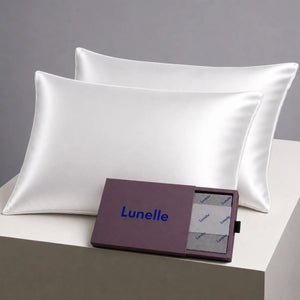
22 Momme Silk Pillowcase, Set of 2
When replacing a worn silk pillowcase, the most important factor is starting with a quality foundation. Lunelle's 22 Momme Silk Pillowcase uses Grade 6A mulberry silk, the highest available grade, in a charmeuse weave. The fabric is certified OEKO-TEX, which means it is free from the chemical treatments that can accelerate degradation. At 22 momme, it is the most commonly recommended weight for everyday use: durable enough to last two to four years with correct care, soft enough to be the reason you keep the habit.
- 100% Grade 6A mulberry silk, charmeuse weave
- 22 momme: the practical midpoint for durability and feel
- OEKO-TEX certified, free from harmful chemicals
- Machine washable, gentle cycle, cool water
- Envelope closure
- 60-night guarantee
Frequently Asked Questions: Replacing a Silk Pillowcase
When should you replace a silk pillowcase?
When it no longer feels smooth, when visible wear signs appear (pilling, thinning, snagging, fraying seams), or when the sheen has faded significantly. For a well-maintained 22 momme pillowcase, this is typically after two to four years. Poor care shortens that window to under a year.
How long does a silk pillowcase last?
Between two and five years for a high-quality mulberry silk pillowcase with correct care. The main variables are momme weight (higher is more durable), wash frequency and temperature, detergent type, and exposure to sunlight or harsh chemicals.
Can a worn silk pillowcase cause more hair damage than cotton?
Yes. A degraded silk surface with fraying fibres, rough patches, or thinning areas can create more friction than a smooth, intact cotton pillowcase. Once the surface has roughened, the low-friction benefit is gone and the fabric may actively snag hair or skin.
Does benzoyl peroxide ruin a silk pillowcase?
Yes. Benzoyl peroxide bleaches and degrades silk. The American Academy of Dermatology notes it can bleach pillowcases and towels, producing orange or white discolouration. If you use it overnight, allow it to fully absorb before contact with the pillow, or use a separate pillowcase on those nights.
What shortens a silk pillowcase's lifespan most?
The four main accelerants are: hot water washing (above 30°C), enzyme detergents (protease enzymes digest silk protein), tumble drying (heat and mechanical agitation), and direct sunlight (UV degrades the protein fibre). Any one of these consistently applied can reduce a two-year pillowcase to a six-month one.
Does a higher momme weight silk pillowcase last longer?
Yes. Higher momme means more silk per square metre and a denser weave, which provides more structural resilience over repeated washing and use. A 22 momme pillowcase outlasts a 16 momme one under the same care conditions. A 30 momme outlasts a 22 momme.
Can I repair a silk pillowcase that is fraying or snagging?
Minor seam repairs (loose stitching) can be done by hand with matching silk thread. A fraying or snagging surface cannot be effectively repaired: the fibre damage is distributed across the fabric and is not localised to a single point. If the surface is rough, replacement is the correct action.
What can I do with a worn silk pillowcase?
A pillowcase that is no longer suitable for face and hair contact can be repurposed: as a bag for jewellery or delicate items during travel, as a cover for a hair tie collection, as packing material for fragile objects, or as a cleaning cloth for screens and lenses. Silk is gentle on most surfaces. Do not discard it as waste until it has completed a second purpose.
Should I replace both pillowcases at the same time?
Yes. Alternating between a worn and a fresh pillowcase means you are spending half your nights on a surface that is no longer performing correctly. If both are from the same set purchased at the same time, they will typically reach end of life at roughly the same point.
How can I make a silk pillowcase last longer?
The key habits are: cool water washing (maximum 30°C), pH-neutral enzyme-free detergent, mesh laundry bag in the machine, no tumble drying, air drying in shade, and washing after every use if you apply heavy overnight skincare or hair products. These habits alone can double the lifespan relative to casual care.
Is it worth buying a more expensive silk pillowcase when replacing?
If your previous pillowcase wore out faster than expected at a lower momme weight, upgrading makes practical sense. The cost-per-year of a 22 or 30 momme pillowcase with correct care is often lower than repeatedly replacing a lighter-weight one. Higher Grade (6A vs 4A) silk also has more consistent fibre quality, which affects how evenly it wears.
Can retinoids damage a silk pillowcase?
Prescription-strength retinoids (tretinoin) can damage silk on direct contact because of their chemical reactivity. Allow the product to fully absorb before your face contacts the pillow, typically 20 minutes. An over-the-counter retinol is less reactive and a lower concern, but allowing it to absorb fully is still a good habit.
Ready to Replace? Start Right This Time.
Grade 6A mulberry silk, 22 momme, OEKO-TEX certified. The Lunelle pillowcase is made to last with correct care, and comes with a 60-night guarantee.
Shop the Replacement →60-night guarantee. Free returns if you do not notice the difference.
Further Reading
Sources and References
- Canadian Conservation Institute. Silk: Care and Storage of Silk Textiles. canada.ca
- PubMed. Restricting Detergent Protease Action to Surface of Protein Fibres. pubmed.ncbi.nlm.nih.gov
- PMC. A Brief Review on the Tribological Interaction Between Skin and Textiles. pmc.ncbi.nlm.nih.gov
- American Academy of Dermatology. Acne Tips: Skin Care Do's and Don'ts. aad.org
- Healthline. Silk vs Satin Pillowcase: What's the Difference? healthline.com
- University of Georgia Extension. Caring for Textiles: Silk and Wool. extension.uga.edu
- Sleep Foundation. Benefits of a Silk Pillowcase. sleepfoundation.org
- Lunelle. Common Silk Care Mistakes to Avoid. lunellesilk.com
- Lunelle. How to Keep Silk Looking New: The Complete Care Guide. lunellesilk.com