
Silk Bedding Colours Guide: Which Shade Is Right for You?
Lunelle Team
16 min read
You set out to buy a silk pillowcase. Simple enough. Ten minutes, done. Then the colour options appeared, and somewhere between "warm ivory" and "pearl champagne" and "dove white" and "dusty blush" you lost the better part of an evening. Your notes app now contains the beginnings of a personal colour theory. The pillow remains unpurchased.

This is a remarkably common trajectory. And it is, as trajectories go, largely unnecessary. In any honest silk bedding colours guide, colour is actually the easiest part of the decision. It affects aesthetics, bedroom mood, and how much you will notice skincare stains in the morning. It does not change how the silk performs on your hair and skin. Those benefits come from the fabric, from its smooth charmeuse weave, from the reduced friction that the American Academy of Dermatology links to reduced frizz and breakage for curly and coily hair, and from the breathable comfort that sleep researchers credit to fibre type rather than shade. Pick the colour you will not regret. The silk handles the rest.
What follows is a properly organised guide to every major colour family, what each one actually delivers in a real bedroom, what it costs you in upkeep, and how to choose without another evening disappearing into a spiral of undertone comparisons.
Quick Answer
In a silk bedding colours guide, colour affects aesthetics, bedroom mood, and daily maintenance requirements, but it does not change the fabric's core benefits for hair and skin. White and ivory are the most versatile options for a hotel-clean look, though they show skincare stains most readily. Navy and charcoal create a richer, editorial bedroom feel but require sun-free drying to prevent fading. Champagne, blush, stone, and silver are the practical middle ground: polished without demanding anything from you. The most important decision is always the quality of the silk first. Colour is the final detail, not the first.
Key Takeaways
- Colour affects bedroom aesthetics and practical upkeep, not the silk's benefits for hair and skin. Both perform identically on friction and comfort.
- White silk will show skincare stains, fake tan, and lip mask residue with impressive reliability. It is the colour of honesty and hotel lobbies.
- Navy, charcoal, and black create a richer, moodier look but require shade drying to protect against visible colour fading over time.
- Champagne, blush, stone, and silver are the colour options that forgive your skincare routine without looking like you are hiding anything.
- Darker silk pillowcases should carry OEKO-TEX STANDARD 100 certification. Richer dye colours mean more complex chemical processing, and the certification confirms the finished fabric has been tested for harmful substances.
- Satin is a weave, not a fibre. A satin pillowcase in any colour may be polyester. The colour does not indicate the material. Always read the fibre content.
In this article
- Why material matters more than colour
- White and ivory: the hotel-bedroom choice
- Navy, charcoal, and black: the editorial option
- Champagne, blush, stone, and silver
- All colours at a glance
- Colour, skin tone, and bedroom harmony
- What different shades demand in care
- How to choose: a practical decision guide
- Does colour perform differently on satin versus silk?
- Frequently asked questions

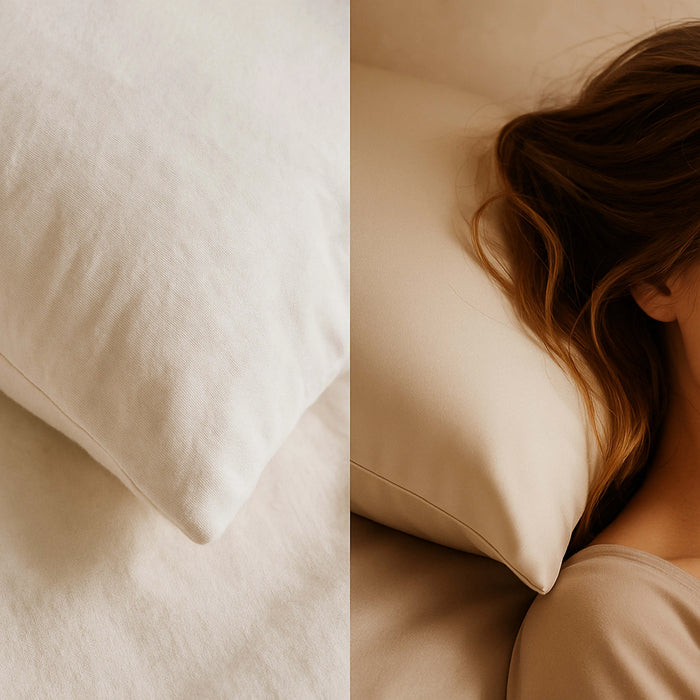
Twenty minutes deliberating over the colour. None of it wasted, as long as it is also silk.
Shop Now →Why the material matters more than the colour
Before anyone touches a colour chart, it is worth establishing what colour actually affects and what it decidedly does not. The smooth surface that makes silk useful for hair and skin comes from the charmeuse weave and the fineness of the fibre, not from its dye. Whether you choose cream or cobalt, the same mechanism applies: a low-friction surface that creates less drag against hair than rougher cotton fabrics.
The AAD notes that friction against a pillowcase can make hair frizzy and easier to break, particularly for curly and coily hair types, and recommends satin or silk pillowcases to reduce that overnight friction. Its curly hair guidance explicitly lists sleeping on silk or satin as one of six evidence-informed protective measures. That benefit does not vary based on whether the pillowcase is white or navy. The fibre does that work regardless of the dye bath it passed through.
Similarly, Sleep Foundation notes that silk may cause fewer sleep creases than rougher fabrics because its surface creates less friction with skin. It also describes silk as cool to the touch, moisture-wicking, and potentially gentler for sensitive skin. None of these properties are colour-dependent. A navy silk pillowcase and a white one, if made to the same quality specifications, will perform identically.
What colour does affect is the visual and psychological experience of your bedroom, your tolerance for visible laundry casualties, and the impression a bedroom makes. Sleep Foundation's guidance on bedroom colour notes that certain shades, particularly blues, greens, and whites, are associated with more restful and calming environments for many people, while very saturated or vivid colours can feel stimulating. That said, the research on this is more observational than prescriptive, and the most restful colour is ultimately the one that makes you feel settled.
"The research on bedroom colour and sleep quality points in a generally consistent direction: cooler, softer tones are more conducive to relaxation than bright, high-saturation colours. But individual preference matters just as much. A bedroom you love is a bedroom that works."
Sleep Foundation, Bedroom Environment: What Elements Are Important?
So the practical framework for a silk bedding colours guide is this: the silk does the work. The colour sets the scene. Choose the silk quality first, based on fibre grade and momme weight, then choose the colour that fits your bedroom and your lifestyle. The order matters.
White and ivory: the hotel-bedroom choice
White silk pillowcases have an obvious appeal: they look clean, crisp, and deliberately calm. The aesthetic reads as considered. If the target is a bedroom that feels like a very good hotel, white or ivory is the most direct route. There is no visual noise, nothing competing with the linen, and no shade that clashes with anything else. It is the design equivalent of a blank page, which either sounds perfect or faintly alarming depending on your personality.
Ivory softens this considerably. Where bright white can feel clinical or demanding in rooms with warmer paint tones, ivory sits naturally alongside cream walls, oak furniture, warm linen, and anything with an earthy undertone. For most Australian and UK bedrooms, ivory is the more forgiving choice of the two.
The practical trade-off is transparency. White silk does not negotiate with your skincare routine. Vitamin C serums, tinted moisturisers, fake tan, lip masks, and face oils all have very clear opinions about white fabric, and they are not shy about sharing them. Good Housekeeping's guide to washing silk pillowcases recommends washing frequently, using a gentle detergent, and handling stains promptly. For white silk, this is especially relevant. The good news is that silk at 22 momme or above is durable enough to handle regular gentle washing. The bad news is that "regular" here means approximately once a week.
"Silk pillowcases should be washed as regularly as conventional pillowcases, roughly once a week. The frequency does not damage the fabric if the washing method is correct. Infrequent washing followed by intensive cleaning creates more wear than regular careful care."
Good Housekeeping, How to Wash Silk Pillowcases Safely
Choose white or ivory if: your bedroom leans towards a minimal, spa-clean aesthetic; you prefer timeless over trend-led; your skincare routine involves mostly clear or lightly tinted products; and you are comfortable with a gentle weekly wash. Avoid white if you use heavy tinted actives, self-tanner, or deeply pigmented lip treatments at night and have a low tolerance for visible residue.

Navy, charcoal, and black: the editorial option
If white silk is the boutique hotel, navy is the boutique hotel that has had an interesting evening. It is polished, deliberate, and just enough of a statement to feel like a decision rather than a default. Navy works particularly well in bedrooms with cooler undertones: grey walls, brass or matte black hardware, darker timber, or velvet upholstery. It creates depth without drama, and it has the advantage of being one of the colours Sleep Foundation identifies as associated with calm and restful feelings in bedroom environments.
Charcoal is navy's quieter sibling: less saturated, more versatile across warm and cool rooms, and slightly less likely to polarise opinion. Black sits at the other end, creating the most visually dramatic option and working best in rooms that are already committing to a darker aesthetic. For a dedicated guide to black silk pillowcases specifically, including how the benefits compare to lighter shades, this piece covers it in detail.
The practical considerations for dark shades differ from lighter ones. Lint, pet hair, and light-coloured skincare products become more visible against a dark background. More importantly, all silk should be dried away from direct sunlight and heat sources, but this matters especially for darker dyes: UV exposure accelerates colour fading in deeper pigments, and the contrast between a faded section and the original colour is more visible on dark fabric than light. Always dry dark silk pillowcases in the shade, laid flat or hung, away from the sun. It is not dramatic advice. It is just what the fabric needs.
"Darker textile dyes, particularly deep blues, charcoals, and blacks, are generally more complex chemical formulations than lighter shades. This makes OEKO-TEX certification more valuable on darker colours, not less, since there are more chemical inputs to be tested and verified."
OEKO-TEX, STANDARD 100: Why It Matters for Bedding
Choose navy, charcoal, or black if: your bedroom already leans towards a cooler, richer, or more editorial aesthetic; you want depth without pattern; you are consistent about shade drying; and the look you are after is less "freshly pressed linen" and more "deliberately considered." Avoid very dark shades if you have light-coloured pets or very sticky lint-producing fabrics in the same room.
Champagne, blush, stone, and silver: the flexible middle ground
These are the colours chosen by people who have done this before. Not because they are boring, but because they are wise. Champagne, blush, soft stone, and silver carry enough warmth or cool to feel intentional, enough neutrality to work across changing bedroom styles, and enough depth to avoid the "I couldn't decide" accusation that sometimes follows a very stark white.
Champagne reads warm, soft, and a touch romantic. It suits rooms with natural timber, warm plaster tones, linen curtains, or rattan furniture. Blush is warmer still and suits similarly warm spaces, though it has earned a reputation for being trend-sensitive. If you still love blush as a colour, own that. It is a warm, flattering neutral that will not date as badly as its critics suggest.
Stone and silver lean cooler. Stone is a contemporary neutral that suits rooms with grey, blue-grey, or greige paint, concrete-feel finishes, or cooler Scandinavian aesthetics. Silver is slightly more metallic in undertone, more obviously luxurious in an explicitly glamorous way, and very effective in bedrooms that already have some metallic or mirrored elements.
The practical advantage of all of these shades is that they split the difference between white and dark: they hide everyday skincare residue better than white without demanding the shade-drying vigilance of navy. They are also among the safest options when buying a silk pillowcase as a gift, since they flatter a wider range of bedroom aesthetics and are unlikely to clash with whatever someone already has.
All colours at a glance
| Colour | Best for | Maintenance level | Bedroom aesthetic | Avoid if |
|---|---|---|---|---|
| White / Ivory | Clean, hotel-spa look; minimal skincare routine | High (shows stains readily) | Minimal, Nordic, spa, contemporary | You use heavy tinted products at night |
| Champagne / Blush | Warm, romantic feel; forgiving of skincare | Medium | Warm, natural, linen-and-timber | Cool-toned bedroom with grey or blue walls |
| Stone / Silver | Cool neutral; works across changing decor | Medium | Scandinavian, grey-tone, contemporary | Very warm or bohemian bedrooms |
| Navy / Charcoal | Dramatic, editorial look; cool-toned rooms | Medium (lint more visible; shade drying essential) | Moody, editorial, masculine, eclectic | Light-coloured pets; unventilated drying spaces |
| Black | Bold statement; very dark or dramatic rooms | Medium-high (OEKO-TEX certification especially recommended) | Dramatic, maximalist, high-contrast | Light, airy, or minimalist bedrooms |
Colour, skin tone, and bedroom harmony
A common question in any silk bedding colours guide is whether the pillowcase colour has any effect on skin, specifically whether certain shades are more flattering against different complexions. The honest answer is: the pillowcase colour affects what you see in the mirror when the bed is made, not what happens to your skin overnight. Performance is identical across colours for the same silk quality. The aesthetic dimension is real but purely visual.
That said, visual harmony is worth considering. Warm skin tones tend to look best complemented by warm pillow shades: champagne, ivory, blush, and light caramel neutrals tend to sit warmly against warm complexions in bedroom photography and in daily use. Cool skin tones photograph and live well with cooler whites, silvers, and stone shades. This is not a rule so much as a general principle about how warm and cool colour families interact.
Hair colour also interacts with pillow colour in a practical way that has nothing to do with skin tone. People with very light hair will notice dark silk pillowcases more in terms of visible hair residue (shed hairs, dry shampoo residue, scalp oils). People with dark hair will find the reverse. This is a maintenance consideration as much as an aesthetic one. Neither is more "correct," but it is worth knowing before committing to a very dark or very light shade.
"The most consistent finding in colour psychology research is that individual associations with colour vary significantly based on personal history and cultural background. No single colour is universally calming. The best bedroom colour is the one the person sleeping in it finds restful."
Sleep Foundation, What Color Helps You Sleep?
From a bedroom design perspective, the most practical framework is this: choose a pillow colour that sits within the same temperature family as the dominant wall and textile colours in your room. Warm walls pair naturally with warm shades; cool walls with cooler ones. This is not interior design snobbery. It just means the bed will look intentional rather than accidental when guests see it, which may or may not matter to you, but usually does.
What different shades demand in care
The care requirements for silk do not change by colour, but certain colours make the consequences of poor care more visible. This is not a reason to avoid a colour, but it is worth understanding before you commit.
White and ivory silk will show the effects of incorrect washing most starkly: yellowing from oxidised oils, blue-grey tinting from hard water mineral deposits, or overall dulling from alkaline detergent residue. Good Housekeeping's testing and review of silk pillowcases consistently finds that silk at 22 momme or higher handles regular gentle washing well, but that care method matters far more than frequency.
Dark silk has the opposite visibility problem: fading. Deep blues, charcoals, and blacks are susceptible to UV-accelerated colour loss if dried in sunlight, and the contrast between faded sections and the original depth of colour is more obvious than it would be on lighter shades. The fix is simple, but it requires consistency: shade drying, every time. Not "mostly shade drying except when the sun comes out and the garden looks inviting." Always.
For dye safety across all colour families, OEKO-TEX STANDARD 100 certification provides meaningful assurance. According to OEKO-TEX, STANDARD 100 tests the finished textile and all its components against a list of over 1,000 harmful substances. For bed linens, which fall under Product Class 2 (direct skin contact), this is not a formality. A certified pillowcase, particularly in a deep or vibrant colour requiring more complex dye formulation, has been tested at the point of skin contact. That is worth more than a pleasant marketing description.
The honest trade-offs of silk pillowcases include the care requirements, and this is as true for coloured silk as for white. The benefits are real but the fabric rewards consistent, gentle handling. Not dramatic or time-consuming. Just consistent.
The right silk, in the right shade
The problem: most "silk" pillowcases on the market do not specify their fibre composition, momme weight, or certification. You select a colour, add to cart, and have no reliable way to know whether the fabric is genuine mulberry silk, a silk blend, or polyester satin wearing the word "silk" as a costume.
The solution: a silk pillowcase that is transparent about what it is, confirmed safe at the point of skin contact, and available in a shade that works for your bedroom.
22 Momme Silk Pillowcase, Set of 2
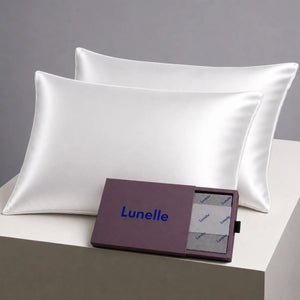
The Lunelle pillowcase in white or ivory sits in the colour territory that works with almost every bedroom style, while the 22 momme Grade 6A mulberry silk means the performance matches the aesthetics. If you have been reading about colour choices and wondering whether silk actually delivers on its reputation, this is the option to test that against. The OEKO-TEX certification means the dye chemistry has been independently verified, not just described as safe on a product page.
- 100% Grade 6A mulberry silk
- 22 momme weight for the ideal balance of softness and durability
- Charmeuse weave for a smooth, low-friction surface
- OEKO-TEX STANDARD 100 certified, free from harmful substances
- Envelope closure
- Machine washable on delicate
- 60-night guarantee
How to choose your silk pillowcase colour
After all the colour theory, the most useful framework is a set of honest questions that cuts through the options quickly. The goal is to arrive at a colour you will still be happy with after the novelty of a new purchase has faded, not just one that looked good in the cart at eleven o'clock on a Tuesday.
Decision checklist
- What is the dominant temperature of your bedroom? (Warm walls and timber: lean warm. Cool greys and blues: lean cool.)
- What is your skincare routine at night? (Active and tinted products: avoid stark white. Simple and mostly clear: any colour works.)
- Do you have light-coloured pets? (If yes, avoid very dark shades unless you enjoy morning lint archaeology.)
- Are you buying for yourself or as a gift? (For a gift, champagne, stone, or silver are the safest choices across unknown bedrooms.)
- How do you feel about consistent shade drying? (If you dry laundry indoors by a window: check that it is not sun-facing for dark silk.)
- Are you decorating for the long term, or does your bedroom aesthetic shift regularly? (Ivory, champagne, and stone survive more decor changes than navy or black.)
The classic safe choice, for any situation where you are genuinely uncertain, is ivory. It sits warmer than white without the contrast concerns of deep shades, it works in almost every bedroom style, and it hides low-level skincare residue reasonably well. It is also the shade that translates best in dim morning light, which, during an Australian winter or a grey British morning, is the light you will most often see it in.
The complete guide to silk pillowcase benefits for hair and skin covers the performance evidence in depth if you are still deciding whether the investment is justified before the colour conversation even becomes relevant.
Does colour perform differently on satin versus silk?
This question comes up frequently in colour discussions because "satin" and "silk" are used interchangeably by a significant portion of the bedding market. They are not interchangeable. Satin is a weave structure, as Merriam-Webster defines it: a weave that produces a smooth-faced fabric. That smooth face can be created using silk, polyester, rayon, or other fibres. A pillowcase described as "satin" may be made from any of these. The colour tells you nothing about the fibre.
This matters for the colour discussion because the same colour in polyester satin versus genuine mulberry silk will age differently, feel differently against skin, and behave differently under washing conditions. Polyester satin in a deep navy may hold its colour more rigidly but also runs warmer, retains static, and does not offer the natural breathability or protein-fibre properties of genuine silk. Silk in the same navy shade will typically feel cooler, breathe more naturally, and age more gracefully with correct care.
The performance properties credited to "silk" in beauty and sleep research, the friction reduction, the thermal comfort, the breathability, specifically apply to silk as a natural protein fibre, not to satin as a weave structure applied to synthetic materials. Sleep Foundation's comparison of satin versus silk pillowcases notes this distinction directly and clarifies that the evidence base for beauty benefits applies to silk, not to all satin-weave products. The colour does not override the fibre. Check the material, not the finish.
"Most silk pillowcases are both silk and satin. But satin pillowcases can also be made from polyester, which means they mimic the smooth feel of silk without being made from silk."
Good Housekeeping, Best Silk Pillowcases (Tested and Reviewed)

Silk in the colour that works for your bedroom
Grade 6A mulberry silk, 22 momme, OEKO-TEX certified. Available in white and ivory, the two shades that work with almost any bedroom and hold their look over time.
Shop the 22 Momme Pillowcase →Or explore the 30 momme option for a heavier, denser feel. 60-night guarantee on both.
Frequently Asked Questions: Silk Bedding Colours

Does silk pillowcase colour affect hair benefits?
No. If two pillowcases are made from the same quality silk, the benefits for hair come from the fabric's smooth, low-friction surface, not from the dye colour. The American Academy of Dermatology's guidance on reducing overnight friction applies equally to white, navy, and champagne silk. Colour is an aesthetic choice; performance is determined by fibre and weave.
Is white or navy silk better?
Neither is better for hair or skin. White typically gives a cleaner, brighter look that suits minimal and spa-style bedrooms, while navy creates a richer, moodier aesthetic. White shows skincare stains sooner; navy requires consistent shade drying to protect the colour from UV fading. The better choice depends entirely on your bedroom and your skincare routine.
What colour silk pillowcase should I buy?
The most versatile starting point is ivory or champagne: warm enough to suit most bedroom aesthetics, forgiving enough to hide light skincare residue, and unlikely to polarise opinion if bought as a gift. If you want the crispest, cleanest look and use mostly clear night products, white is the classic choice. If your bedroom has a moody, editorial feel, navy or charcoal will look better. Stone and silver are the ideal middle ground for cool-toned, contemporary rooms.
Does a darker silk pillowcase need different care?
The washing process is the same, but shade drying is especially important for dark silk. UV light accelerates colour fading in deep-dyed fabrics, and fading tends to be more visible on navy, charcoal, or black than on lighter shades. Always dry dark silk flat or hung in the shade, away from direct sunlight and heat sources. This is not optional for dark colours; it is the main variable that determines how long the colour holds.
Does silk pillowcase colour affect sleep quality?
Not directly. Sleep Foundation notes that bedroom colour can influence emotional associations with a space, with blues, greens, and softer whites typically associated with calm and restfulness. But the actual sleep-quality benefits of silk (breathability, thermal comfort, reduced friction) come from the fibre itself, not the colour. Choosing a calming shade is a reasonable aesthetic decision; it is not the mechanism behind sleep improvement.
Is satin available in more colours than silk?
Yes, satin-weave fabrics (especially those made from polyester) are typically available in a wider colour range than genuine mulberry silk pillowcases. This is because synthetic satin accepts dye more easily and at a lower cost than natural silk. However, satin is a weave structure, not a fibre. Checking that a pillowcase is 100% mulberry silk rather than polyester satin is more important than choosing the widest colour range.
Why does dark silk need OEKO-TEX certification more than light silk?
Darker dye colours require more complex chemical formulations to achieve than lighter ones. More dye chemistry means more potential residual substances in the finished fabric. OEKO-TEX STANDARD 100 certification confirms the finished textile has been tested against over 1,000 potentially harmful substances, which is particularly valuable for bed linens in direct contact with skin every night. It does not mean uncertified light-coloured pillowcases are automatically safe, but the case for certification is more pressing for darker shades.
Will a coloured silk pillowcase bleed onto my face or hair?
A quality silk pillowcase that has been properly dyed and finished should not bleed colour in normal use. If you wash a new dyed silk pillowcase before first use (as recommended for any new bedding), any excess surface dye will rinse out at that stage. A pillowcase that bleeds colour onto skin or hair during normal use is either poorly dyed or the dye was not properly fixed, and should be returned or exchanged.
What colour silk pillowcase is best for sensitive skin?
The colour itself has no direct effect on skin sensitivity. The relevant factors are fibre quality, certification, and care routine. For sensitive or reactive skin, the most important consideration is OEKO-TEX STANDARD 100 certification, which confirms the fabric has been tested for harmful substances. Silk's natural properties (smooth, non-abrasive, temperature-regulating) make it a commonly recommended choice for sensitive skin regardless of shade, though it is worth noting that silk allergy, while rare, has been reported.
Which silk colour is best for gifting?
Champagne, stone, and soft silver are the most universally flattering gifts across different bedroom aesthetics. They sit within the neutral-to-warm range that works in most rooms, without the strong preference implications of very stark white or very deep navy. If you know the recipient has a cool, contemporary bedroom, silver or stone is ideal. If their bedroom is warm and natural, champagne or ivory will suit it well.
Does silk colour fade over time?
All textile dyes fade over time with light exposure and washing, but silk's natural lustre can make colour changes more noticeable than in cotton. Darker shades are more susceptible to visible fading than lighter ones. Shade drying, pH-neutral washing detergent, and washing on a delicate cycle in cool water all extend colour life. Avoid tumble drying, which combines heat and friction, two reliable accelerants of colour change in silk.
How often should I wash a silk pillowcase?
Approximately once a week, which is the same frequency recommended for any pillowcase. Silk is in direct contact with skin oils, hair products, sweat, and skincare residue every night. Infrequent washing followed by intensive cleaning creates more fibre wear than regular gentle washing. Use a silk-safe or pH-neutral detergent, a cool cycle or gentle hand wash, and air dry in the shade away from direct heat.
Further Reading
Sources and References
- American Academy of Dermatology. 6 Curly Hair Care Tips from Dermatologists. aad.org
- Sleep Foundation. Benefits of a Silk Pillowcase. sleepfoundation.org
- Sleep Foundation. What Color Helps You Sleep? sleepfoundation.org
- Sleep Foundation. Bedroom Environment. sleepfoundation.org
- Good Housekeeping. How to Wash Silk Pillowcases Safely. goodhousekeeping.com
- Good Housekeeping. Best Silk Pillowcases, Tested and Reviewed. goodhousekeeping.com
- OEKO-TEX. OEKO-TEX STANDARD 100. oeko-tex.com
- Merriam-Webster. Satin Weave Definition. merriam-webster.com
- Sleep Foundation. Satin vs. Silk Pillowcase. sleepfoundation.org
- Health.com. TikTok Warns Sleeping on Your Side Can Cause Wrinkles. health.com
- National Eczema Organization. How to Choose and Wear Winter Layers If You Have Eczema. nationaleczema.org