
Silk Pillowcase Feels Stiff? Causes and How to Fix It
Lunelle Team
16 min read
You bought it for the softness. That was, specifically, the entire point. You have read about the friction reduction, the smooth charmeuse surface, the hair-friendly glide. Then it arrived, you opened the packaging, and held it, and thought: this is not quite what buttery feels like. It feels more like... a very well-ironed envelope.
A silk pillowcase that feels stiff is a disappointingly common experience, and it does not always mean the product is poor quality or that something has gone wrong permanently. In most cases, when a silk pillowcase feels stiff, the cause is one of three solvable problems: detergent residue, hard water mineral build-up, or heat exposure during processing or drying. All three can be addressed with a correct wash and a patient air-dry. The smoothness you were sold is usually still in there.
That said, texture matters beyond aesthetics. The American Academy of Dermatology recommends silk or satin pillowcases to reduce overnight friction for curly and coily hair, because that friction is a genuine driver of frizz and breakage. A stiff, papery-feeling silk pillowcase is not delivering the smooth, low-friction surface that recommendation assumes. The fix is worth pursuing.
Quick Answer
A silk pillowcase that feels stiff is usually caused by one of three things: detergent residue left in the fabric from too much product or insufficient rinsing; hard water mineral deposits that bind with soap and cling to fibres; or heat exposure during processing or drying that alters the natural drape of the silk. A careful rewash using less detergent, cool water, a delicate or hand wash cycle, a thorough rinse, and a gentle air-dry in shade will resolve most cases. If stiffness persists after two careful washes, the issue may be with the processing quality of the fabric itself rather than care alone.
Key Takeaways
- Stiffness in a silk pillowcase is almost always residue-related, water-quality-related, or heat-related. The smoothness is not gone; it is buried under something that rinses out.
- Too much detergent is a more common cause of stiff silk than too little. More product does not mean cleaner fabric. It means more residue.
- Hard water areas carry calcium and magnesium minerals that combine with soap molecules and form a coating on fabric fibres. This makes laundry feel stiff regardless of how carefully you washed it.
- Silk is a protein fibre that degrades under alkaline conditions. High-pH detergents, hot water, and prolonged soaking all accelerate fibre weakening that can manifest as a roughened, dull, or stiff feel.
- A correct rewash, a thorough rinse, and shade air-drying fix residue and mineral stiffness in most cases. No special products are needed, and hot water is not the answer.
- If stiffness persists after two correct washes, the issue may be incomplete degumming during silk processing. A squeaky, papery texture that does not respond to correct washing is a quality concern worth raising with the retailer.
In this article
- Why does new silk feel stiff out of the box?
- The detergent residue problem
- Hard water and its effect on silk
- Heat, processing quality, and the protein fibre factor
- How to diagnose the type of stiffness you have
- How to soften a stiff silk pillowcase: step by step
- What good silk should feel like
- Preventing stiffness with the right ongoing care routine
- Frequently asked questions

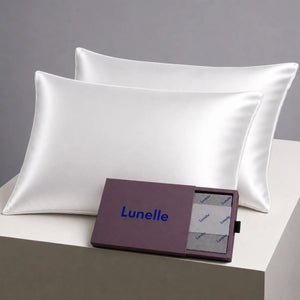
For when the silk pillowcase arrived feeling like it skipped a step. Specifically, the soft step.
Shop Now →Why does new silk feel stiff out of the box?
A brand-new silk pillowcase that feels stiff rather than soft typically has one of two explanations. The first is processing residue: finishing agents, sizing compounds, or packaging treatments applied during manufacturing that have not yet been washed out. These are common across textile categories, not unique to silk, and a correct first wash removes them. This is one reason skipping the first wash is a common silk care mistake: the fabric you sleep on before washing it is not the fabric at its intended best.
The second explanation is more fundamental to silk as a material: sericin. Raw silk naturally contains a protein gum called sericin, and degumming (the process of removing it) is what creates the soft, lustrous hand that finished silk is known for. Peer-reviewed textile research in InTech Open confirms that degumming is precisely what gives silk its characteristic soft handle and elegant drape. If degumming was incomplete, residual sericin leaves the fabric feeling stiffer and slightly squeaky rather than smooth and liquid. This is a manufacturing issue rather than a care one, and it tends not to resolve with washing the way residue stiffness does.
The distinction matters for deciding what to do next. Residue stiffness responds well to a careful rewash with less detergent and a thorough rinse. Degumming-related stiffness may improve marginally with washing but will not fully resolve, because the underlying sericin is still present in the fibre. This is rare in properly finished silk but worth knowing so you can diagnose correctly before deciding whether to wash again or contact the retailer.
"Degumming is the process that transforms raw silk from a stiff, gummy fibre into the soft, lustrous material associated with luxury textiles. Proper degumming removes sericin completely. Residual sericin results in a stiffer, less draping fabric than the finished product should exhibit."
InTech Open, Physicochemical and Low-Stress Mechanical Properties of Silk Fibres
The detergent residue problem
Detergent residue is the single most common cause of stiff fabric after washing, and it applies to all textiles, not just silk. Electrolux specifically lists stiff, sticky fabric as a primary symptom of detergent left in clothes, caused by using too much product, overloading the machine, or failing to rinse adequately. The American Cleaning Institute similarly identifies stiff, harsh-feeling fabric as a common laundry problem linked to residue and buildup.
With silk, the temptation to "use a bit extra just to be sure" is understandable but counterproductive. Silk requires far less detergent than cotton for the same cleaning effect, because the charmeuse weave has a smoother, less absorbent surface than woven cotton. A teaspoon of silk-safe or pH-neutral detergent in a small basin of cool water is typically sufficient for a hand wash. Machine washing on delicate with a standard small-load measure of detergent, or slightly less, is appropriate for a single pillowcase.
The rinse cycle is as important as the wash itself. Detergent residue that remains in the fabric after rinsing is the direct cause of the stiff, dull feeling. If you are machine washing, an extra rinse cycle is usually the most effective single step for preventing residue stiffness. If you are hand washing, two or three complete rinses with fresh cool water until no foam is present will achieve the same result.
Hard water and its effect on silk
If you live in a hard water area, and much of the UK and Australia does, your laundry has an invisible adversary that has nothing to do with your washing technique. Hard water contains elevated concentrations of calcium and magnesium minerals, and Miele explains that these minerals bind with detergent molecules and deposit a coating on fabric fibres, making laundry feel stiff and dull rather than soft and clean. This reaction happens regardless of how carefully you washed.
The mineral deposit problem is cumulative. A single wash in hard water may produce only a faint stiffness. Multiple washes in hard water without any intervention gradually build up a mineral coating that creates a progressively rougher feel. For silk, where the smoothness of the surface is the entire functional point, this build-up is more noticeable and more consequential than it would be in a rougher fabric where a little extra stiffness goes unnoticed.
The practical mitigation options include using a small amount of white vinegar in the final rinse water. Electrolux recommends diluted white vinegar as a practical measure for removing detergent and mineral residue from fabric. Some silk care specialists also suggest this approach specifically for mineral stiffness in hard water areas. The key word is diluted: a tablespoon in a basin of rinse water is a light, helpful addition. Undiluted vinegar on silk is not a great idea. Keep it very light, and always defer to the care label if the manufacturer specifies otherwise.
"Hard water minerals combine with soap to form calcium and magnesium stearates that deposit on fabric. This is why laundry washed in hard water can feel stiff even when correctly cleaned. A small amount of diluted white vinegar in the final rinse is a commonly recommended remedy for mineral build-up."
Miele, How to Deal with Hard Water in Washing Machines
Heat, processing quality, and the protein fibre factor
Silk is a protein fibre, which means its chemistry is fundamentally different from synthetic fabrics or plant-based cellulosic fibres like cotton. Conservation guidance from the Western Australian Museum notes that protein fibres like silk tolerate weak acidic conditions better than alkaline ones and are vulnerable to degradation under alkaline conditions. High-pH detergents, bleach, and very hot water all interact poorly with silk at the fibre level, progressively weakening the protein structure in a way that can manifest as a rough, dull, or stiff feel over multiple washes.
Heat is the other variable that causes more damage than people expect. Silk care guides from established silk specialists including Jim Thompson recommend washing at approximately 30 degrees Celsius or cooler, advise against tumble drying entirely, and specify shade drying away from direct sun. Each of these instructions exists because heat, whether from a dryer, a radiator, or direct sunlight, can alter the drape and feel of silk fibre. The effect is not always dramatic but it is cumulative: repeated heat exposure gradually reduces the liquid, smooth feel that properly cared-for silk should have.
This matters for diagnosis. A pillowcase that was soft when new but has gradually become stiffer over successive washes is almost certainly accumulating one of these problems: residue, mineral build-up, or gradual heat-related fibre change. All three are accelerated by the same mistakes, hot water, excess detergent, tumble drying, and all three can be arrested (if not entirely reversed) by switching to a correct care method.

How to diagnose the type of stiffness you have
| Type of stiffness | When it appears | Key symptom | Likely fix |
|---|---|---|---|
| Detergent residue | After washing (one or more times) | Fabric feels slightly coated or sticky, dull sheen | Rewash with less detergent, extra rinse |
| Hard water minerals | After washing in hard water areas | Stiff even after rinsing, no soapy residue visible | Diluted white vinegar rinse, then rewash |
| Heat damage | After tumble drying or hot washing | Fabric has lost drape; rougher texture overall | Partial: correct future care slows further damage |
| Incomplete degumming | New out of the box; does not improve with washing | Squeaky, papery feel; slightly rigid | Contact retailer; this is a manufacturing issue |
| Packaging or finishing residue | New out of the box; resolves after first wash | Slight crispness, not unpleasant; improves dramatically after washing | Single correct first wash |
How to soften a stiff silk pillowcase: step by step
The process for rescuing stiff silk is not complicated, but the specific details matter more than in everyday cotton washing. The goal is to remove residue while protecting the fibre structure. This is the method that addresses the most common causes of stiffness without introducing new problems.
Step-by-step process for softening stiff silk
- Check the care label first. Machine wash instructions and temperature limits vary by product. The care label takes precedence over general guidance. If it says hand wash only, hand wash only.
- Use cool water, never warm or hot. Cool water (approximately 20 to 30 degrees Celsius) is gentler on silk protein fibres and more effective at rinsing residue without setting it further into the fabric.
- Use very little detergent: less than you think you need. For hand washing: a small amount (about a teaspoon) of pH-neutral or silk-safe detergent in a basin of water. For machine washing: one small measure at most, in a mesh laundry bag on a delicate cycle.
- Wash gently, with minimal agitation. Silk fibres are smooth and clean more easily than cotton. Aggressive scrubbing or vigorous machine cycles do more damage than they undo. Light swirling in hand wash; delicate cycle in machine.
- Rinse thoroughly, twice if needed. This is where most stiffness problems are solved. Two complete rinse cycles or two fresh basins of rinse water ensure detergent is genuinely removed rather than redistributed. If the water is still slightly foamy, rinse again.
- Do not wring or twist. Lay the pillowcase flat on a clean dry towel, fold the towel over it, and press gently to absorb excess water. Rolling the towel briefly is effective. Twisting or squeezing applies mechanical stress to wet fibre that can cause distortion or roughening.
- Air dry in the shade, away from heat sources. Lay flat or hang on a smooth non-metal hanger, away from direct sunlight, radiators, and tumble dryers. Shade drying is one of the most important habits for maintaining silk in good condition long-term.
- Smooth before drying, not after. Silk dries relatively quickly and holds the shape it was left in. Smooth it out before hanging or laying flat while still damp to avoid drying with creases.
If the pillowcase was stiff due to hard water minerals, add a tablespoon of diluted white vinegar to the final rinse water and let it sit for a few minutes before the final drain. This helps break down mineral deposits and is safe for silk at low concentrations. Rinse once more with plain cool water after the vinegar rinse to clear any acid residue.
"Silk specialists including Jim Thompson advise washing silk at around 30 degrees Celsius, avoiding tumble dryers entirely, and air drying in the shade away from direct sunlight. These three steps together are what preserve the texture, drape, and colour of silk over its working life."
Jim Thompson, Silk Care Guide
When stiffness means the silk needs replacing, not rescuing
The problem: most silk pillowcases in the mass-market category are vague about degumming quality, momme weight, and fibre grade. A pillowcase that feels chronically stiff despite correct washing may have arrived with a processing shortcut already built in.
The solution: a pillowcase where the material specifications are stated upfront, the processing quality is reflected in the feel, and the care instructions are honest about what the fabric needs.
22 Momme Silk Pillowcase, Set of 2
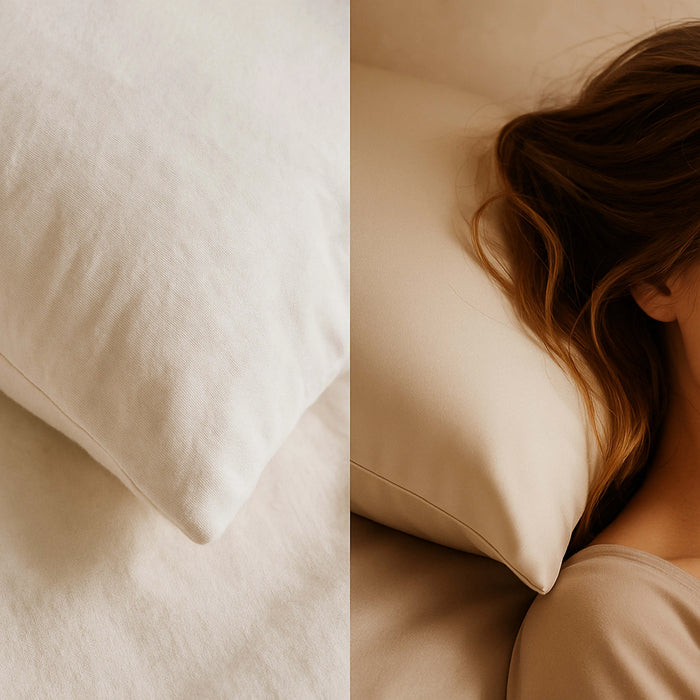
Grade 6A mulberry silk at 22 momme, properly degummed and finished to the smooth, draping texture that silk should have. The OEKO-TEX STANDARD 100 certification means the fabric has been independently tested for harmful substances, and machine-washability on a delicate cycle means the care routine is realistic rather than aspirational. If your current silk feels stiff after multiple correct washes, the problem is the source, not the method.
- 100% Grade 6A mulberry silk
- 22 momme for durability and substance
- Charmeuse weave, fully degummed for a smooth, liquid feel
- OEKO-TEX STANDARD 100 certified
- Envelope closure
- Machine washable on delicate
- 60-night guarantee
What good silk should actually feel like
Knowing what correct silk feels like is useful context for diagnosing whether your pillowcase has a solvable problem or a starting-point problem. Properly finished mulberry silk charmeuse should feel cool, smooth, and slightly slippery to the touch, in the same way that a well-washed, quality satin does but with a lighter, more liquid quality. It should have obvious drape: when you hold it up, it should fall in soft, easy folds rather than holding a shape stiffly. There should be no papery crinkle when you handle it, and no resistance when you run your hand across the surface.
Fresh out of the packaging, new silk may have a slight crispness from packaging or finishing treatments, but it should still have that characteristic drape and coolness. If the fabric feels rigid enough to hold its shape, squeaks slightly when you rub it between your fingers, or resists folding, these are signs that something is not right at the processing level rather than at the care level.
After the first correct wash, quality silk should feel noticeably softer and more fluid. If the feel improves dramatically with washing, the original stiffness was almost certainly a packaging or finishing residue. If it remains largely unchanged, the issue is deeper in the fibre. At that point, the warranty and the retailer are the appropriate next step, not a more elaborate washing routine. One of the more persistent silk care myths is that enough washing and care can compensate for poor starting quality. It cannot. Good silk can be maintained. Poor silk cannot be transformed.
Preventing stiffness with the right ongoing care routine
Once a silk pillowcase is in good condition, keeping it that way requires less effort than most people fear, but more consistency than most people apply. The habits that prevent stiffness are not complicated. They just need to be the default, not the exception.

The complete guide to silk care supplies covers everything you need to maintain silk well, but the essentials are: a pH-neutral or silk-specific detergent, a mesh laundry bag for machine washing, cool water, and a consistent shade-drying habit. None of these are expensive. The mesh bag protects silk from mechanical abrasion against other items in the drum; the pH-neutral detergent protects the protein fibre from alkaline degradation; and shade drying prevents both UV colour damage and heat-related texture change.
The things that cause stiffness to develop over time, too much detergent, insufficient rinsing, heat drying, and hard water without any mitigation, are all habits rather than single events. Switching to a correct routine after a stiffness problem does not always undo existing damage, but it reliably prevents the stiffness from returning once it has been resolved. That is worth more than the most elaborate rescue wash.
Silk that earns its softness
Grade 6A mulberry silk, properly processed, OEKO-TEX certified, machine washable. The smooth glide it arrived with should still be there in two years, if you keep the detergent light and the heat away from it.
Shop the 22 Momme Pillowcase →Also available in 30 momme for a denser feel. 60-night guarantee on both.
Frequently Asked Questions: Silk Pillowcase Stiffness

Why does my new silk pillowcase feel stiff?
Usually because of packaging or finishing residue that washes out after the first correct wash, or occasionally because of incomplete degumming during silk processing. Packaging residue responds well to a careful first wash in cool water with a small amount of pH-neutral detergent and a thorough rinse. Degumming-related stiffness (a squeaky, papery texture that does not improve with washing) is a manufacturing issue and should be raised with the retailer.
Will washing make silk softer?
Often, yes, if the stiffness is caused by residue, minerals, or packaging treatments. A correct wash with cool water, minimal detergent, and a thorough rinse removes the material causing the stiff feel. If the stiffness is caused by heat-related fibre damage or incomplete degumming, washing will not fully restore the original soft feel, though correct future care will prevent further deterioration.
Can hard water make a silk pillowcase feel rough?
Yes. Hard water contains calcium and magnesium minerals that bind with soap molecules during washing and deposit a coating on fabric fibres. This makes laundry feel stiff and dull rather than soft, regardless of how carefully the washing was done. A diluted white vinegar rinse helps break down this mineral build-up, and using a water softener or filtered water for silk washing eliminates the problem at the source.
Should I use fabric softener on silk?
Check the care label first. Fabric softeners can be used on some delicates but can also leave a coating on fabric that contributes to stiffness over time. Consumer Reports notes that fabric softener and detergent build-up are common causes of laundry problems. If a silk pillowcase already feels stiff and coated, addressing the existing residue is more useful than adding a further product layer.
What does stiff silk mean: is it fake?
Not necessarily. Genuine silk can feel stiff due to residue, hard water, heat damage, or incomplete degumming. Polyester satin can also feel smooth rather than stiff. Stiffness alone does not confirm a fabric is fake, though it is a signal to investigate. Check the care label for fibre composition, look for a stated momme weight (genuine silk pillowcases should specify this), and verify any claimed certifications. A squeaky, plasticky stiffness that does not improve at all with washing is more consistent with synthetic material than residue-related stiffness in genuine silk.
How much detergent should I use for silk?
Less than you would use for cotton. A teaspoon of pH-neutral or silk-specific detergent in a basin of cool water is appropriate for hand washing. For machine washing, one small measure (or slightly less) in a delicate cycle with a mesh bag is typically sufficient. Detergent residue is one of the most common causes of stiff silk after washing, and using too much product is more likely to cause it than using too little.
Can I tumble dry silk to make it softer?
No. The tumble dryer is not a helpful tool for silk texture and is the direct route to heat-related fibre damage. Heat causes structural changes to silk protein fibres that reduce drape and softness, and these changes are cumulative and cannot be reversed. Air drying in the shade, laid flat or hung on a smooth hanger, is the only recommended drying method for silk.
Does silk soften over time with regular use?
Correctly cared-for silk typically maintains its feel rather than changing dramatically with use. It does not harden or stiffen simply through being slept on. Stiffness that develops over time is caused by care factors: accumulated residue, mineral build-up, or gradual heat damage. Addressing those causes with correct washing prevents stiffness from increasing. Silk does not inherently soften with age the way some fabrics do, but it also does not harden when properly looked after.
Is satin better than silk if I keep having washing problems?
Satin is a weave, not a fibre. A satin pillowcase may be polyester, which is easier to care for but does not offer the same natural properties as silk. The washing difficulties most people encounter with silk come from specific care mistakes (too much detergent, too much heat, hard water) rather than from silk being inherently difficult. Correcting those specific practices usually resolves the problem. If the goal is a lower-maintenance bedding option, polyester satin is easier to care for. If the goal is the benefits associated specifically with silk, correct silk care is the more efficient path.
How often should I wash a silk pillowcase?
Approximately once a week, consistent with the general recommendation for any pillowcase. Silk in overnight contact with skin, hair products, and sweat needs regular cleaning. Infrequent washing followed by intensive cleaning causes more fibre wear than consistent gentle washing. Use a delicate cycle or hand wash, cool water, minimal pH-neutral detergent, and air dry in shade every time.
Will white vinegar damage my silk pillowcase?
At very low concentrations (a tablespoon diluted in a full basin of rinse water), white vinegar is a commonly used and generally safe remedy for detergent and mineral residue on delicate fabrics. Undiluted vinegar applied directly to silk is not recommended, as concentrated acidity can affect silk protein over time. Always dilute, use only in the final rinse, and follow with a plain cool-water rinse afterwards to clear any acid residue.
Further Reading
Sources and References
- Electrolux. How to Get Rid of Detergent Residue on Clothes. electrolux.com.sg
- American Academy of Dermatology. 6 Curly Hair Care Tips from Dermatologists. aad.org
- Miele. How to Deal with Hard Water in Washing Machines. miele.co.th
- Western Australian Museum. Deterioration: Conservation and Care of Collections. manual.museum.wa.gov.au
- InTech Open. Physicochemical and Low-Stress Mechanical Properties of Silk Fibres. intechopen.com
- Sleep Foundation. Benefits of a Silk Pillowcase. sleepfoundation.org
- American Academy of Dermatology. How to Prevent Rosacea Flare-ups. aad.org
- Consumer Reports. Why Fabric Softener Is Bad for Your Laundry. consumerreports.org
- Jim Thompson. Silk Care Guide. jimthompson.com
- American Cleaning Institute. Fabric Softeners and Enhancers: A Comprehensive Guide. cleaninginstitute.org
- Tom's Guide. The Right Way to Wash a Silk Pillowcase. tomsguide.com