
How to Wash a Coloured Silk Pillowcase Without Fading
Lunelle Team
14 min read
A coloured silk pillowcase is one of those purchases that is easy to get wrong on the care side. You bring it home, it is beautiful, and then you wash it with your normal laundry and something changes. The colour is slightly less vivid. Or there is a faint bleed onto another item. Or the texture has shifted. None of this is inevitable. All of it comes from the same few fixable mistakes.

Silk is a natural protein fibre with properties that make it genuinely different to wash from cotton, linen, or synthetic fabrics. Those differences mean the standard approach to laundry actively harms it. Alkaline detergents strip the sericin coating and degrade the fibre. Hot water destabilises the dye bonds. Wringing distorts the weave. Sunlight causes photodegradation that weakens both the fibre and the colour. On a white or pale pillowcase, these mistakes are tolerable in the short term. On a dyed pillowcase, they are visible immediately.
This guide covers exactly what to do and, more importantly, exactly what not to do when washing a coloured silk pillowcase, including hand washing, machine washing when the care label allows it, stain removal, and long-term colour preservation.
Quick Answer
To wash a coloured silk pillowcase without fading: use cool water, a pH-neutral or silk-safe detergent, and wash inside out. Hand wash gently or use a machine on the coldest delicate cycle in a mesh bag. Press out excess water without wringing, then dry flat in the shade away from direct sunlight or heat. Avoid bleach, fabric softener, alkaline detergents, and any temperature above 30°C.
Key Takeaways
- Silk is the natural fibre most vulnerable to UV light. Direct sunlight causes both colour fading and fibre degradation. Always dry coloured silk away from sunlight.
- Most laundry detergents are alkaline. Alkaline chemistry degrades silk protein and can cause dye bleeding. Only pH-neutral or silk-specific detergents are safe on coloured silk.
- Hot water opens the fibre structure and destabilises dye bonds. Cool or cold water is non-negotiable for dyed silk.
- Mechanical stress worsens colour loss. Wringing, scrubbing, and rough machine cycles all damage both the fibre and the dye. Gentle handling throughout is what keeps the colour long-term.
- Before washing for the first time, run a colourfast test on a small hidden area to check whether the dye bleeds.
In this article
 Why coloured silk needs a different approach to washing
Silk is a natural protein fibre, spun from the cocoons of the silkworm Bombyx mori. Its fibre structure is fundamentally different from plant-based fibres like cotton or synthetic fibres like polyester, and those structural differences change how it responds to washing chemistry, temperature, and mechanical stress.
The fibre itself is composed largely of fibroin, a protein, with a coating of sericin. Alkaline detergents attack both. The Royal Society of Chemistry explains that alkaline conditions cause hydrolysis of protein fibres, breaking the peptide bonds that give silk its tensile strength and lustre. This is why washing silk with a standard laundry detergent, most of which sit at a pH of 9 to 11, causes gradual degradation even at low temperatures. The fabric does not immediately fall apart. It just slowly becomes duller, softer in the wrong way, and more prone to pulls and thinning.
The situation is more acute with coloured silk because dye stability adds another variable. Textile science identifies colourfast failure as the result of three factors: the quality of the original dyeing process, the mechanical stress applied during washing, and the chemical environment of the wash water. A home laundry environment affects all three in the wrong direction if the standard approach is used.
Expert Insight
Canada's Canadian Conservation Institute (CCI) notes that silk is the most vulnerable natural textile fibre to light damage and that this vulnerability extends to UV and visible light components of ordinary sunlight. Exposure to light causes photodegradation: the silk fibre yellows, weakens, and becomes brittle, and dyed silk loses colour faster than undyed silk because the dye itself is also susceptible to photobleaching. The conclusion for everyday care is unambiguous: do not dry coloured silk in direct sunlight, and do not store it where sunlight can reach it.
Source: Canadian Conservation Institute (cci-icc.gc.ca)
The good news is that washing coloured silk correctly is not complicated. It requires four things: cool water, a safe detergent, gentle handling, and shade. None of those things are difficult to provide. The problems arise when standard laundry habits are applied without modification to a fibre that does not tolerate them.
Expert Insight
The Royal Society of Chemistry explains that alkaline conditions cause hydrolysis of the amide bonds in protein fibres, progressively breaking down the peptide linkages that give silk its tensile strength and surface lustre. This degradation is cumulative and largely invisible during the first several washes. The fabric dulls and weakens before any obvious physical change is apparent, which is why silk washed repeatedly with standard laundry detergent often seems to deteriorate suddenly after months of apparently normal use. The damage was gradual from the very first wash.
Source: Royal Society of Chemistry Education (rsc.org)
Testing colourfastness before the first wash
Before washing a coloured silk pillowcase for the first time, it is worth spending two minutes checking whether the dye is likely to bleed. This matters especially for deeply saturated colours (navy, charcoal, deep burgundy), prints, and any pillowcase that has not been pre-washed by the manufacturer.
How to run a colourfast test
Dampen a small white cloth or white tissue with cool water. Press it firmly against a hidden area of the pillowcase, such as an inside seam or a corner that will not be visible in use, and hold it for thirty seconds. Remove the cloth and check it for any transfer of colour. If there is significant colour on the cloth, the dye is not fully stable and you should hand wash the pillowcase alone in the first few washes to prevent bleeding onto other items. If there is no colour on the cloth, or only a very faint trace, the dye is likely to be stable under correct washing conditions.
Tide's care guidance describes this colourfast test as a standard pre-wash precaution for items where dye stability is uncertain, and it is particularly useful for any brightly or deeply dyed item being washed for the first time.
Choosing the right detergent for coloured silk
Detergent choice is the most consequential decision in washing coloured silk. Not because the range of options is complicated, but because the wrong choice is actively harmful, and most people default to products that fall into that category.
Standard laundry detergents are formulated for cotton and synthetic fibres. They are alkaline, typically pH 9 to 11, which is effective at removing oils and organic material from those fibres. On silk, that alkalinity breaks down the sericin coating and begins hydrolysing the fibroin protein. Over multiple washes, this dulls the fabric, weakens it, and causes colour loss.
The detergent you need for silk is pH-neutral or pH-slightly-acidic, and ideally labelled as silk-safe or suitable for delicates. Products formulated specifically for wool and silk are often the most reliable because they are designed around the needs of protein-based fibres. Avoid anything containing optical brighteners, enzymes, or bleach components, all of which are aggressive on silk protein and dye.
Conservation guidance for historic silk textiles reinforces this approach. The Victoria and Albert Museum advises that natural protein fibres including silk should only be cleaned with mild, specialist products, and that cleaning agents appropriate for cotton or synthetic fabrics should be treated as incompatible with silk by default.
| Detergent Type | Safe for Coloured Silk? | Why |
|---|---|---|
| pH-neutral / silk-specific detergent | Yes | Matches silk's natural pH range; preserves fibre and dye |
| Wool and delicates detergent (pH-neutral) | Yes | Formulated for protein fibres; no enzymes or brighteners |
| Standard laundry detergent (alkaline) | No | Alkaline pH degrades silk protein and destabilises dye bonds |
| Biological detergent with enzymes | No | Enzymes attack protein fibres directly |
| Any product containing bleach | No | Bleach destroys silk fibre and strips dye |
| Fabric softener | No | Coats fibre, reduces natural lustre and breathability |
How to hand wash a coloured silk pillowcase: step by step
Hand washing is the safest method for coloured silk and gives you the most control over both temperature and mechanical stress. It takes about ten minutes and extends the life of the pillowcase considerably compared to machine washing.
Turn the pillowcase inside out
Washing inside out reduces friction on the outer face of the fabric, which is where colour fading is most visible. It also protects any printed surface details or lustre finish. Always start with this step.
Fill a basin with cool or cold water
Use the coldest water that is comfortable to handle, ideally 20 to 30°C. Hot water destabilises dye bonds and can cause significant colour loss in a single wash. Cold water does not open the fibre structure in the same way and is far safer for both the silk and the dye.
Add a small amount of pH-neutral or silk-safe detergent
One or two teaspoons is typically sufficient for a single pillowcase. Dilute it in the water before adding the pillowcase, rather than applying it directly to the fabric, which can cause uneven concentration and localised dye disturbance.
Submerge and gently agitate for two to three minutes
Move the pillowcase through the water gently, using your hands to work the water through the fabric. Do not scrub, rub, or wring. Silk fibres are weakest when wet, and mechanical stress at this stage causes both physical damage to the weave and dye displacement. Think of this as pressing and releasing, not washing in the ordinary sense.
Rinse thoroughly in cool clean water
Empty the basin and refill with clean cool water. Rinse the pillowcase by pressing and releasing it in the fresh water, repeating until no soap residue remains. Detergent left in the fabric after washing can attract dirt, cause dullness, and, in alkaline products, continue to affect the fibre. Rinse until the water runs completely clear.
Press out excess water, do not wring
Lift the pillowcase out of the basin and gently press it against the side to remove excess water. Do not twist or wring. Wringing distorts the weave and can cause permanent creasing and colour streaking on dyed silk. Lay the pillowcase flat on a clean dry towel, fold the towel over it, and press gently to absorb additional moisture.
Dry flat in the shade
Lay the pillowcase flat on a clean drying surface, or drape it over a drying rack away from direct sunlight and any heat source. Do not tumble dry, do not dry in direct sunlight, and do not hang it vertically while wet, which can cause the fabric to stretch unevenly. Turn it right-side-out once it is mostly dry to allow the outer face to finish air-drying.
Machine washing a coloured silk pillowcase
Some coloured silk pillowcases, including many modern mulberry silk pillowcases with tightly woven charmeuse, can tolerate machine washing if done carefully. Always check the care label first. If the label permits machine washing, the conditions matter as much as the permission.
Machine wash conditions for coloured silk
- Cold water only: the coldest setting on your machine, ideally 20°C or below
- Delicate or hand-wash cycle only: this limits drum agitation speed and movement
- Inside a mesh laundry bag: prevents friction against other items and against the drum
- Alone or with other silk or delicate items only: no denim, zips, or anything rough
- Silk-safe or pH-neutral detergent: standard detergent is still harmful regardless of the cycle setting
- No spin cycle, or the lowest spin setting available: high-speed spinning wrings the fabric and causes mechanical stress equivalent to hand-wringing
- Remove promptly after the cycle ends: leaving damp silk in a machine causes creasing and can trap odours
Expert Insight
Good Housekeeping recommends washing silk bedding no more than once a week, and notes that bleach and fabric softener should never be used on silk. The guidance also advises against drying silk in a tumble dryer. The weekly wash frequency recommendation reflects both the gentle care requirements of silk and the fact that over-washing any delicate fabric increases cumulative wear, colour loss, and fibre degradation faster than necessary. For a pillowcase that is in regular nightly use, once-weekly washing is a practical standard that balances cleanliness against care.
Source: Good Housekeeping
How to dry coloured silk without fading the colour
Of all the care mistakes that cause colour loss in silk, drying in direct sunlight is the most common and the most damaging. The Canadian Conservation Institute documents that silk is the most light-sensitive natural textile, with both UV and visible light components causing photodegradation. The same light that fades curtains and upholstery fades dyed silk, and the process is faster than most people expect.
The mechanism is photochemical: light energy breaks chemical bonds in both the silk fibre and the dye molecules. In the fibre, this causes the silk to yellow and weaken over time. In the dye, it causes irreversible colour loss. On a deeply coloured pillowcase, even a few hours of direct sunlight during drying can produce a visible change in vibrancy.
Expert Insight
Research from the Textile Research Institute Princeton shows that UV exposure causes significant degradation of silk protein at moderate light intensities. Dyed silk is more vulnerable than undyed silk because the dye molecules absorb additional light energy and can transfer it to the fibre, a process that accelerates both colour loss and structural weakening. Exposure time is as important as intensity: several hours of direct outdoor sunlight during a single drying session can produce measurable fibre degradation in deeply saturated silk.
Source: Textile Research Institute, Princeton (tri.org)
Drying correctly
Lay the pillowcase flat on a clean towel or a drying rack in a shaded, well-ventilated indoor space. A bathroom with the window open, or a shaded outdoor area, both work well. Avoid direct sunlight, radiators, tumble dryers, and hair dryers. High heat from any source, not just sunlight, causes shrinkage and irreversible damage to the silk structure. Room-temperature air drying in shade is the correct method.
If the care label permits a low-heat tumble dry cycle, and some silk pillowcases do tolerate it, use the lowest heat setting and remove the pillowcase while it is still slightly damp, then complete drying flat in the air. This reduces the risk of heat damage and shrinkage while still making use of the dryer for the initial moisture removal.

Stain removal on coloured silk
Stain removal on coloured silk requires a different approach from stain removal on cotton or synthetics. The instinct to act fast is right. The instinct to reach for a commercial stain remover is wrong.
Most commercial stain removers contain enzymes, bleach components, or surfactants at alkaline pH levels. Any of these can damage silk fibre or strip dye in the area of application, leaving a lighter patch that is more visually noticeable than the original stain. The urgency is real, but the product matters as much as the speed.
How to remove a stain from coloured silk
Act quickly but do not rub the stain. Blot with a clean white cloth to absorb as much of the liquid as possible. Then, mix a very small amount of pH-neutral detergent with cool water and dab gently at the stain with a clean cloth, working from the outside of the stain inward to avoid spreading. Rinse with cool water and blot dry. Do not scrub. Do not apply heat. Allow to air dry flat in the shade.
For set stains, the approach is the same but requires more patience and more repetitions. Never use bleach, acetone, or rubbing alcohol on coloured silk. Westlake Dermatology notes the parallel between skin sensitivity and fabric sensitivity to chemical exposures, and research published in PMC on textile contact and atopic dermatitis confirms that both fibre type and the chemical nature of cleaning agents affect fabric condition after repeated treatment. Aggressive chemical treatments can cause localised damage that is often more permanent than the original problem.
The pillowcase that holds its colour
The care routine above is straightforward. What makes it sustainable is having a pillowcase that is constructed to tolerate it. Tightly woven, high-grade mulberry silk is significantly more resistant to washing wear than lower-grade alternatives, both because the fibre quality is better and because the weave density means less mechanical disruption per wash.
22 Momme Silk Pillowcase, Set of 2
Woven from 100% Grade 6A mulberry silk at 22 momme, this pillowcase is built for exactly the kind of regular, careful washing described in this guide. The charmeuse weave is dense enough to tolerate a cool delicate machine cycle in a mesh bag, and the fibre quality means colour retention is measurably better across repeated washes than lower-grade alternatives. Hand wash in cool water with a pH-neutral detergent, press dry, and lay flat in the shade. That is all it asks for.
- 100% Grade 6A mulberry silk, 22 momme weight
- Charmeuse weave, dense enough for careful machine washing
- OEKO-TEX certified, free from harmful chemicals
- Low moisture absorption: does not draw hydration from skin or hair
- 60-night guarantee
Common mistakes that cause coloured silk to fade
Most colour loss in silk pillowcases is preventable. It comes from a small number of repeated mistakes rather than from a single catastrophic error.
Hot water
Hot water opens the fibre structure and destabilises dye bonds. Even a single hot wash can cause visible colour loss on a deeply dyed silk pillowcase. Cool water is always the correct temperature, regardless of how dirty the item appears.
Alkaline detergents
Standard laundry detergents are formulated for cotton. Their alkaline pH actively degrades silk protein. The damage accumulates gradually, which is why a silk pillowcase washed with ordinary detergent looks fine for several months and then begins to dull and pill. By that point, the damage is done. The Royal Society of Chemistry's educational materials confirm that alkaline conditions cause hydrolysis of the amide bonds in silk, progressively weakening the fibre from the first wash.
Wringing and scrubbing
Silk fibres are physically weakest when wet. Wringing a silk pillowcase causes mechanical stress that displaces the weave, distorts the fabric, and can cause colour streaking in dyed fabrics. Gentle pressing and blotting are the only forms of physical water removal that do not risk fabric damage.
Direct sunlight during drying
Sunlight causes photodegradation of both the silk fibre and the dye. Textile Research Institute Princeton research shows that UV exposure causes significant degradation of silk protein, even at moderate intensities. Shade drying is not optional for coloured silk.
Fabric softener
Fabric softener works by coating fibres with a lubricating film. On silk, which already has an inherent natural lustre and softness from its fibroin and sericin structure, this coating is unnecessary and counterproductive. It builds up over time, dulling the natural sheen and affecting the breathability that makes silk comfortable.
Mixing with rough items
Zips, hook-and-eye fastenings, denim, and rough synthetic fabrics all cause friction and snagging when washed together with silk. Even on a delicate cycle, contact with these items can pull threads, pill the surface, and accelerate colour wear. Silk should always be washed either alone or with other delicate items of similar construction.
Washing too infrequently
This one is less intuitive but relevant. Body oils, sweat, and residue from skincare products accumulate on a pillowcase. If left too long, these deposits can begin to affect the dye and create localised discolouration that is harder to remove than the regular gradual accumulation. A weekly wash keeps the pillowcase clean without over-stressing the fibre.
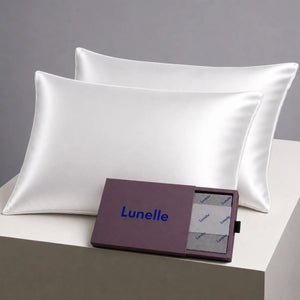
A denser weave for those who want the most substantial option. At 30 momme, the fabric is more durable through repeated washing and holds its structure exceptionally well over time.
Shop Now →Silk that handles weekly washing without losing its character.
100% Grade 6A mulberry silk. OEKO-TEX certified. 60-night guarantee.
Shop the 22 Momme Pillowcase →Prefer the densest option? The 30 Momme Pillowcase is also available. Both carry the 60-night guarantee.
Frequently Asked Questions: Washing Coloured Silk Pillowcases
Can I machine wash a coloured silk pillowcase?
Check the care label first. If machine washing is permitted, use the coldest water setting, a delicate or hand-wash cycle, a mesh laundry bag, and a pH-neutral silk-safe detergent. Avoid the spin cycle or use the lowest spin setting. Remove promptly after the cycle ends. Hand washing remains the safest option for preserving colour vibrancy over time.
Why is my silk pillowcase fading after washing?
The most common causes are hot water (destabilises dye bonds), alkaline detergent (degrades silk protein and dye), wringing (causes mechanical dye displacement), and drying in direct sunlight (photodegradation of both fibre and dye). Switching to cool water, a pH-neutral detergent, gentle pressing rather than wringing, and shade drying will prevent further fading.
What detergent is safe for coloured silk?
A pH-neutral or slightly acidic detergent formulated for silk, wool, or delicate fabrics. Avoid anything alkaline, anything containing enzymes, optical brighteners, or bleach components, and fabric softener. Many dedicated silk or wool wash products at chemists and department stores are suitable. Check the label for pH neutrality or a "safe for silk" indication.
Can I use vinegar to wash silk?
No. Despite being frequently recommended as a natural detergent alternative, white vinegar is acidic enough to damage silk fibre over time and can cause localised colour changes in dyed fabrics. It is not a safe substitute for a silk-specific detergent. Use a pH-neutral product designed for the purpose.
How often should I wash a silk pillowcase?
Once a week is the standard recommendation from bedding care guides including Good Housekeeping. This frequency balances cleanliness, removal of body oils and skincare residue, and protection against the cumulative wear that comes from over-washing. Washing less frequently allows oils and residue to build up and can cause localised dye changes that are harder to reverse.
How do I remove a stain from a coloured silk pillowcase without damaging it?
Blot immediately with a clean white cloth, then dab gently with a very dilute solution of cool water and pH-neutral detergent, working from the outside of the stain inward. Rinse with cool water and blot dry. Do not scrub, do not use commercial stain removers (which are typically alkaline or enzyme-based), and do not apply heat. For set stains, patience and repeated gentle applications work better than aggressive chemistry.
Can I tumble dry a coloured silk pillowcase?
Most silk pillowcases should not be tumble dried. The heat causes fibre shrinkage and accelerates colour degradation. If your care label specifically permits tumble drying, use the lowest heat setting and remove the pillowcase while still slightly damp, then complete drying flat in the shade. Air drying flat is always the safer option.
Does washing temperature really matter for colour retention in silk?
Yes, significantly. Hot water opens the silk fibre structure and breaks the bonds that hold dye molecules within the fabric, causing them to leach out into the wash water. Cool or cold water keeps the fibre structure closed and dye bonds stable. The difference between washing at 40°C and washing at 20°C is not subtle; it is the primary variable in whether colour loss is visible after a single wash or across dozens of washes.
Is silk more vulnerable to colour fading than cotton?
Yes. Silk's protein-based fibre structure and the typical dyeing processes used on it make it more vulnerable to fading from heat, alkaline chemistry, UV light, and mechanical stress than most cotton. NCERT textiles curriculum notes that dyed fabrics in general are susceptible to colour loss during cleaning, and silk's light sensitivity in particular, documented by the Canadian Conservation Institute, puts it at the higher end of the risk spectrum among natural fibres.
Can I iron a coloured silk pillowcase?
Yes, with care. Use a cool silk setting on your iron, or a low heat setting if your iron does not have a dedicated silk mode. Iron while slightly damp and from the reverse side. Do not use steam directly on coloured silk as concentrated steam can cause watermarks on dyed fabric. Keep the iron moving constantly rather than pressing in one place.
What causes colour bleeding in silk pillowcases?
Colour bleeding happens when dye molecules are not fully stable within the fibre and are released into the wash water. The main triggers are hot water, alkaline detergents, and mechanical stress from wringing or agitation. Some pillowcases bleed slightly in the first wash regardless of care, particularly in deeply saturated colours. Washing alone for the first one or two washes, in cool water with a gentle detergent, minimises the risk of bleeding onto other items.
Further Reading
Sources and References
- Canadian Conservation Institute. Care and Handling of Textiles. cci-icc.gc.ca
- Royal Society of Chemistry Education. Proteins and their properties: Silk hydrolysis. rsc.org
- Tide. How to Wash Silk: Step-by-step guide. tide.com
- Good Housekeeping. How to Wash Silk Bedding. goodhousekeeping.com
- Sleep Foundation. Best Silk Pillowcase. sleepfoundation.org
- Dupont N, et al. Atopic dermatitis and textile contact: the role of fibre type and fabric finish. PMC / NIH. pmc.ncbi.nlm.nih.gov
- Westlake Dermatology. Sensitive Skin and Fabric Choice. westlakedermatology.com
- NCERT. Textiles: Fabrics from Fibres. ncert.nic.in
- Textile Research Institute Princeton. Effect of UV radiation on silk degradation. tri.org
- Gavazzoni Dias MF. Hair Cosmetics: An Overview. PMC. pmc.ncbi.nlm.nih.gov
- Victoria and Albert Museum. Caring for your textiles. vam.ac.uk